I have nothing good to say about this book. I didn’t like a single part of it. I don’t have a single stirring quote from it to share. It started and ended disturbingly; and in between featured copious amounts of speechifying and boredom.
I have off tomorrow for Juneteenth! This was a big surprise that came at 3 PM today.
You know you’re in the right job when one of your first thoughts is “But tomorrow I was looking forward to _____”. And you know you’re in the right life when you can shake that off and say, “Time for that Monday!”
“Everyone has a story they tell themselves about themselves. Even if they don’t explicitly acknowledge it, their minds are at work retelling or editing or updating a narrative that explains or excuses why they have spent their time on earth as they have.”
“The one shot America had at behaving well, and thus saving itself, was to remove the feeling that ‘the government’ was imposing restrictions on people and re-instill the idea that people were imposing order on themselves, to fight a common enemy.”
“[N]ever in the unwritten history of nasal swabs had nasal swabs been awaited with such anticipation.”
This is a book about the handling of the COVID-19 pandemic in the US; but it’s written by Michael Lewis, so it’s not going to be a polemic or a dry history. It’s a book about a few real-life characters who had some interesting roles to play, and their unique perspectives.
– Scientist Bob Glass: his daughter’s (and, let’s face it, his) eight-grade science project is a model of communicable disease spread, which points the super-spreading finger mainly at children, for their multitudinous and highly physical social interactions. The model concluded that closing schools and keeping children isolated was the best way to stop the spread of a flu-like illness, counterintuitive though it may seen when it’s the older cohorts who suffer the most adverse effects.
– Charity Dean: a California public health officer with a hero complex; I had a hard time truly understanding her character and her motivations under different circumstances. She also just didn’t seem all that important to the story.
– Richard Hatchett: one of the first picks to work on a task force to produce a pandemic plan of action back in the George W. Bush administration; because President Bush had read a book (!) called THE GREAT INFLUENZA about the 1918 flu pandemic, and it scared him into wanting to craft a governmental plan of action to deal with pandemics. (Yes, the last Republican president whose initials were not DJT actually read books – those were the days!)
– Carter Mecher: kind of the main character, someone that Lewis obviously respects a great deal; a doctor at the Veterans Administration, and unofficial leader of the task force.
So the pandemic plan is written with its emphasis on social distancing and closing schools. During the Obama administration, there is the H1N1 scare, and the plan is considered; but they take a gamble and decide it’s too intrusive into people’s daily lives, and they don’t use it. They dodge a bullet; I think there is a comment to the effect that it wasn’t a bullet dodged, but rather that nature had chosen to spray us with buckshot. The pandemic response team is ultimately disbanded, and then we get Trump. There’s also the politicization of the CDC; the CDC is not so much a villain in the story as a tragic anti-hero. They could have been so much better, done so much more. Instead, at first they minimized.. and then surrendered.
It took about half of the volume to finally get the narrative up to 2020 talking about COVID-19. Until then, I was chomping a bit at the bit – get to the good stuff already! These people are all relatively interesting but I didn’t buy a book to read about a bunch of government scientists and doctors with some novel ideas. After all the backstory, things got very compelling indeed. I have long been a Michael Lewis fan and continue to be. Ugly cover, though. ( )
When I was a teenager, I was rightfully paranoid about getting pregnant. After a few pregnancy scares in my mid-teens, I went straight, and from then on it was condoms, condoms, condoms. I went on the pill in my late teens. But I couldn’t quite believe that taking these little pills was really a trustworthy way to avoid pregnancy. I could SEE condoms. So I still insisted, condoms, condoms, condoms. It took me years to come around to the realization that these little pills were known to have well over 90% efficacy; and then I finally laid off the condoms, when in trustworthy relationships.
Something similar has been going on this year. All year it’s been mask, mask, mask. Then I get two shots in the arm. Can I really believe that those two little shots mean I’m protected, and protected from infecting others? I can’t actually see the shots doing anything. I can SEE masks, and I can obviously see staying home doing nothing. So even since my long awaited V-Day, I’ve been careful, careful, careful. No indoor dining! And trips that I’d been looking forward to… should I really be running around the country, to NC, to NYC, to ME, weaving school even?
Maggie and I had wanted to celebrate our birthday together in NYC. I was more fine with the idea when it was distant, but now it’s coming up. She wants to plan indoor things. I told her I only wanted to do outdoor things. She said then it wasn’t worth planning anything. And it was OK, if I wasn’t comfortable coming down, it was fine, she honestly wasn’t mad. Not at me.
Then I’m like, when am I going to be OK with this? What threshold of cases will make it all OK? It hit me when I saw a headline today about the Canadian border *possibly* reopening soon. If it reopened tomorrow, would I go to my long-missed Canadian haunts? With my prevailing attitude of fear – no, I wouldn’t. Dammit, what’s it gonna take, Tytania? When will you live again? I’ll tell you when. At some arbitrary point. Someday you will just start to feel OK doing shit again.
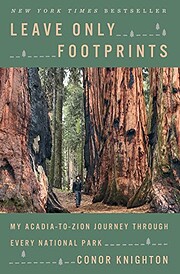
Haven’t had a good “my-year-of” book in a while. Here: visiting every national park in the USA – 59 of them, at the time of writing – in a calendar year.
He doesn’t do it alphabetically, despite the “Acadia-to-Zion” subtitle; nor really geographically. And the book is neither alphabetical nor geographical nor chronological. He picks a few parks for each chapter and unites them with a theme (water, love, diversity, whatever).
The style takes some getting used to. I realize 59 parks is a lot to fit into one book, and I would fully accept giving some of them short shrift. But often a chapter will start out talking about one park, and it could be a mere paragraph or two before you have suddenly shifted your focus to an entirely different one. It often left me, “Wait! Wait! What happened to…” I did get used to it, and grew less and less likely to settle in and form an attachment to any particular park description that might start a chapter, knowing that it would very likely be snatched away from me abruptly at any moment. Still, even though it wasn’t till page 245 that we were introduced to Guadalupe Mountains National Park in Texas, and by then I was used to the device, I really think this park deserved more than a page. Guadalupe, we’re told, is one of the least visited parks in the lower 48, and contains the highest point in Texas. Then we suddenly start talking about Rocky Mountain National Park. It reminded me of the blancmange Monty Python skit where they start following an ordinary couple down the street with a voiceover and then suddenly shift the camera away saying that because they are so ordinary we are now going to turn our attention instead to…
As a companion, the author is amiable enough with no major tics or annoyances. He’s young and has a broken heart, but that isn’t too intrusive a device. I had a couple of favorite parts:
a) When he goes to Volcanoes National Park and hikes out on the lava flow, like we did a few years ago. “Had no one else been standing out there, I would have absolutely turned back. It felt like I was marching into hell. How on earth was this allowed? It couldn’t possibly be safe. Walking across a field of lava felt like driving over downed power lines or skating to the center of a newly frozen river… But up ahead of me, I saw groups of tourists in the distance. There were even a few rangers walking around, answering questions. I had to zig and zag to get where they were standing, avoiding bits of fresh, bubbling lava that had risen to the surface. It felt like dodging puddles on a sidewalk, except in this case a misstep wouldn’t mean soggy socks, it would mean burning my foot off.”
Sorry for the very long excerpt – it’s just that, YES, every single sentence is EXACTLY how it was! I described it as like marching into Mordor.
b) A beautiful thought as he ends a few days Isle Royale National Park, an island off Michigan’s upper peninsula, accessible only by seaplane or boat. As he’s waiting for the boat to take him back to civilization, a fellow park visitor comments, “It’s pretty great being cut off from the outside world.” Author replies, “I think we’re in the outside world. Everyone else is just cut off from this.”
I am dying to go to more national parks – I have such a hankering lately to go west, and that was the reason I was drawn to this book. I particularly want to go to Yosemite, as well as Yellowstone and Glacier. I’m woefully deficient in park experience. I was surprised, though, that I actually have been to six: – Volcanoes, HI – Pinnacles, CA – Channel Islands, CA – Badlands, SD – Wind Cave, SD – Acadia, ME ( )


 )

 )