Book Corner 2026.61

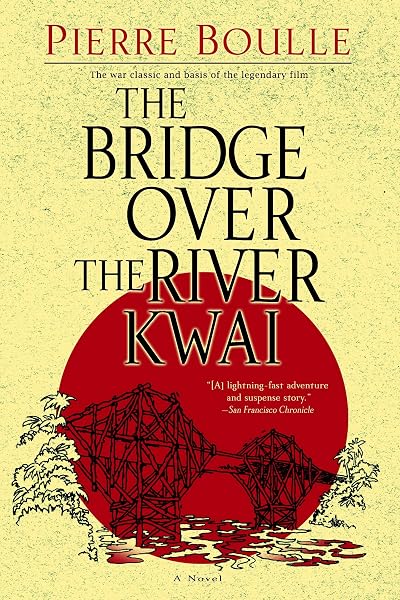
by Pierre Boulle

A real riveting page-turner!

I watched the movie about 20 years ago as part of an effort to watch as many as possible of the “Top 100” movies of all time. I thought I remembered some key scenes, but in fact I misremembered. I’m really glad I picked this book up.

British Colonel Nicholson (Alec Guinness) and his men are captured by the Japanese in the South Pacific, and the POW’s are made to build a railway bridge (that’s right, over the River Kwai) to help the Japanese link Bangkok with Rangoon.

Colonel Nicholson is dignified and proper and stands on ceremony at all times. He has a battle of wills with Saito, the commander of the POW camp. Nicholson insists that officers should not be working side-by-side with enlisted men. The officers should be officer-ing. Nicholson’s suggestions are not welcome, and he’s beaten and treated horribly for weeks. Yet he won’t back down on this point. Saito is finally made to give in, by the fact that the bridge is way behind schedule (because the men keep sabotaging the building effort) and Nicholson’s convinced him that the men will work much faster and quicker if it’s British officers commanding them.

The thing is… this isn’t a mind game Nicholson is playing. Once he’s released from imprisonment, he actually does start commanding the men to quickly and effectively build the bridge. The project goes from disaster to architectural wonder way ahead of schedule.

This is the hinge of the plot. Colonel Nicholson is so attached to always doing the correct thing, to the best of his ability, this even extends to aiding the enemy. He’s thoroughly forgotten what side he’s on.

I am glad to be done with the book so that I can now get that annoying whistling theme out of my head.
Book Corner 2026.60

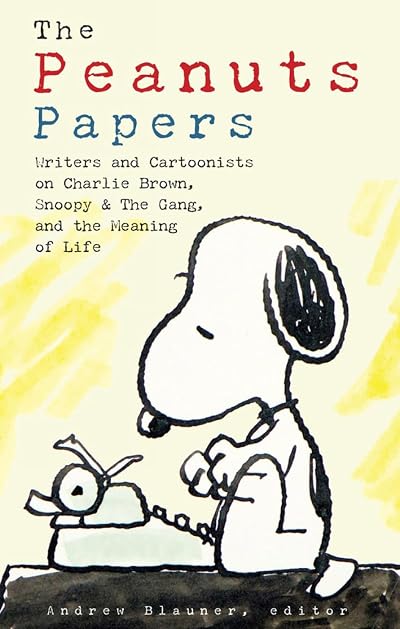
This collection of essays and short pieces about PEANUTS was very hit-or-miss. Most of them were too much in the weeds (giving me “weed claustrophobia”?). There was even poetry, FFS, which of course I skipped. I liked the section written as a comic strip.

OK, might as well add my own boring essay. I was reading PEANUTS books when I was just learning to read. Taught me a LOT of vocabulary. They were interesting, plus my big brother loved them, so I wanted to be like him. Sometimes we’d even act out a comic together as a skit. Sometimes I tried to use the punchlines on adults.

Sample thing I did as a cute 4- or 5-year-old:
Me, to neighbor visiting: You wanna know what the trouble with you is?
Neighbor, eagerly, thinking I’m adorable: What? What’s the trouble with me?
Me, perturbed: No, say you don’t want to know.
Neighbor: OK! No, I don’t want to know.
Me: The trouble with you is you don’t want to know what the trouble with you is!!!
(Big laughs)

Snoopy was like my big brother. Self-confident and sarcastic. I’m very partial to the strips where Snoopy still acts like a dog. He was thinking thoughts and being very funny, but he still kept all four paws on the floor, and whatever he was thinking or doing, you could still imagine it really being done by a dog. The Red Baron stuff just lost me, because, did the kids around him still think of him as a dog? How could they, if he was wearing a costume? It’s jumping the shark, and it happened pretty early in the strip’s history.

Book Corner 2026.59

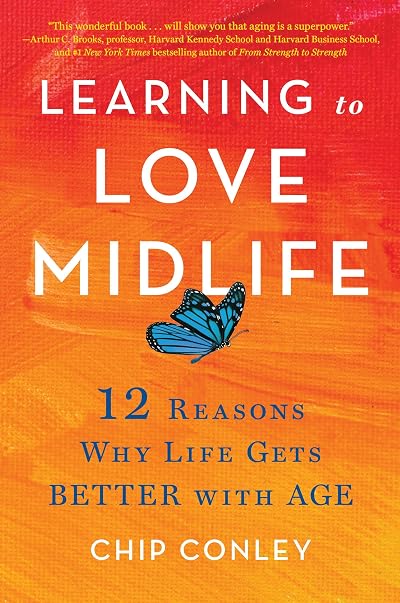
by Chip Conley

Starts strong, but definitely meanders. I found the beginning really speaking to me, e.g.:

“The midlife unraveling is a series of painful nudges strung together by low-grade anxiety and depression, quiet desperation, and an insidious loss of control… It’s enough to make you crazy, but seldom enough for people on the outside to validate the struggle or offer you help and respite. It’s the dangerous kind of suffering – the kind that allows you to pretend that everything is OK.”

This quote is attributed to “Brene”. I am unable to find in the index, bibliography, or immediately preceding paragraphs who that was.

One good thing about the book is that while he provides plenty of examples from his personal life, it doesn’t feel like his story is taking over the narrative.

And yes, I am reading a ton more books in retirement – it’s great.