Book Corner 2022.13

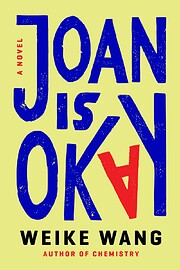
by Weike Wang

This wasn’t quite what I was expecting. What I was expecting from JOAN IS OKAY was something along the lines of ELEANOR OLIPHANT IS COMPLETELY FINE. Both are about misfit women. (And both women are either OK or completely fine.) But ELEANOR is played for laughs and sentimentality, while JOAN was completely serious and refused to follow any predictable narrative arc.

Joan is an ICU doctor who lives inside her work. She enjoys nothing more than being a cog in a machine. She has odd, not-exactly-close yet not-really-distant relationships with her mother and her older brother, and likewise had with her father, whose death back in China opens the novel. Her relationships with her co-workers are also not cold or distant or weird, but odd, in a matter-of-fact kind of way.

Joan gets a new neighbor across the hall who infiltrates her life in a frankly creepy-friendly way. He gives her food, objects, furniture. As this guy noses in more and more, his furniture filling her previously spartan living space, one would be forgiven for thinking: ah, now here is where the fun young guy shows Joan, one piece of furniture at a time, how to live, laugh, and love! But, no. It is not that kind of book at all.

The author is not a medical doctor, but she is a chemist with a doctorate in public health. It’s always so refreshing to read about characters who are in STEM. Writers only ever seem to write about other writers, usually thinly disguised as “artists.” (I always imagine them thinking, “It’ll be way too obvious I’m writing about myself if I make her a writer… I know! I’ve got it, she’ll be an artist.” Right, they’ll never suspect.)

Book Corner Abandonment

by Nikole Hannah-Jones & the NYT Magazine

Hi [Friend Who Gave Me This for Xmas]!

I’ve read a little more than half of the 1619 Project and I think I’m going to bail.  It’s just one horrible thing after another.

It’s a tremendous work of scholarship, and given all the over-the-top controversy about it, I’m glad to have acquainted myself firsthand with at least half of it.   From what I’ve read about the accusations of historical inaccuracies, they seem to be a matter of misreading and of interpretation, not the result of actual poor scholarship, IMHO.

What I remember most about Ta-Nahesi Coates Between the World & Me was how said that as a kid he hated Black History month, and learning about the civil rights era, because it seemed to be all about black people being hurt.  Images of black people with fire hoses aimed at them, black people being beaten, etc.  That came back to me as I was reading last night and really wanted to be done with it.  I’m glad you gave it to me, I’m glad I read what I read, I’m glad it exists.  Thank you!

Book Corner 2022.12

by Victoria Turk

Somehow I expected more about handling electronic communication at work, and less about dating apps and such. Extremely basic advice. Spot fake news by checking the sources! I do like that phone calls make her shudder. But I disagree with her that you should text a warning before you call. The three words I hate most in MS Teams are “can”, “I”, and “call.” Every fiber of my being screams noooooooooooooooooo you canNOT, while my fingers type the letters “O” and “K” because I’m such a good team player. If they’d just call and rip the band-aid off, it would be better. There was a blessed period when work texting blossomed when nobody called anymore. Then MS Teams made it so easy to make a Teams call. Pththththth on you, Microsoft.

Book Corner 2022.11

by Eugenia Chang

Mathematician Eugenia Chang suggests ways to remedy gender-related disparities in representation, pay, etc. by changing the characteristics that we reward and value, irrespective of gender. So for example, theory: men are more confident, they speak up more, they get noticed more, they get valued more, they get paid more. Common wisdom redress: teach girls to be more confident. Get women to speak up more. Get men to quiet down and listen to women. Chang’s suggestion: Why are we paying people just for confidence and speaking up? The people not speaking up so much – often but not always women – are often bringing just as much value to the table; why aren’t we nurturing and rewarding them for the value they bring, instead of trying to make them more like men?

I think I got the gist of it there. To remove gender from the picture, Chang suggests two new adjectives to take the place of ‘masculine’ and ‘feminine.’ I’ll quote her definitions here:

Ingressive: focusing on oneself over society and community, imposing on people more than taking others into account, emphasizing independence and individualism, more competitive and adversarial than collaborative, tending toward selective or single-track thought processes

Congressive: focusing on society and community over self, taking others into account more than imposing on them, emphasizing interdependence and interconnectedness, more collaborative and cooperative than competitive, tending toward circumspect thought processes

Chang suggests that we picture a society where congressiveness is valued more than ingressiveness. Not ‘as much as,’ but ‘more than.’ Here I feel Chang and I part company, and that her argument could have been stronger if, in a congressive mindset (!), she could have acknowledged that maybe we need the strengths of both personality types to make a good world. But she makes no bones about where she stands: congressive is better.

I like to think that I do not impose on people and am not particularly adversarial. Those are negative personality traits you could argue we could all do with less of, or do without. But what’s wrong with valuing one’s independence? With single-track thought processes? There is definitely a time and place for laser focus. If Chang had merely said, let’s make space for your more collaborative and wholistic-thinker types to flourish, I would have been much more receptive. I certainly love leaving gender out of it. That takes away space for men to get defensive, more ‘ingressively’ inclined females such as myself from getting similarly defensive (not that I ever would), and for anyone to decry ‘reverse sexism.’ Just focus on the individuals being marginalized, and why, and how to fix.

Book Corner: The Book Talks Back

Another one of my heroes wrote to me!

This time it was Jonathan Haidt. Close to my heart most for The Righteous Mind, which I loved well enough to actually give a little lecture about it at my local library several years ago. I was listening to a 2020 podcast where he was interviewed by Fellow Noodle-Hero Julia Galef. (Double-hero-whammy, I love when that happens.) They were talking about the “sacred” as one of morality’s foundations (an important concept!) when he reached around for non-obvious “everyday” things one might find “sacred”, and he said, “Oh, say like even the Rolling Stones” (noodle ears perk up) “…Tattoo You…” (wha!?!) “…side 2.”

This guy is a fan of Tattoo You, the 1981 collection of throwaways only remembered nowadays for “Start Me Up” (which I understand is widely disliked for being overplayed) and “Waiting on a Friend” (more critically acclaimed/tolerated)! And not only that. SIDE 2!

I guess this guy gets a hundred emails a day through his website “Contact” link, but not many with the subject line “Tattoo You.” I basically told him how happy I was to now have one more reason to love him, and he basically said he was happy to hear it.

Reading books is so much a one-way street. When a writer’s ideas really resonate with me, and I put him/her up on my Pantheon shelf, and then something prompts me to reach out, and he/she actually replies, it just feels a little like god himself coming down from on high. You don’t expect it. People writing the books are in some higher realm communicating with you through the magical object, The Book. They talk TO you. You don’t expect them to talk BACK to you. Maybe it feels like the book talking?

Or maybe I’m just a squealing giddy schoolgirl at heart. MEEEEEE! HE WROTE TO MEEEEEE!

Book Corner 2022.10

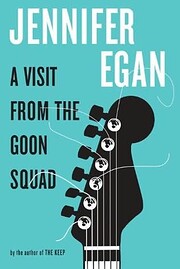
by Jennifer Egan

Amazing story consisting of substories following various intertwined lives.

A group of west coast teens with a bad punk rock band grows up. Bennie the bass player becomes an extremely successful record executive. Scotty the guitarist gets the girl Bennie wants. Rhea, who wants Bennie, and Jocelyn are best friends; Jocelyn gets involved with a much older, rich guy in the music bizz, with kids her age. Said rich guy, Lou, goes on a safari with two of his kids. Sasha, a comupulsive shoplifter, becomes Bennie’s personal assistant; she is the figure who most weaves in and out, binding many stories together.

The one spoiler I’ll give is that the goon squad is time. And it’s not really a spoiler that everyone gets old.

I’m 52 and from NYC. This surely colored my love for these stories. (The action takes place on both coasts; but NYC has the much more vivid scenes.)

Book Corner 2022.9

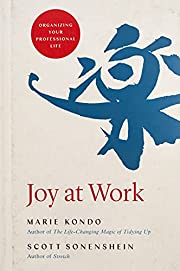
by Marie Kondo & Scott Sonenshein

OK, starting at the root, go through your hard drive, open every document, and ask, “Does this spark joy?”

No, no, no. This book isn’t like that, though it might have been better if it had been. It’s only PARTLY written by Marie Kondo; the other part is written by some guy who isn’t Marie Kondo, and contains trite advice about improving life in an office. This trite advice gets into a Marie Kondo book by being called a form of “tidying.”

Examples: Stop saying ‘yes’ to everything. This is ‘tidying your time.’ Unsubscribe from email lists you don’t read. This is ‘tidying your email.’ Categorize all the decisions you have to make and see if you can eliminate, automate, or delegate them. This is ‘tidying your decisions.’ etc.

It only becomes bearable when Kondo’s voice once again returns at the end, because she can carry any book on charm alone. But really, this one is not a keeper. You do not spark joy; good-bye.

Book Corner 2022.8

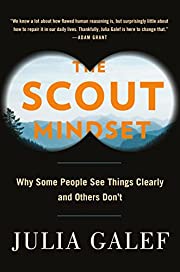
by Julia Galef

From one Julia to another…

Julia Galef is my new hero.

Galef defines ‘scout mindset’ as having clear thinking as your mission, to take a true map of the terrain. This is contrasted with ‘soldier’ mindset, which sees itself always in combat, and thus views the surroundings primarily in terms of what needs defending, etc. It’s not a perfect dichotomy, but you get the idea. Strive always to see the truth, even when unpleasant or bad for your side. A scout needs to report back with the real situation on the ground, even when the commanding officers might not like what they hear.

To be honest, the first four out of five sections may have had me leaving only a three or four star rating. Parts about overcoming bias seemed to be geared towards scientists and social scientists. Parts about about living without illusions seemed more for entrepreneurs. It all stated truths, but presented nothing earth-shattering.

The final section is where it really took off: Rethinking Identity. A chapter ensues about how beliefs become identities; and the next chapter presents my favorite takeaway: hold your identity lightly. My ex-therapist would have loved this. He always discouraged rigid thinking along the lines of “I am [this type of] person.” One should, instead of thinking, “I am a feminist,” think instead “I am someone who often sympathizes with feminist causes.” Not, “I am a vegan,” but “I am one who currently adheres most of the time to a vegan diet.” Or whatever. You find that this subtle shift has you becoming less defensive, more liable to seek truth in others’ arguments rather than digging in to a perceived threat. And if you must have an identity – try on ‘scout’ as an identity. “I am a scout.” A scout wouldn’t dismiss an argument out of hand without first giving it a fair hearing.

Some fun parts that I bookmarked:

“The Outsider Test.” When faced with a tough decision, try to avoid the sunk-cost fallacy by imagining someone else has just stepped into your shoes. What would she likely think of the situation? Try imagining that YOU have teleported from the outside into your own life, and wonder, what would you tell you to do? What I liked was her “It’s as if you’re hanging a sign around your neck: ‘Under New Management.'” I love the image. Also, this is why I love reading advice columns. It’s so easy to see the solution to other people’s problems. I try to imagine being an advice columnist answering myself; would the answer be crystal clear?

On holding your identity lightly: I have a friend who shall remain nameless who gets angry whenever I try to be a moderating influence, a la “let’s just TRY to consider where the ‘other side’ is coming from on this…” He’ll call it “coddling.” Coddling racists, coddling evil people, whatever. Galef: “It’s not a favor you do for other people, for the sake of being nice or civil. Holding your identity lightly is a favor to yourself – a way to keep your mind flexible, unconstrained by identity, and free to follow the evidence wherever it leads.”

Finally, choosing your role models. I’ll tell you my role model easily: Tyler Cowen. Tyler is interested in everything, and disinterested about everything (in the original correct sense of the word). Tyler doesn’t take sides. Tyler is on the side of whatever improves humanity’s health and happiness, and he is, as far as I have been able to tell after many years of him being my homepage, genuinely interested in seeking out what that side actually is. He will praise or censure whoever deserves it, and does not hew to any party line. If the data seems to show that universal Pre-K, for example, is beneficial for kids in the medium to long-term, he’s for it; and if it starts to show actually the opposite is true, then he’s against it. He doesn’t come in with a pre-set belief. He really, truly wants to know the truth. And he takes interest in everything. When something just plain doesn’t interest him, he takes interest in finding out why. He follows sports and popular and unpopular arts and culture. When he doesn’t like something aesthetically, he asks himself why, and why other people might like it; what is the art trying to convey, on its own terms? He travels extensively, and he travels for the purpose of learning. You get the idea. I love Tyler.

And I love Julia! I’m going to listen to more of her podcasts.

Book Corner 2022.7

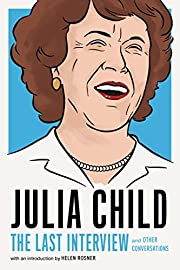
A strange little book. Interviews with Julia Child from 1961, 1984, 1989, 1991, 1999, and then, finally, THE LAST INTERVIEW! of the title from 2004 – which is barely more than a page long. This should have been titled better.

By now we (I) know all about Julia Child; lots of repetitive biographical information could fall by the wayside, but then, the 140-page book would be even thinner. The interviews are vaguely interesting; as Child grows older and starts to hold forth on matters beyond cooking, some unlikability starts to show through. She’s human, after all. She brings up her support for Planned Parenthood and abortion rights, which is laudable; but a comment like “Who wants a baby that is from a crack mother?”, well, not so much. It’s funny back in 1991 to hear her and the interviewer complain about Justice Sandra Day O’Connor, though, and the Supreme Court and the Republicans. O’Connor “has been a zero, hasn’t she”. What we wouldn’t give now to have a Justice O’Connor, and the state of the nation in 1991. Oh well. Bon Appetit!