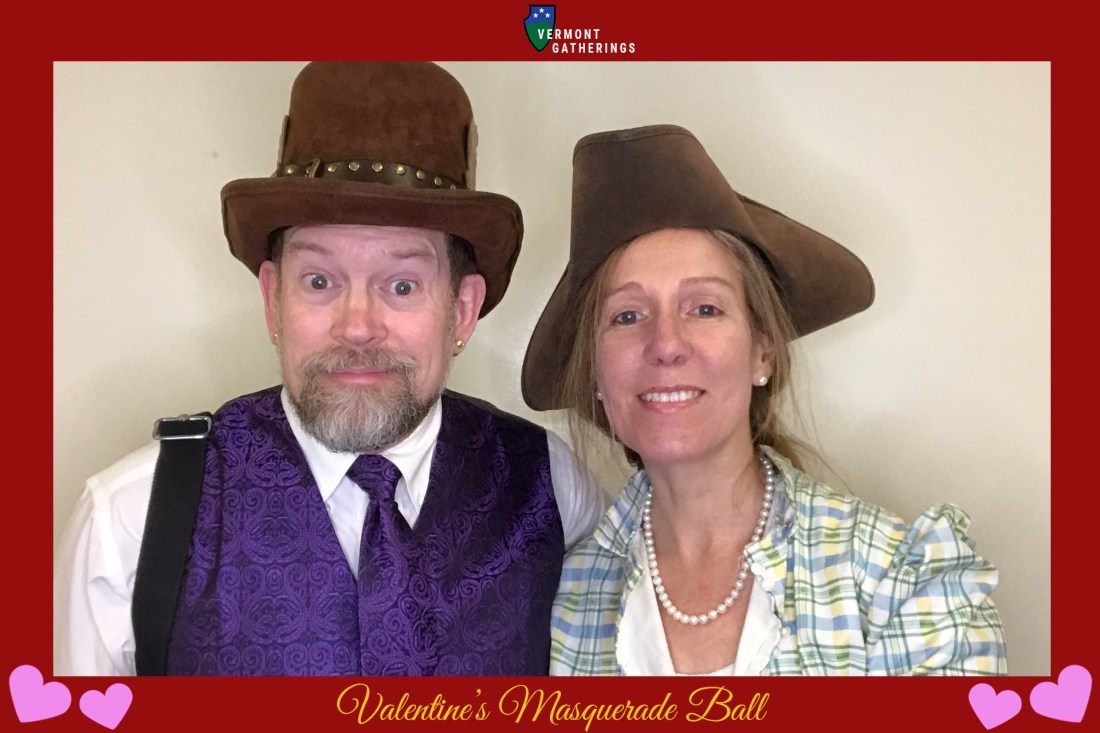
We were invited by a friend, who stood us up.
We were told it was a steampunk event, or at least put on by steampunk people. It was just a ‘masquerade ball.’
There wasn’t much to it.
I ate too much because I was bored.
But we look cute.
We were invited by a friend, who stood us up.
We were told it was a steampunk event, or at least put on by steampunk people. It was just a ‘masquerade ball.’
There wasn’t much to it.
I ate too much because I was bored.
But we look cute.
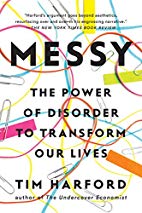
Messy by Tim Harford
This book’s cover features blurbs by Brian Eno and Tyler Cowen. Otherwise, I never would have thought this was a book I’d enjoy. I fall on the ‘tidy’ end of the spectrum. I didn’t want to read a book about how the most awesome, brilliant, and creative people in the world all have/had sloppy desks. Not only is it not my world – it tends to be a boring kind of book.
But – despite the requisite chapters about sloppy desks and messy workplaces, this book isn’t about how you really should dis-organize your space so much as it’s about the sometimes (!) beneficial effects of disorder in general. The first chapter on Brian Eno’s “Oblique Strategies” sets the tone; to get people to be more creative and motivated in the studio, Eno created a deck of cards with suggestions of off-the-wall things to think about or do. He’d periodically pick a card, and suddenly everyone was instructed to try to “Think like a gardener,” or all trade instruments.
There’s a chapter about a crazy military commander or two, who’d keep the enemy – and sometimes their own men – just bewildered enough to allow the most improbable victories to be snatched from the jaws of defeat. There’s a chapter about the famous “Building 20” at MIT, an ugly pile of cinderblocks with an unorganized disarray of offices, which nevertheless was a hotbed of scientific discovery and invention in the 20th century.
So it isn’t about dividing people into messy vs. neat, so much as it’s about how helpful it can often be when things DON’T follow the expected path. Harford encourages us to appreciate rather than rue the Oscar Madison that lives in all of us. Some (!) disorder is good for you; it shakes you up; you function better; it’s real life. The book flowed well (dare I say it was well organized?); I always looked forward to returning to it each day. I’m a fan!
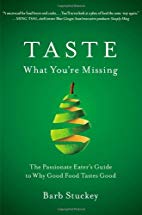
Taste What You’re Missing by Barb Stuckey
This was fun. It is full of little “science experiments,” however, that might interest your eighth grader, but just get annoying to page through. They are along the lines of, “Puree different foods and add food coloring to make them all the same color, and put them in unlabeled jars. Hold your nose and taste them. Can you tell the difference?” Not very profound.
The takeaway: Slow down for Pete’s sake! Eat every bite with rapt attention. She’s a food lover. Her perspective is an interesting one, too: she isn’t a chef or scientist, but works in the food industry, making food taste better. Yup, adding aromas and artificial flavors – she doesn’t go into what distinguishes ‘natural’ from ‘artificial’ flavors, unfortunately.
So, bottom line, I could have learned more. But there were some share-worthy anecdotes along the way, and reading about food from a food lover is always the next best thing to eating food!
| Items |
| Provider |
| Red Swan Bush Bean |
| Cylindra Beet |
| Napoli F1 Carrot |
| Dwarf Green Curled Kale |
| Breen |
| PLS 14 Shelling Pea |
| Cider Jack F1 Pumpkin |
| Schwarzer Runder Radish |
| Ronde de N. Summer Squash |
| Orangeti F1 Winter Squash |
| Matt’s Wild Cherry Tomato |
| County Fair Blend Zinnias |
| Dwarf Jewel Bl Nasturtium |
We are addicted to Sudoku. Black pens, colored pens, white-out pens litter our house like junkies’ needles; grids and worksheets foul every surface. There’s Sudoku in the Burlington Freeps & Sudoku in the Seven Days – we scrounge every one we can lay our inky hands on; buying books isn’t enough to satisfy our cravings. Xopher no longer surfs the internet; my fiber equipment lies unused. It’s Sudoku, Sudoku, Sudoku, broken up only the occasional sumoku, calcoku, or kenken. Stay tuned for the inevitable journal of recovery: “Off the Grid: My Year Without Sudoku”, coming soon.
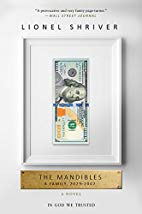
The Mandibles by Lionel Shriver
∗∗∗∗∗
I was absolutely mad about this modern-day, black-humored GRAPES OF WRATH. It’s 10 or so years in the future, and the dollar implodes, leading to a nationwide economic collapse. We follow one family’s step-by-step decline into utter destitution, in the wider setting of New York City’s descent into lawlessness. But trust me, it was no dystopian downer; it was funny and riveting.
My five-star feelings only began to quaver after the portion set in the 2030’s ended, when we fast-forward into what I initially thought was, and then thought SHOULD have been, a brief coda, set another decade or so into the future. The action only sagged here, in basically one scene, where the characters who were the teenagers during the collapse are now disaffected young adults unable to hold my interest. As this portion of the book went on, I was grossly disappointed – ending with the 2030’s section was EXACTLY where it should have ended, I felt. BUT — she did pull off a good enough ending to make the too-long coda worthwhile. So I stick with 5 stars.
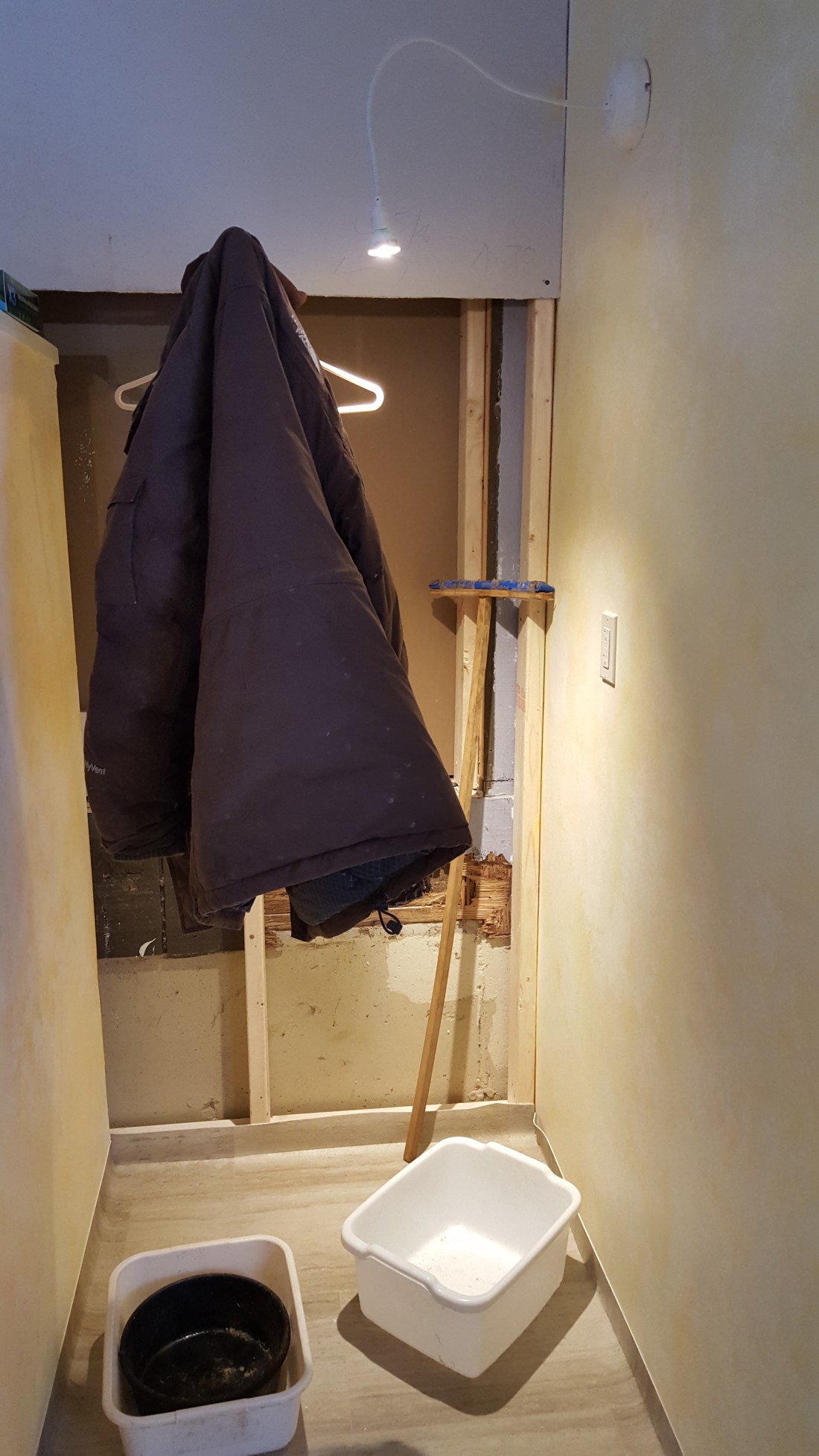
The mudroom now has electricity, a variety of lights, and baseboard heating.
This makes a tremendous difference.
Above, you can see Xopher is already making himself at home. This is the site of a future util-a-tub. Hopefully plumbing work will happen this week. That’s the last major piece to be done; then it’s just furnishing and fixing and finishing.
Strangers Drowning: Impossible Idealism, Drastic Choices, and the Urge to Help
by Larissa MacFarquhar
This book was put together in a creative way; it wasn’t just philosophy and it wasn’t just case studies, it was both, but interspersed chapter-by-chapter, sometimes multiple chapters of one followed by one chapter of the other, or vice versa.
MacFarquhar is fascinated by extreme altruists, or as she likes to call them, “do-gooders.” She interviews a wide variety of them and lets them tell their stories, sometimes directly with their own words, sometimes through her. In between, she ponders what we owe to others vs. ourselves, and how we each answer that question differently, and what we lose – as well as gain – when we put others’ needs above our own. “Others” in all these contexts means those who are neither ourselves NOR our family members, nor even our friends, acquaintances, or neighbors – the do-gooders chronicled here are all dedicated to helping strangers.
Personal interest: One case study involved a family that adopted 22 children, hailing from none other than my home state, in Barre, Vermont.
Enjoy her interview here with Tyler Cowen:
View at Medium.com

It’s good, and not hard if you’ve got a food processor to rice the cauliflower.