New word I made up.
Are you well slept?
Are you slept at all?
Often I am more like sleptish.
New word I made up.
Are you well slept?
Are you slept at all?
Often I am more like sleptish.
by Helen Joyce
This book should have been shorter and more balanced. That said, it states some things that desperately needed stating. Pediatric transitioning now seems more disturbing to me than ever.
Something that has always bothered me about our current understanding of trans identity, that I don’t think I’ve ever seen explicitly stated elsewhere, is that it seems to think gender is definable by the most culture-specific, superficial things – i.e. liking pink and liking dresses makes you a girl. Joyce discusses how being trans is explained to children: “You nod along to descriptions of restrictive gender norms, hoping for the right conclusion: that nobody need conform if they do not want to, and that there is nothing wrong with boys playing with dolls or girls playing with trucks. You long to hear that girls (or boys) are people with female (or male) bodies who behave however they damn well please; instead you hear that girls (or boys) are people who behave in feminine (or masculine) ways.”
Naah, just some good eatin’.

I might go to the doctor tomorrow to see what they advise about my sacrum.
I’m getting really fatigued in the afternoons, probably from trying to do everything with a fractured sacrum.

My sacrum hurts.
My head hurts.
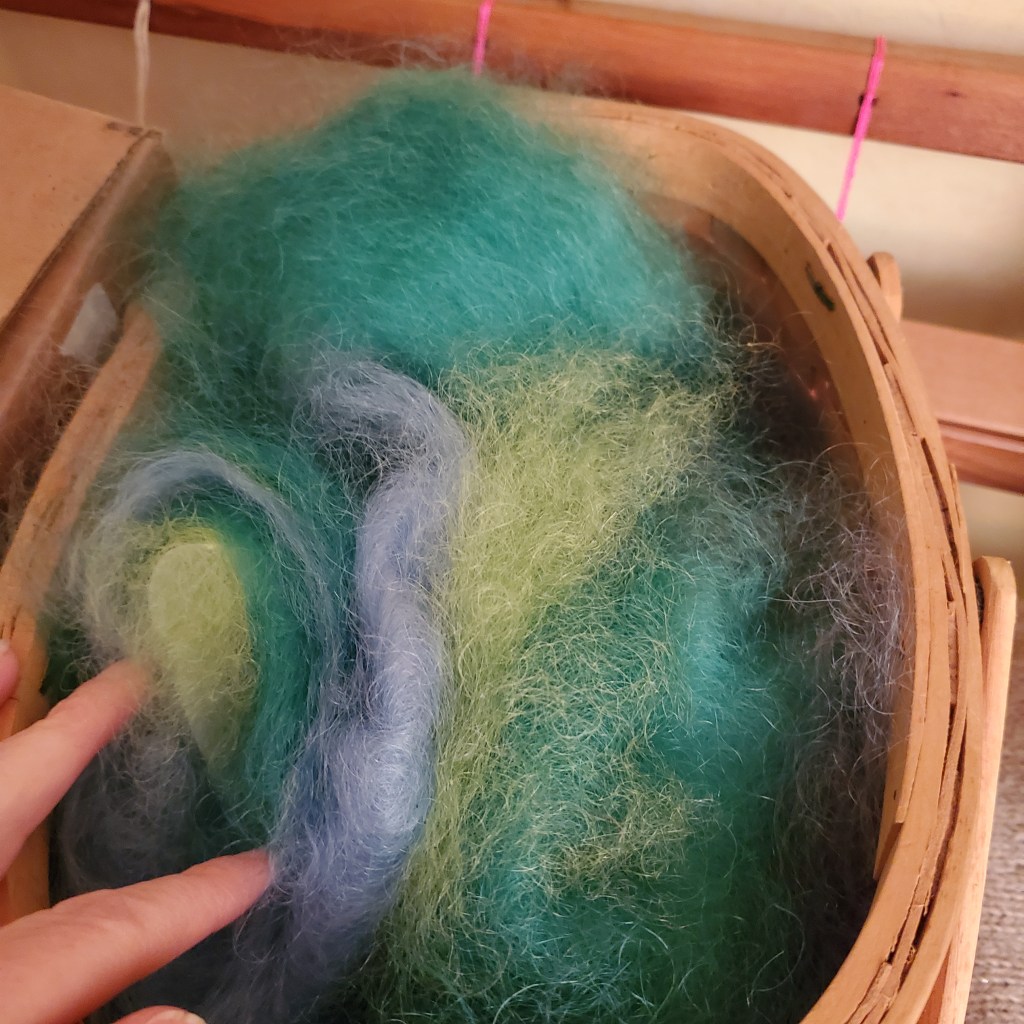
This is some of the mix I’m going to spin up next. Not too many drastic color changes this time.
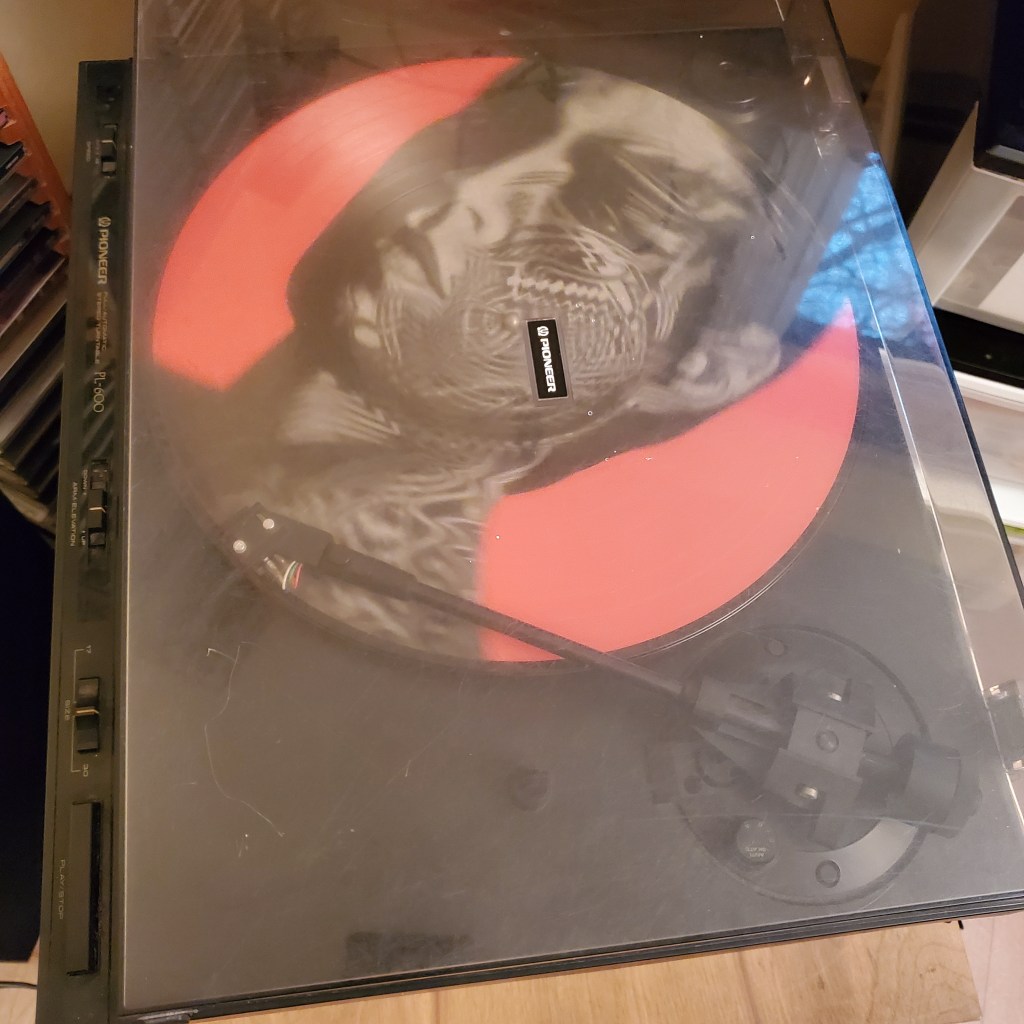
Had a lot to get done this weekend. One thing I did get was get my record player repaired, specifically the cartridge replaced. Sounds great now.
Not a great way to kick off the reading year. It was a Xmas gift.
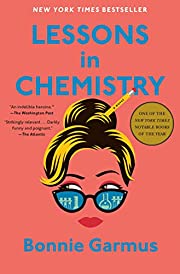
by Bonnie Garmus
Plot: Elizabeth is a woman trying to make it as a chemist circa 1960. She faces brutal sexual harassment. Her fellow-genius-chemist lover suddenly dies in a freak accident after impregnating her. She struggles to raise her baby and continue doing chemistry in her kitchen. In another freak turn of events, she lands a job hosting a chemistry cooking show. Finally, a series of unlikely events lead to the explanations behind her dead lover’s horrendous childhood.
Books that don’t feel true to the period drive me up a wall. I grew weary picking up my phone to fact-check all the anachronisms. A sampling:
Second annoyance: one of my favorite tropes, the Bratty Kid. Granted I mostly liked Madeline, Elizabeth’s bastard child who is a 4-year-old kindergartener through most of the book. I’ll buy that she’s precocious and accept some over-the-top examples for comic effect. But I didn’t buy how everyone treated this 4-year-old as a tiny adult, not just her mom.
Thirdly, when we got glimpses into how Elizabeth actually conducted her inexplicably wildly popular cooking show, I wished the author would have left it up to our imaginations. Her explanation of the difference between ionic, covalent, and hydrogen bonds, trying to compare them to relationships, was not only ridiculous, but bore only the flimsiest relationship to cooking.
Finally, eh. It just wasn’t a serious book and had too much parenty crap for my taste – I don’t mean the Elizabeth-Madeline relationship, more all the crap about Elizabeth and Calvin’s parentage and pasts. The most common chick-lit climax of all… “And the mother/father really WAS…. [drumroll]” This is a book to toss.
I donated these hats.
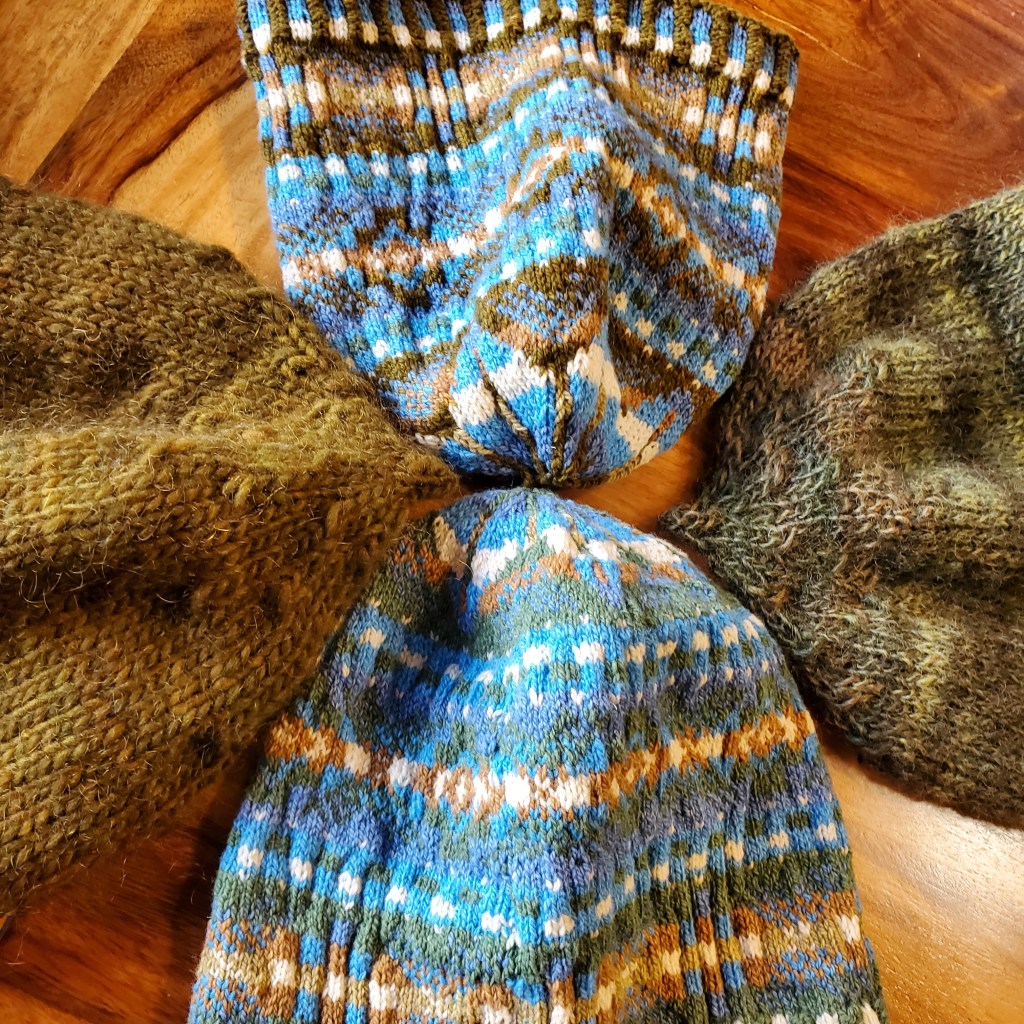
I made some batts out of this.
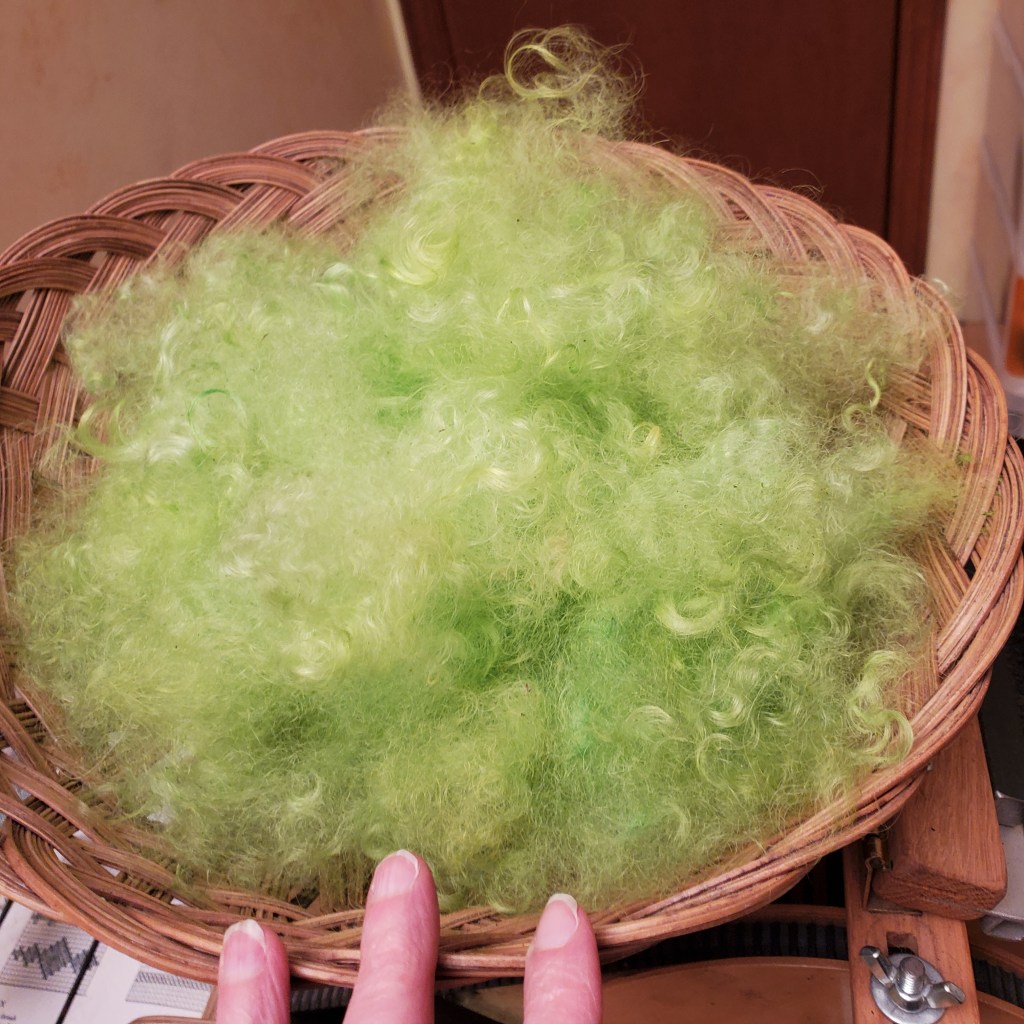
I’m in a poor mood… I hate Tuesdays. Luckily there’s a cure for that.
Yes, I squeezed one last book into 2022 making for 58.
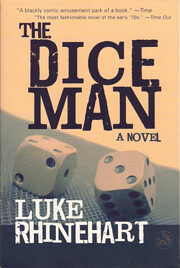
by Luke Rhinehart (pseudonym)
The fantastic premise and story is overshadowed entirely by the raunch and ugliness in this 1971 novel. I’ve read CATCH-22 and CUCKOO’S NEST which bear some similarity, but the level of misogyny here was disgusting, and I can overlook a lot. I quit halfway through – but changed my mind and decided to see what would happen.
Psychiatrist Luke Rhinehart is bored with his life, so one night he decides to roll some dice to tell him whether to rape Arlene, family friend, colleague’s wife, and upstairs neighbor. The dice say to do it. So he “rapes” her (she wants it).
Exhilarated, he starts applying dice throws to other decisions in his life. Things go crazy quick. He feels he has stumbled upon a deep psychological discovery:
“It was the goddam sense of having a self. What if – at the time it seemed like an original thought – what if the development of a sense of self is normal and natural, but is neither inevitable nor desirable? What if it represents a psychological appendix: a useless, anachronistic pain in the side?” Soon he has given up control of his entire life to the dice.
After he’s done this for some period of time, the thought of going back to pre-dice life frightens him. “I thought of writing that from then on all dice decisions would be recommendations and not commands. In effect, I would be changing the role of dice from commander-in-chief to advisory council. The threat of having ‘free will’ again paralyzed me; I never wrote the option.”
His wife at first has no idea what’s going on, only sees him going crazy; feels she’s going crazy herself seeing him swing from loving to distant seemingly on random whim (actually on random dice throws). One day the dice tell him to leave her and the children forever. It’s the hardest thing they have ever told him to do (worse than rape and murder) but he does it.
Another woman he takes up with demands, “How am I supposed to enjoy being with you if I feel you can go ‘poof’ at any minute from some random fall of a die?” “Everything may evaporate at any instant,” he retorts. “Everything! You, me, the most rocklike personality since Calvin Coolidge: death, destruction, despair may strike. To live your life assuming otherwise is insanity.”
I kept reading for the insights like this. And I went back to it after I quit because it really was a gripping story. At once point, when the dice tell him to murder someone he knows, he makes a list of 36 people and asks the dice to tell him who. His wife and kids are on the list. (Why does he put these horrible things on the lists in the first place!?!) I found myself actually covering the end of the chapter with my fingers so that I couldn’t accidentally see the name of the victim in advance. That’s a gripping story.
Another book it reminded me of, and maybe was trying to emulate, was LOLITA, in its first-person unapologetic wacko humor in the midst of disgusting subject matter – but in no way shape or form does it ever approach the literary quality of that classic.
Full disclosure, I am someone who has used random number generators to decide things like what to eat. NOT whom to murder, though.