Dearly beloved, we are gathered here today to get through this thing called ‘life’…. Prince
I have a terminal disease called ‘life’ and only have about 47 more years to live. Let’s make the most of it.
Dearly beloved, we are gathered here today to get through this thing called ‘life’…. Prince
I have a terminal disease called ‘life’ and only have about 47 more years to live. Let’s make the most of it.
57 books read this year. If I get bored enough today, it might end up at 58.
2019: 57
2020: 59
2021: 61
but who’s counting.
Best non-fiction and best overall:
How to Change Your Mind by Michael Pollan
Best fiction:
Gotta go with Willful Disregard by Lena Andersson.
Year in review outside of the covers:
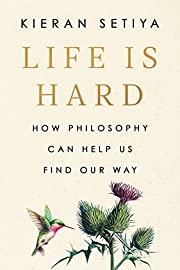
by Kieran Setiya
Felt a bit like a bait-and-switch. I was expecting a book with a focus on the hardships of life, perhaps with lessons about acceptance. But while the chapter titles lead us off with the various types of “hard” we’re likely to encounter through life, the conversation quickly shifts to general philosophy and pop psychology. And little of that conversation was genuinely compelling or enlightening. I did bookmark this interesting tidbit, though – Setiya is quoting somebody else, a historian named Keith Thomas, on the topic of friendship in early modern England – “friends were valued because they were useful. One did not necessarily have to LIKE them.” Ha! I never heard such an analysis; I guess it makes sense, if you think about how marriage used to be much more of a social contract based on utility rather than a way for fulfilling love matches. Maybe friendship was similar… not based on any bosom-buddy kind of feeling, but more of a mutual aid society.
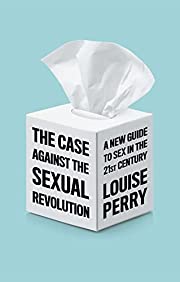
by Louise Perry
Provocative! Contrarian! Convincing? Partially.
Let’s put it in a nutshell: women lost something when we gained the Pill and the ability, nay expectation, to go around fornicating without repercussions (or so it seemed). Because contraception fails, and is not always used, women risk ending up with the life-changing experience of pregnancy without the societally ensured expectation of an ensuing marriage or means of support on the part of her paramour. Because men are bigger and stronger than women, women end up in situations where they can be overpowered and assaulted when they attempt to exercise their sexual freedom. Because (more controversially now) biology has built women to invest their emotions in sex more than men do, we just plain don’t reap the same rewards as men do from promiscuity. We have gained freedom, eliminated the stigma of out-of-wedlock birth and divorce, and these are no small things. But were they worth it?
The chapter titles give you a flavor:
This last chapter I thought would have and should have formed more of the meat of the book, because it was the strongest argument. The parts I skimmed or skipped just read like a monotonous litany of case studies, the kind of non-fiction I don’t like.
6. Refuse all help
7. Make no decisions except not to do anything
8. “We aren’t close” is a great reason not to contact someone
9. Give up reading
10. Avoid
Will look for more life lessons.
Two more sleeps.
Warning, Bad Person ahead. I remember feeling this way with my own parents. Newly grateful that I never had children. Because I can be sure I will never, ever inflict this kind of thing on anyone.
Oh Tytania, you are going to grow old alone. Fuck yeah.

Splashes of jewel tone. I need to go back to subtlety.
by Sam Harris
You know I have to have a very high regard for Mr. Harris to read a whole book exhorting me to consider Buddhism and meditation. And I do. He presents an empiricist’s take throughout.
I still really need to sit down with somebody who practices these things and ask all my questions.
I guess first off, WHY. Why do you want to transcend the self in the first place? The self is all we have. Harris’ main claim however is that the self is an illusion. Well, so is free will; but do you wake up every morning and lay there doing nothing, saying, let’s see what I do today?
And if you can alter your consciousness and see that the self is an illusion, if this is a way to mitigate anxiety and bad feelings, doesn’t it get rid of the good feelings too? Why would you want to live that way?
It’s sold as a way to get off the hedonic treadmill. We are constantly chasing pleasure, avoiding pain, bounced around among our emotions, seeking something that can never be permanent. Yup. That’s called the HUMAN CONDITION. The pursuit of happiness… it’s what life is ABOUT. I don’t get why you’d want to spend the effort fighting human nature, eliminating the joy that comes from achieving goals and looking forward to the future and looking back at happy times, in exchange for some steady state of emotion-free selflessness.
I know I’m not getting it entirely. That’s why I need to sit down with somebody.
I really do appreciate Harris’ efforts here. He is against every form of faith-based religion and claims nothing that is not empirically testable. My readings here and elsewhere about meditation and psychedelic use have ‘opened my mind’ a bit – to the extent I actually can read about Buddhism and meditation without running away screaming (much).
One exercise I did enjoy much was about “having no head.” You can’t see your head. Try pretending you don’t have one. Just pretend for a moment, don’t dwell on it. Look around. How does the world look? Douglas Harding: “This hole where a head should have been, was no ordinary vacancy, no mere nothing… It was a vast emptiness vastly filled, a nothing that found room for everything: room for grass, trees, shadowy distant hills…” Trippy. Drawing of headlessness by Ernst Mach:


A little greenhouse Xopher has going in the mudroom. Wasn’t planned. Just things here and there he wanted to keep alive.