Why Do I Follow Recipes?

003.jpg

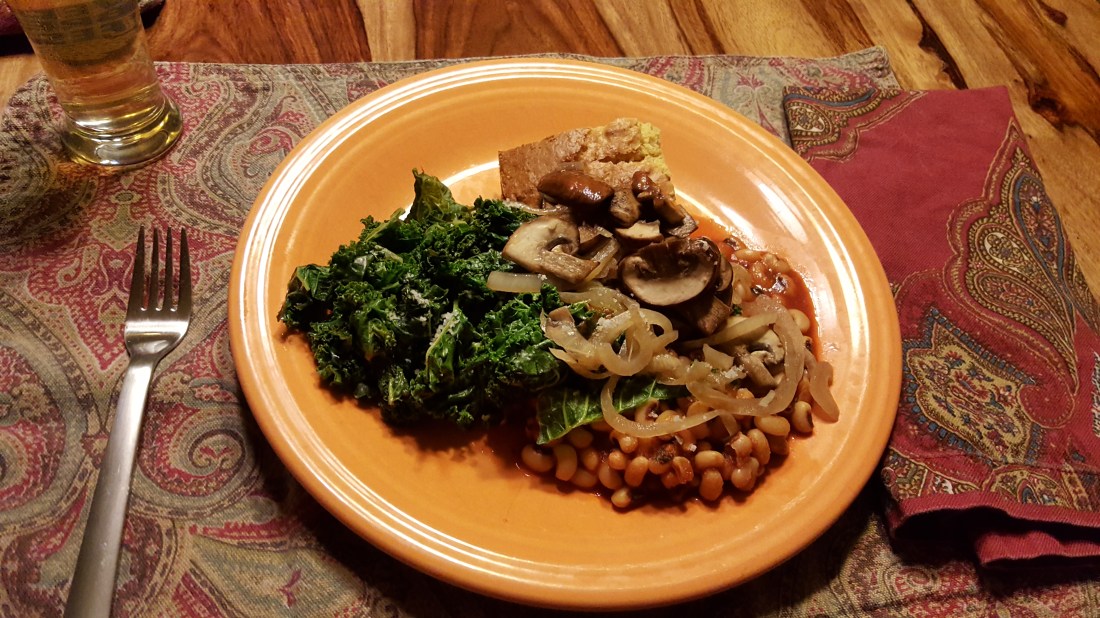
It’s six o’clock, I enter the kitchen and take out the recipe for black-eyed peas I had printed out – the source was “Forks Over Knives,” a vegetable-forward publication.  I begin slavishly following the directions because that’s how I roll.  I find myself spooning tomato paste and other ingredients into a pot of water and dried black-eyed peas that have soaked since last night.  Then I realize… tomato paste?  You’re not supposed to try to cook dried beans with tomatoes or anything acid!!!  They won’t cook!!!  Those IDIOTS.  Now look what I’ve done.

I let them cook for an hour, finding other stupidities throughout the recipe as I looked harder.  Why is there only salt at the end!?  What fat am I supposed to “grill” these onions & mushrooms in, anything!?  Etc.

The beans did pretty much cook, though they certainly weren’t creamy.  I took it upon myself to salt and spice everything in sight and add butter to the onion/mushroom thing.

No more stupid recipes!  Don’t I know how to cook by now?!


Double Book Corner 2019.49-50

I made it to 50.

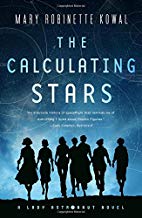
calculatingstars

The Calculating Stars  by Mary Robinette Kowal

Disappointing. It got off to such a strong start. A meteor hits in 1952 off the coast of Maryland and literally wipes out DC and much of the eastern seaboard. The heroine and her newlywed husband are in the Poconos when the blast hits, and they get themselves to safety in time to survive the aftershock. They are both scientists and can do calculations and know what to do and when to do it. They get to their private plane and the heroine pilots them to an air force base in the Midwest – the war has recently ended and they are both veterans as well as scientists.

I loved the matter-of-fact way both of them responded to the disaster and how she was every bit as calm and smart as he was. Unfortunately this was not the tone that persisted through the rest of the book. We dealt a lot on the heroine’s anxiety problems; and the husband’s perfection in the eyes of the first-person narrator, his wife, became tiresome. Of course he was always handsome and brilliant and handsome and chiseled and handsome in every situation. Their innuendo and the way they couldn’t keep their hands off each other got annoying quick.

The story certainly brought home the impact of sexism on STEM-happy females during the post-war era. I felt the situations and reactions on this front were realistic. However, the book’s forays into the similar injustices of racism were very difficult for me to accept because I couldn’t get over the not-period way that characters talked about it. People were referred to as black. I’m sorry, but the word used back then was “Negro”, or sometimes “colored.” At once point, the phrase “men and women of color” was even used by a character! I couldn’t get over this glaring error of tone, and faithlessness to the alleged period.

I got a little skimmy by the end of the book. I knew it would have a happy ending and I just wanted to get to it. ( )


problemwitheverything

The Problem with Everything by Meghan Daum a.k.a. My Twin

I’d read Meghan Daum’s THE UNSPEAKABLE and found I could not be impartial about it, because it was like she was talking out my own brain. I felt the same way throughout this book, except for the parts about her divorce (I am still married). So I guess I can’t be impartial about that, either, in an opposite way – because it is so NOT part of my brain. The parts about her divorce were the least interesting, and I’m just glad they weren’t dwelled on any further than they were.

Spoiler – if there’s such a thing as a spoiler for a book of personal essays – the last paragraph is the best: “The problem with everything is meant to keep us believing, despite all evidence to the contrary, in the exquisite lie of our own relevance. What a gift. What a problem to have.” Maybe it’s not much of a spoiler, because I guess you have to read the whole book to understand it.

The problem with everything that Meghan wants to complain about most in this book comes down to “toughness.” She was born in 1970, I in 1969. We grew up wanting to be tough. Adult. “Kids today,” however, almost seem like they revel in being vulnerable.

We had Zoom. We had Jodie Foster and Kristy McNichol. We had androgyny, being a kid, not a little girl. Meghan hits on an interesting idea: finding out the sex of your baby before the birth didn’t become a common thing till the 80s. Maybe, once people starting finding out the gender and preparing for it well in advance, with pink/blue parties and nurseries, this had something to do with the return of little princess girly girls. We weren’t all tomboys, but no one in my generation wanted to be a princess. (“Kids today!!”)

This plays into the main topic which is the problem with feminism (as well as everything) today. There’s no room for being “tough” anymore; it seems we are supposed to be the opposite, and raise a big complaint about everything no matter how micro.

But back to my life! The first chapter is about the woman who used to protest pornography back around 1990 in NYC, manning a table with a big poster of a woman being fed through a meat grinder. I remember that vividly, in Grand Central Station! Meghan describes her as feral, kind of insane. I agree. I was anti-pornography back then, but the one time I tried to engage her, she talked right through me.

Meghan lived my life. “To be 20 years old in 1990 was, as far as I was concerned, to own the world.” “I practically skipped to the office every morning.” Construction workers would whistle at her/me “because I was 20 years old.” She talks about re-entering the city now as a middle-aged woman. “Now that I had returned, it was as if my 20s were being handed back to me in used condition.” I feel that way on every return visit.

I just can’t be impartial about this book. Five stars for being me. I hope you continue to publish my thoughts in book form, Meghan. ( )

Origins

In 1989, Alice was in her late 50s and a successful author of children’s books.  Her brother had encouraged her to try this new service called Prodigy, which provided “online” news, features, and electronic mail or “e-mail”.  It proved to be a good resource for keeping up with her siblings and their families.  There were also “message boards” on various topics, including one for writers.  Alice began participating in this message board; and she posted to it looking for advice when she found herself wanting to write some scenes into her next book about Dungeons & Dragons, about which she knew next to nothing.

Cut to the headquarters of Prodigy in White Plains, New York.  A 20-year-old college student works there in a part-time job as a tester.  She has a lot of downtime, and she spends it reading the message boards, basically all of them, since there aren’t that many.  She sees this author’s query about D&D.  She’s played it maybe twice, didn’t like it.  But since she’s got downtime, and she’s got opinions, she responds.

When this story unfolded into legend, Alice would tell everyone that my response was simultaneously utterly charming and utterly unhelpful.  But that response quickly blossomed into a daily correspondence, or daily meaning every day that I was at work, since that’s where the “e-mail” was.  We easily chatted every day I was at work, sometimes several times per day.  I told her all my problems.  Alice was interested in people and interested in helping, so she advised me.  I had no one to look up to in my life, so I listened.

So there was a period where I was away from work, probably some holiday period, for a longer time than usual.  Alice said that her husband Larry found her at the computer looking a bit listless and forlorn.  He rubbed her shoulders and said jokingly, “You miss her, don’t you – your ‘daughter’.”  When I returned and Alice told me about the exchange, she said that Larry was right, she had missed her ‘daughter’; but since we looked way too dissimilar to ever pass as mother-daughter, we should perhaps adopt each other as aunt-niece.  That’s how she became my Aunt Alice.


Alice McLerran

alice

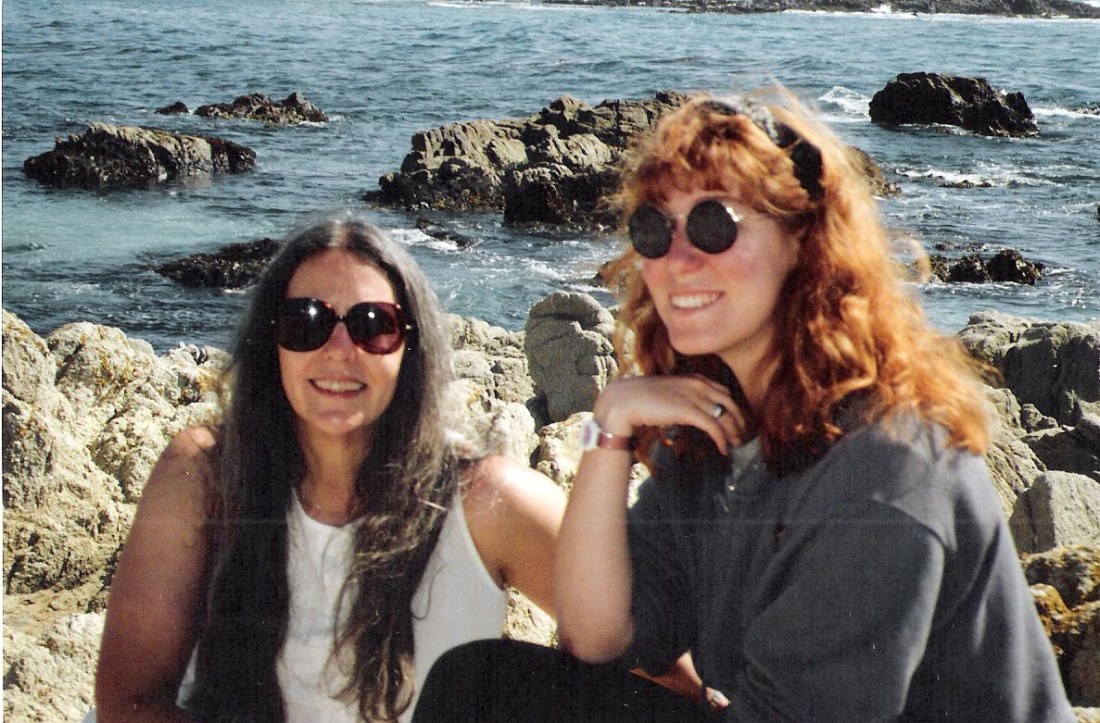
Aunt Alice and me when we met in 1990.

Alice lived a live filled with travel and adventure; and everywhere she went, she managed to meet the most remarkable people.  Some were no doubt truly remarkable; others had remarkableness thrust upon them by Alice herself.  It will forever have been my great fortune to have been one of those people – in the latter camp, of course.  I was not and am not remarkable; but in her eyes, I was.  I will never quite understand why she chose me; but she did, she chose me to love and adopt as her niece, and it changed my life forever and for better.

Aunt Alice passed away yesterday after several years of living with dementia.  I think it was early 2015 when I received my last email from her, her correspondence having already started to become confused and rambling.  I’ve missed her these years.


S’E2S’E Dye Job

This isn’t the S’E2S’E project I’d planned on doing today.  I had a 4-ounce bag of Clun Forest raw wool I was going to wash and dye.  I dropped it into the wash water…  noticed it seemed to have poop pellets in it.  Possibly a lot of poop pellets.  Then I noticed the locks were extremely short.  I thought of picking all that poop out of that wool, and then fussing with the little locks that I would barely be able to hold between my fingertips as I tried to flick them.  Then I thought of how I was not going to enjoy one moment of this project.  Then I double-checked the price on the bag, not that it matters, and it was four dollars.  I thought, I could just dump this out on the ground and forget about it and the lousy four dollars I spent on it.  And I did!

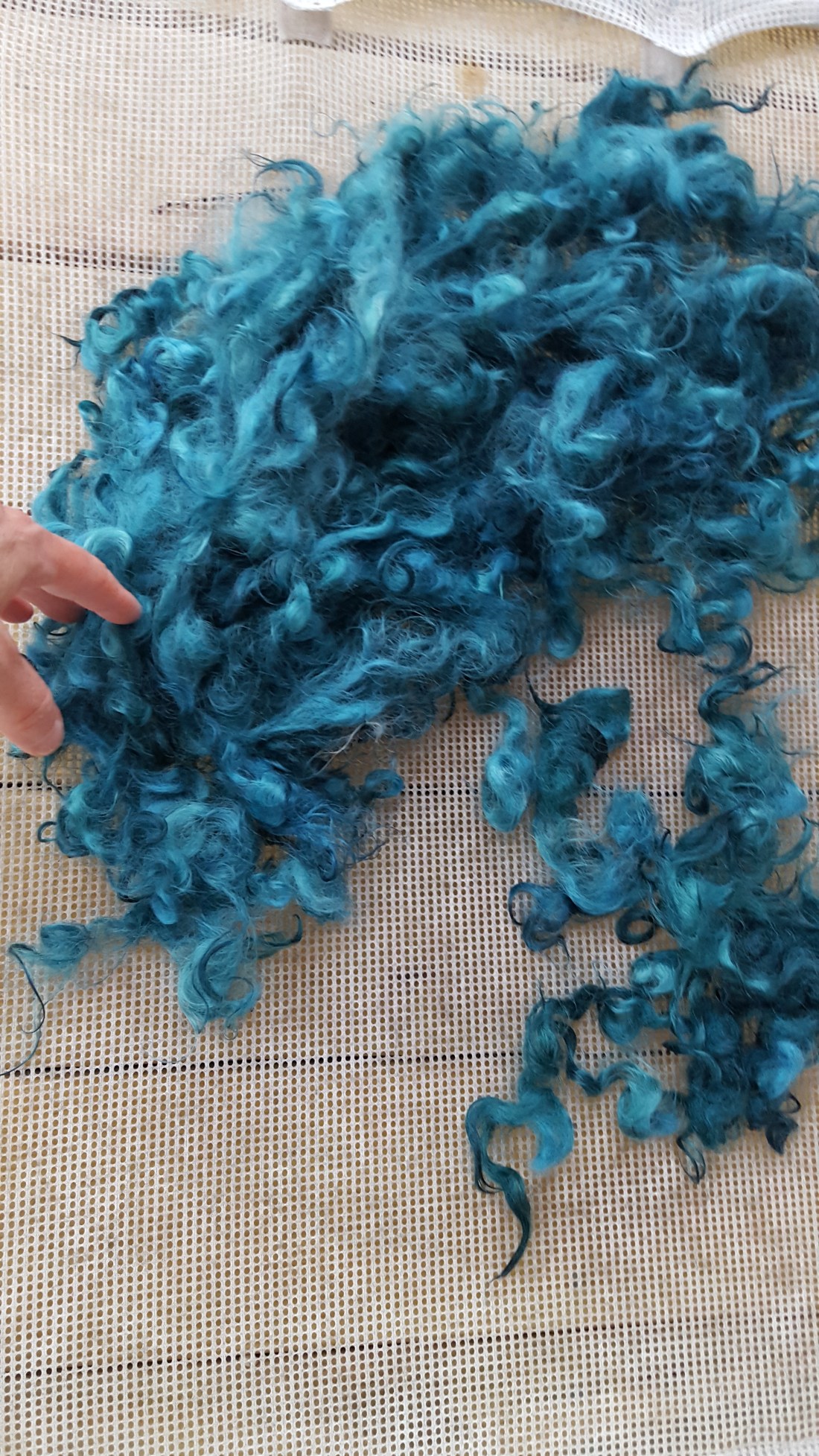
I took out another little satchel of S’E2S’E, also sold to me aw raw wool, but in much, much better condition.  That is what you see here; it is Lincoln Longwool – LONGwool, I emphasize.  I am going to enjoy this one.  Looks like mohair, doesn’t it?

015.jpg

Book Corner 2019.48

0062390996_01__SX142_SY224_SCLZZZZZZZ_

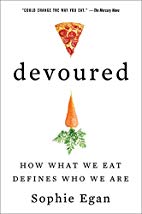
Devoured by Sophie Egan

A book of essays and small bites about how “we” eat in this culture and time. “We” here is really millennial office workers, I’m afraid, and that’s the biggest downside to the book. Sophie Egan is a millennial San Franciscan, and she writes about the culture she knows. It was still fun; lots of the observations are universal. I am amazed to learn that Carl Jr.’s pop-tart ice cream sandwich actually has fewer calories than other items on its dessert menu; or should I say, the disaster that must be Carl Jr.’s dessert menu has many items with more calories than a freaking pop-tart ice cream sandwich.

Egan is at her best clueing us into fun trivial like the above. But she should have gotten out of her milieu a bit and researched eating habits among even slightly older people or people in circumstances other than that of a freelancing writer or tech startup minion. ( )


Shave ’em to Save ’em Continues

009.jpg

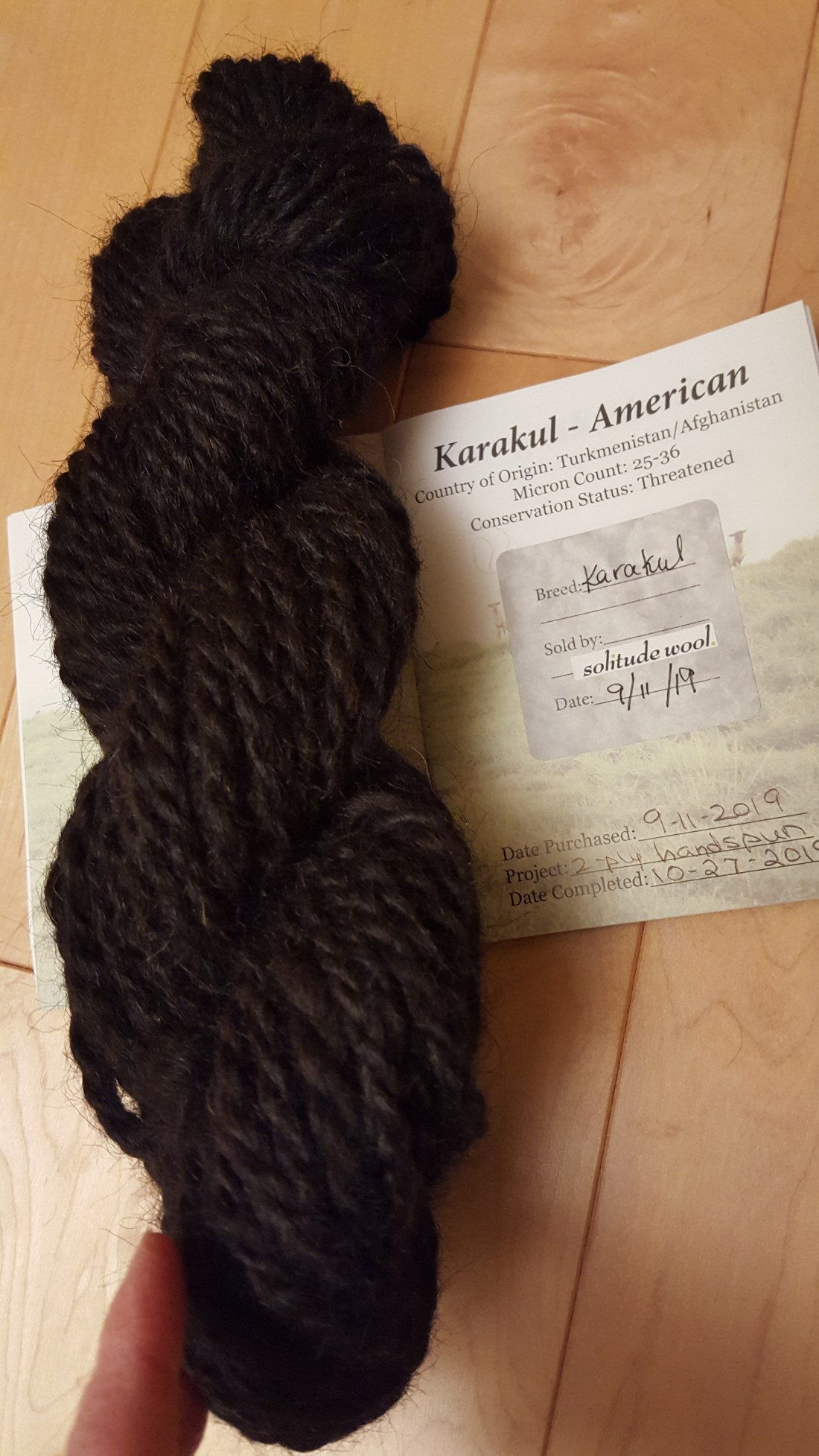
I wasn’t going to stop at just a tote bag!  I aim to entirely fill up my S’E2S’E passport.

I was never so happy to see a project end as the above.  Short little hairs that just got EVERYWHERE the moment you breathed near the fiber.  It was all short.  And coarse as hell.

It does make everything else on my fiber plate feel like a breeze in comparison.

The project is working.  I’m learning about fiber.  Avoid karakul.


Just Another Weekend

007.jpg

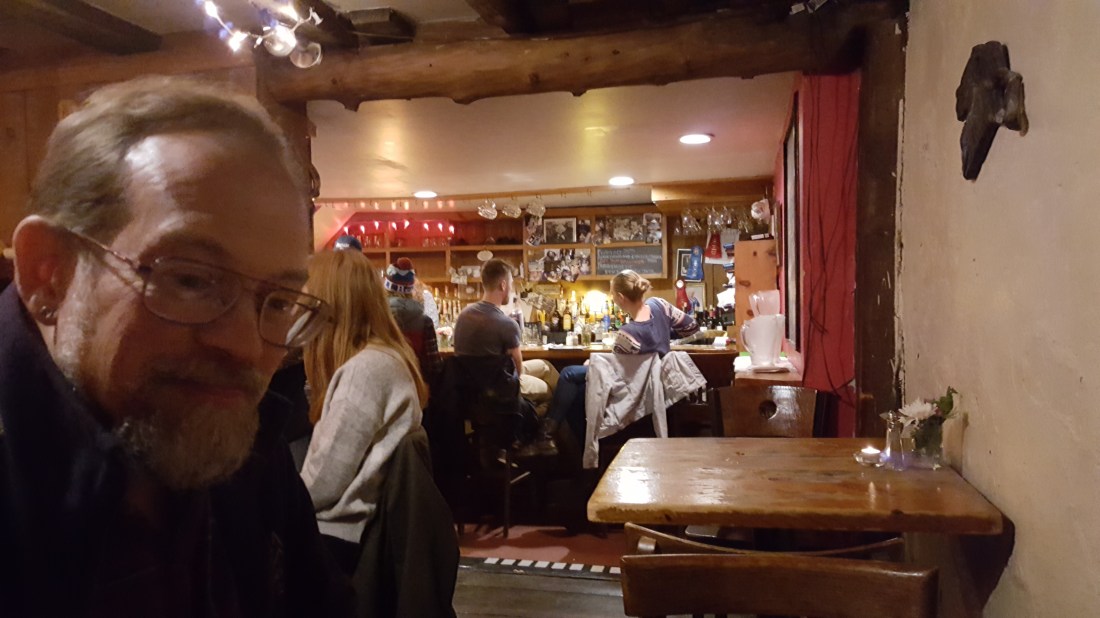
This is X, obviously, last night at the Skunk Hollow Tavern in beautiful Hartland, Vermont.  That is NOT me in the background behind him; it’s someone else with excessively long, straight red hair.

X likes tavern-type places.  I prefer exotic cuisine, but I like to make him happy.

Today my father has been on my mind, gone four years today.  I went and did my shopping, and I greeted everyone the way he would have greeted them.  I bought a lot of everything, because he always bought a lot of everything, because, “this way you have it.”  You can’t argue with that.