

Like Pete Townshend/Roger Daltry: Who’s Left
Columbia, Zowie, Ramona, Beatrice, & Janet, from left to right
Like they’re posing for an album cover.
Like Pete Townshend/Roger Daltry: Who’s Left
Columbia, Zowie, Ramona, Beatrice, & Janet, from left to right
Like they’re posing for an album cover.
The kitchen inventory continues!
The frequently used utility drawer:

The less frequently used utility drawer:
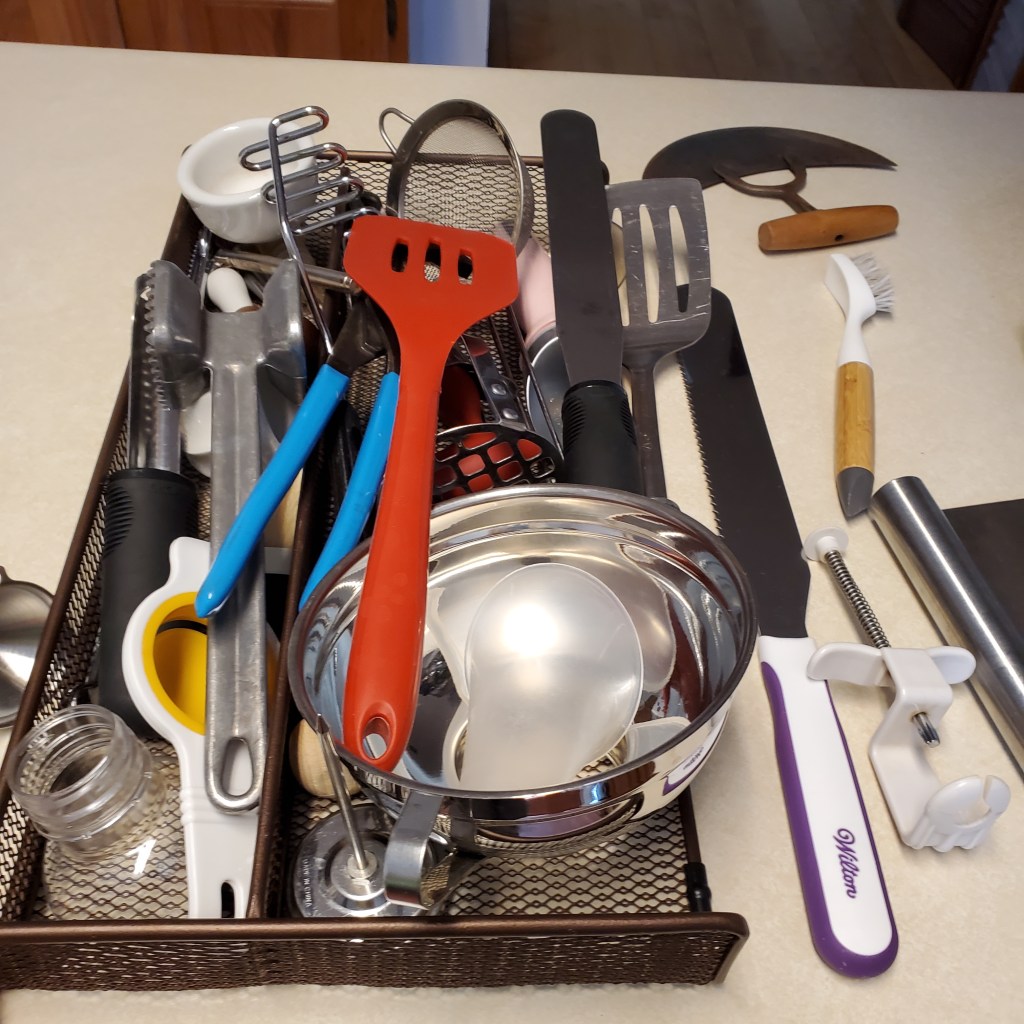
I have Marie Kondo to thank for the fact that things are not much, much worse than they are.
And who or what do I have to thank for some of the plastic things you see here… none other than the Kitchen Kaboodle! When I started my first job, in 1990, and had my first apartment, people on the street corners downtown used to hand out fliers, and I used to take every one of them, because everything was new and exciting to me. One outfit was selling kitchenware through these fliers. Just what I needed – I had a new apartment, and I needed EVERYTHING! One week it was ovenware, another week it was knives, and one week it was the Kitchen Kaboodle! An array of plastic utensils – literally an array, as it also came with a handy plastic stand, labeled “Kitchen Kaboodle.” The stand is long gone. Many of the items are gone… from my possession, that is; plastic is never gone. And some of the items are still in my possession. Very happy memories.
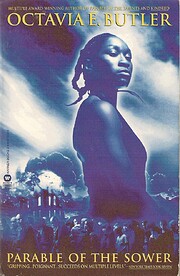
by Octavia E. Butler
Such wonderful theology, such a wonderful main character. I wish it hadn’t been embedded in such a horror movie.
Cannibalism, burning people alive, relentless killing. It reminded me in that sense of Geraldine Brooks’ YEAR OF WONDERS, which was about the plague. There you had people suffocating in pig manure, someone carrying around a dead baby till its head fell off… same kind of thing, has me reading with steel guardrails around my brain so as not to actually internalize anything.
So about the good parts! Theology! God is change. Your job is to do your best to mold that God to serve your ends.
Main character! It’s all led by a supernaturally strong young African American woman. She is the sower. She calls her religion Earthseed. Each chapter begins with some of her “verses”. “The only lasting truth is change. God is change.” “Create no images of God… The universe is God’s self-portrait.”½

From a few nights ago. It made such discrete lines of color.
If you can keep your head when all about you
Are losing theirs and blaming it on you
Head kept.
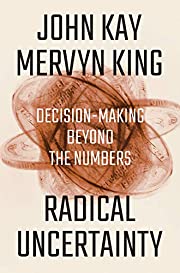
by John Kay & Mervyn King
How did I like this book? Well, I’m not certain.
HA HA HA. It was OK, but it sure seemed to be saying the same thing over and over again for 433 pages and a lengthy appendix: Most situations in life involve a radical uncertainty, rendering them unsuitable for statistical modeling or probabilistic forecasting.
Of all the chapters basically saying the same thing from different perspectives, my favorite was “Evolution & Decision-Making,” which leads with a quote attributed to SF author Bruce Sterling: “Computation is not thinking… You are much more like hour house cat than you are ever going to be like Siri.”
To quote further the beginning of the chapter, “Behavioural economics has identiifed a raft of ways in which humans depart from axiomatic rationality. These behaviours are described as ‘biases,’ signs of human failure… It is as though God had given us two legs so that we could run or walk, but made on leg shorter than the other so that we could not run or walk very well… We are not defective versions of computers trained to optimise in small-world problems, but human beings with individual and collective intelligence evolved over millennia.”
That’s basically what it’s about, although this is the only chapter with an evolutionary bent; it’s all about how ‘real-world’ problems are nothing like ‘small-world’ problems that researchers come up with in the lab.
So take heart! You aren’t a broken machine. You’re an exceedingly smart house cat!
Also memorable, in the chapter “The Use & Misuse of Models,” was a brief historical overview of the collapse of the cod industry in Newfoundland. “The [Dominion] Fisheries Office developed complex models on which its recommendations [for total allowable catch] were based. But cod stocks continued to decline. For the year 1992, the total allowable catch was set at 145,000 tonnes. That proved to be the last year of commercial cod fishing on the Grand Banks.” The authors do not lay responsibility for this solely with the modelers, of course, but maintain that their ‘evidence’ ended up justifying the policy of “greedy fishermen and mendacious politicians” rather than actually protecting fish stocks. This example of mismanagement by model struck me enough to read up on the subject in Wikipedia, where the sad story can be read in more detail: “Over 35,000 fishermen and plant workers from over 400 coastal communities became unemployed… Newfoundland has since experienced a dramatic environmental, industrial, economic, and social restructuring, including considerable outward migration.”
Something of a detour from the main idea of the book; but one example of how the illustrations and anecdotes chosen by the authors are very powerful and well conveyed. Sorry to detour on the detour, but listen to a “No More Fish, No Fishermen,” a song on this topic I heard long ago on public radio and never forgot.
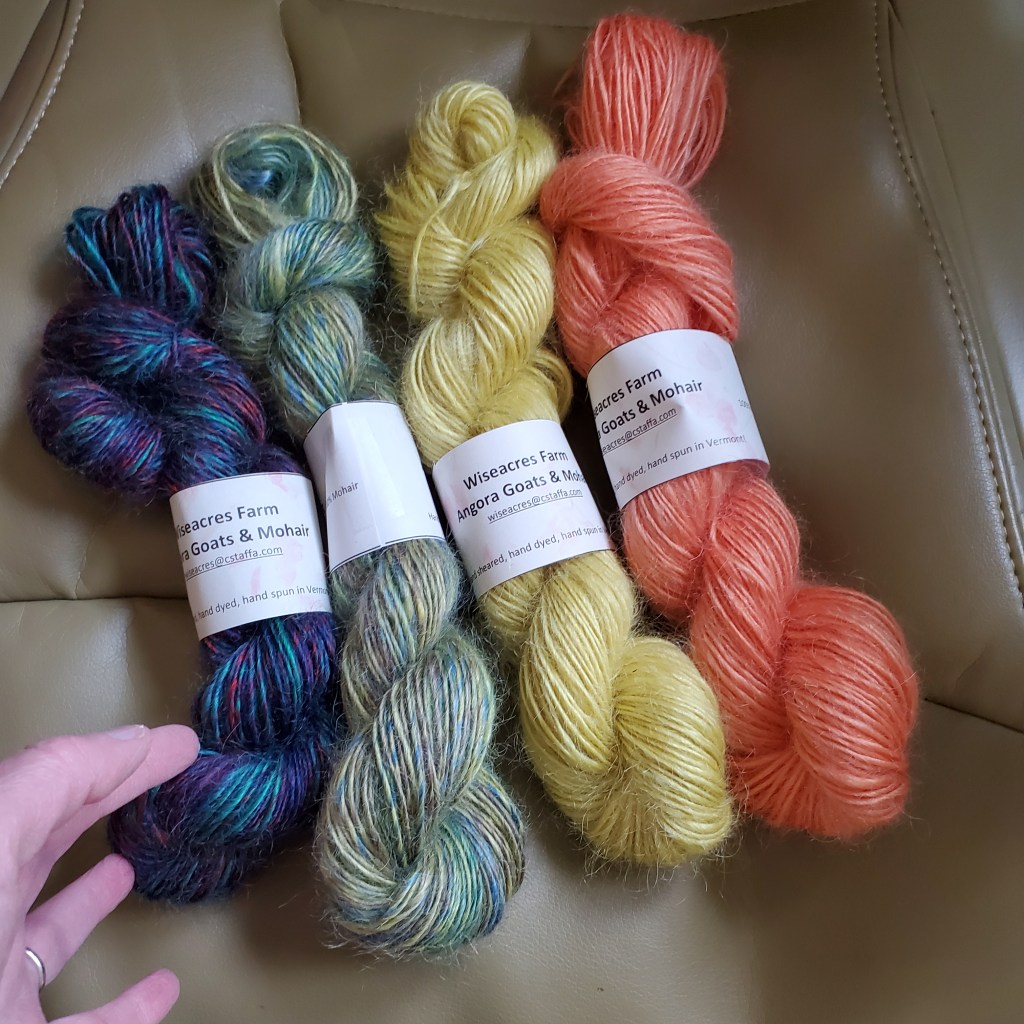
Occasionally I have a few minutes between dinner & collapsing where I feel motivated enough to listen to a podcast and make order out of chaotic goat hair.
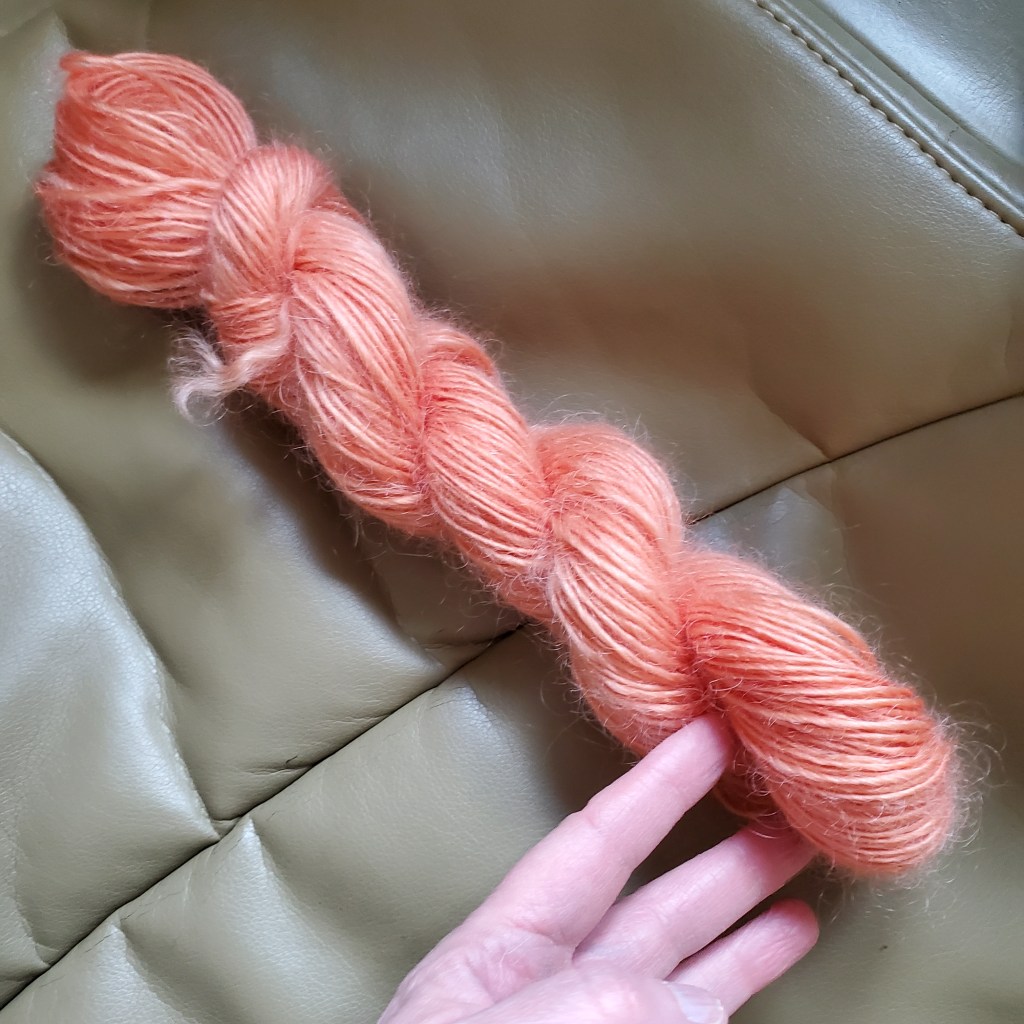
Makes a whopping four I’ve got ready for consignment:
If you can meet with sleep and with insomnia
And treat those two impostors just the same
—
I feel like my whole life is work and trying to sleep.
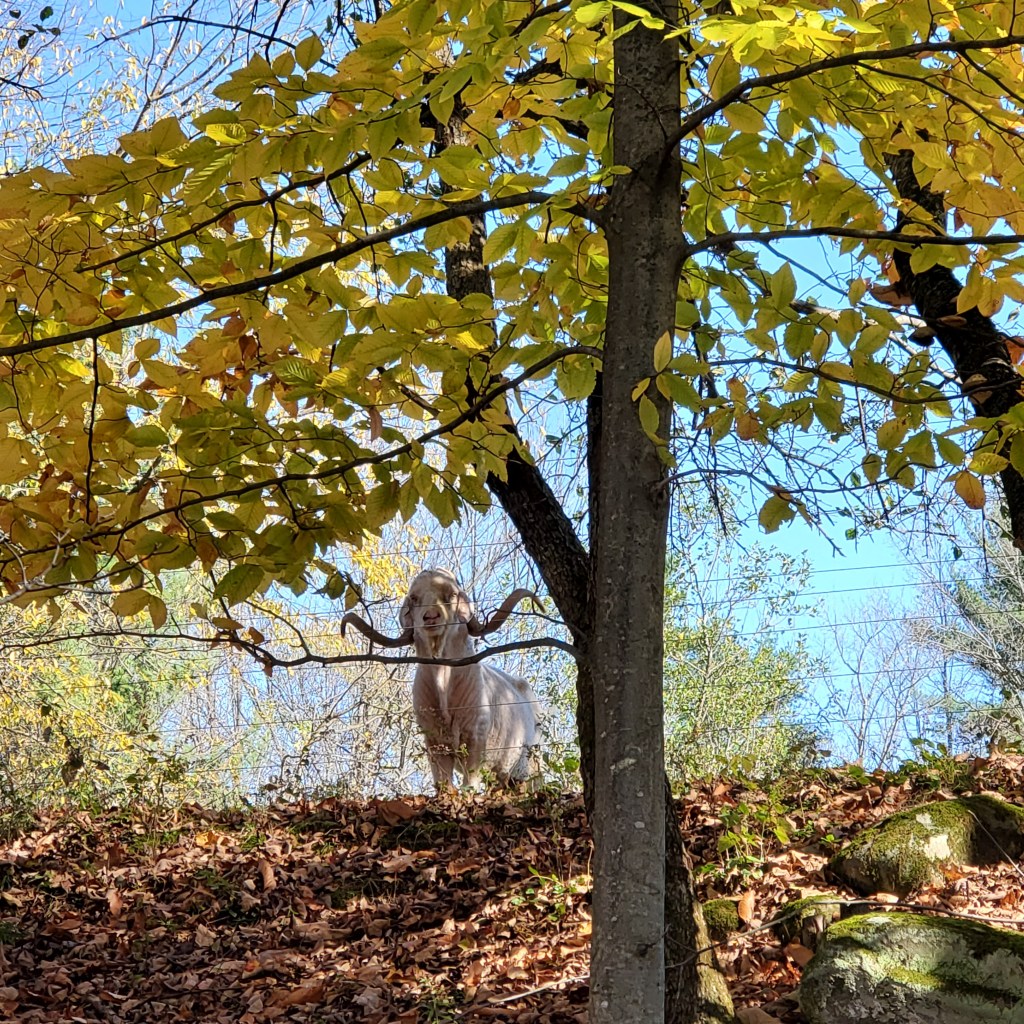
We got Florestan as a kid in 2011 from Grandview Farm in Washington, VT. They were getting out of angora goats; they’ve since become very successful with Gotland sheep. They had two buck kids for sale. His brother, I recall, had some more reasonable name, like Fern. For whatever reason, we chose Florey.
He grew into a behemoth, as you can see. Sara used to refer to him as “Buster.” He got mean. I blame Xopher for the way he socializes buck kids. 2 out of 3 times we had a long-term buck, twice they turned out mean, and those were times we got the buck as a kid. X “plays” with them and I think he teaches them to challenge us.
So it was just the way he was raised. He was mean, and he hurt us from time to time, but he was only being himself. He wasn’t a bad goat. Just smelly and ugly and mean. And I MISS him, dammit.
Yesterday in that well-known journal of philosophical studies, popularly known as the AAA magazine, I came across this: “Expectations are the great enemy of happiness.”
But what my esteemed colleague is neglectfully discounting is this: Expectations are so often a source of happiness, in and of themselves.
And consider another of his points: “Travelers with fewer expectations… maintain an attitude of radical acceptance, open to whatever comes their way, good or bad, and as a result have more authentic encounters with the great big world out there.”
For many of us… or some of us… or at least one of us, though, this radical acceptance affords a novel joy for only a brief period of time, with happiness soon giving way to a sense of aimlessness. Then pointlessness. Then futility. Then we are dealing with a full-on depressive episode.
Do not discount the fact that purpose and drive can be true sources of happiness. “Authentic” even.
Three things you can’t make yourself:
 Tytania