Sunshine in my eyes can make me blind
Too cold to hang outside, snow on the compost. Kid not due for another week. No goat chores. But loads of sunshine streaming through the windows. Just me and my toys in my playroom rediscovering all my Stones albums.
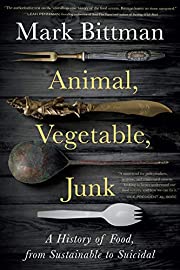
by Mark Bittman
What a contrast with my previous food read, Resetting the Table. I had a feeling I was being swayed too much towards buying this book based on the title. It is not my style at all; it’s just one bad thing listed after another. Everything that has ever happened to our food system since the dawn of history has been bad – did you know that? I don’t care how many facts may be in it; I never find unbalanced works like this to be educational.
I thought that midway through we would finally shift gears towards directing the barbs merely at the junk food industry, but the general negativity towards all modern agriculture never ceased.
I would love to get Bittman and Paarlberg together for a debate. Here are just a few ways they would explicitly part company:
– Normal Borlaug, leader of the “Green Revolution.” To Bittman, he “virtually ignor(ed) what was traditionally grown” in his blind zest for bringing in chemical fertilizers and pesticdes.
– Whether organic farming yields would fall far short of levels that could effectively feed the world’s current population – Bittman calls it “a moronic argument”.
– Whether Alice $100-a-plate, I-never-step-foot-in-a-supermarket Waters has anything of value to teach us about food systems
I had to rub my eyes in disbelief when I read this on page 243: “Although it’s immoral and cruel, and overseen by mostly immoral and cruel people – only a few of whom were sadistic masterminds – the [food] system is largely the result of incremental decisions…” What?! People who work in modern food businesses are “mostly immoral and cruel”? “Mostly”! You might think the majority of them misguided. But “immoral” and “cruel” are some really nasty words to depict “most” people overseeing an industry. (  )
May 14.
Unfortunately X’s appointment is a little behind mine, and he’s looking around May 26. So some of these where I want his company are now dependent on X-Day rather than V-Day.
These dreams are starting to enter the realm of real, actual, honest-to-dog possible occurrences…
V-Day + 1:
Make appointment for haircut & eyebrow wax
Plan date for southwestern road trip (dependency: Maggie)
Order new carpet
X-Day + 1:
Make reservation for Trattoria d’Elia
Make reservation for Single Pebble
Plan date for North Carolina (dependency: Xopher)
X-Day + first available weekends:
Go to Montreal. (dependency: border is open)
Go to VPB
Go to Pizzeria Verita
Go to Doc Ponds
Go to random restaurant!
July:
Go to Cirque du Soleil (dependency: it still exists)
September:
Go to Acadia/Bar Harbor
March 2022:
Go to Virgin Islands

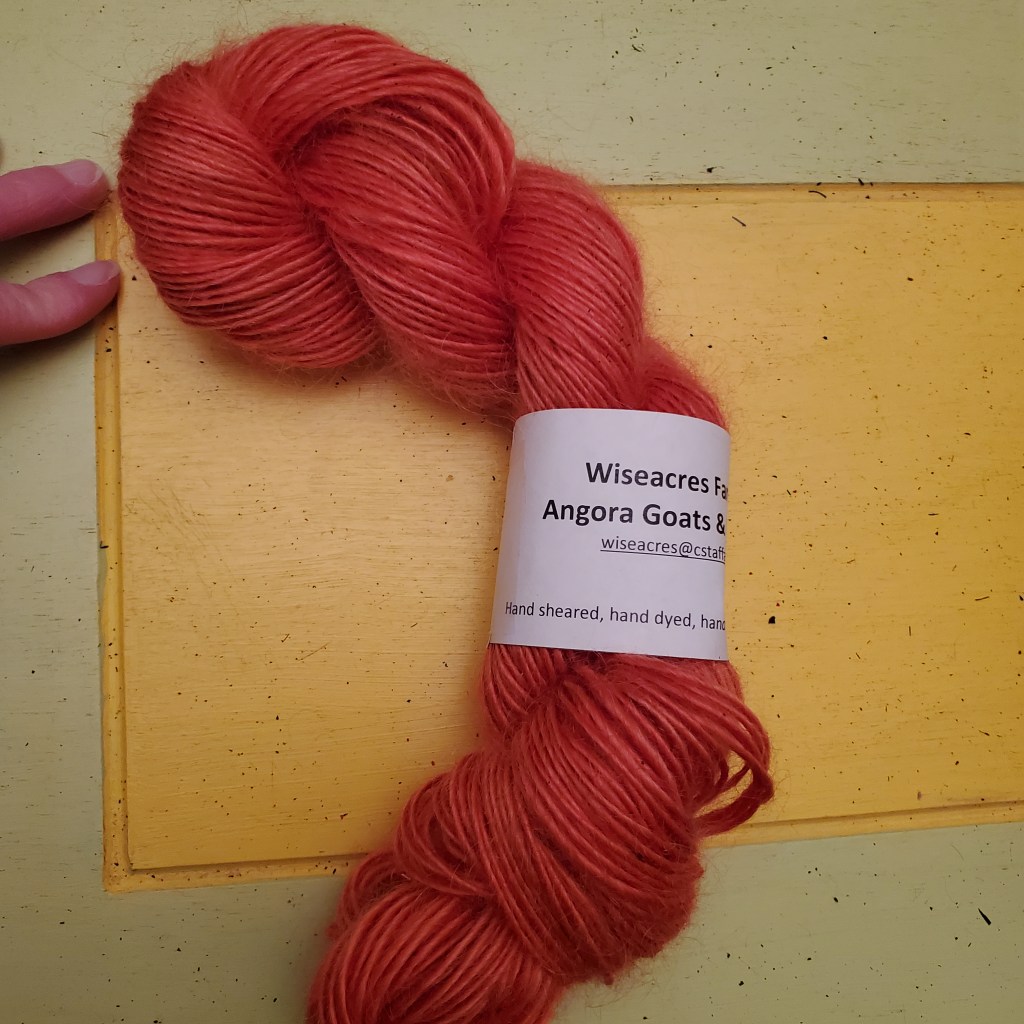
The few, the proud, the appreciators of orange.



While I’m not the spitting image of either of my bioparents, I think I pass easily as a mashup.
I keep trying to find words for it all, but I can’t.

Needles in groups of five = white pine.
A rare double-shot, so maybe somebody can actually do an entire small project out of my stuff.

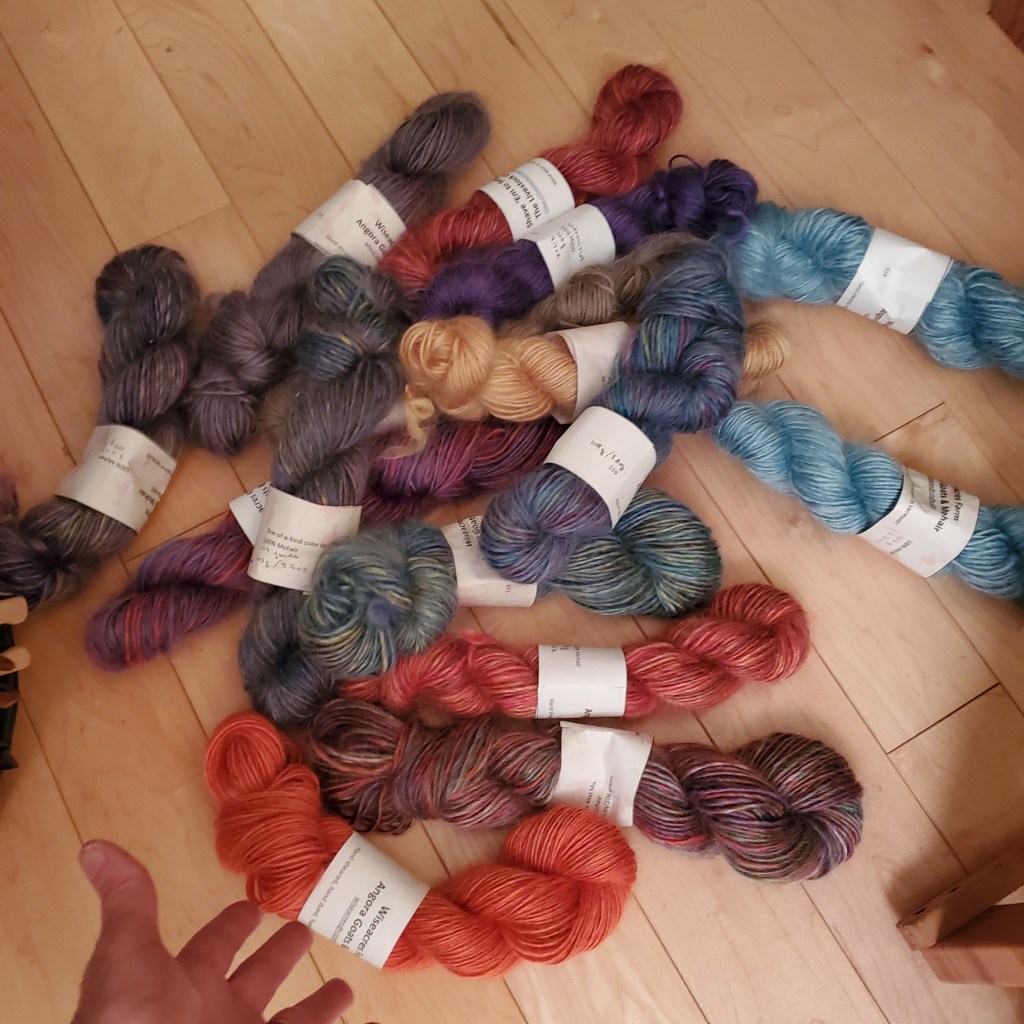
That makes 14 pandemic yarns.

I have to give a shout-out to this book. I purchased it on a whim at L.L. Bean in Ellsworth, ME on vacation. I’ve since read the entire thing, slowly. What makes this book special is a couple of things:
a) It is not a guide you are meant to flip through when faced with an exotic species of tree. It’s meant to be used the opposite way – read about a tree; then, when you go outside, try to find examples of that tree. Preferably not while driving – I’m afraid this book has semi-permanently altered my road attentiveness for the worse. But that’s my only complaint about it. Also, note that all the trees in the book will be common to our northeasterly region of the U.S.
b) The book has absolutely no dependency on foliage; hence it’s useful year-round. Lord knows foliage can be in short supply for what seems like an endless majority of the time up here in the great often-white north. No, instead the book relies on bark, trunk, twig, & situational identifiers.
You’ll also learn that the most common trees of the region are the red maple, as far as deciduous; and the white pine, among the conifers.
I haven’t fully digested most of the details, yet. But I can now recognize sugar maples and elms by their shapes; and aspens by their two-toned trunks; beeches by their foliage clinginess all winter long; and birches by their peeling bark (though I cannot get the hang of telling apart the yellow, the gray, and the black – only the white birch is obviously what it is).
Also, identify white pines by their groups of 5 needles; red pines have two needles, and pitch pines three. Firs are “flat” and “friendly”… spruces are prickly.
You’ll learn so much! (  )
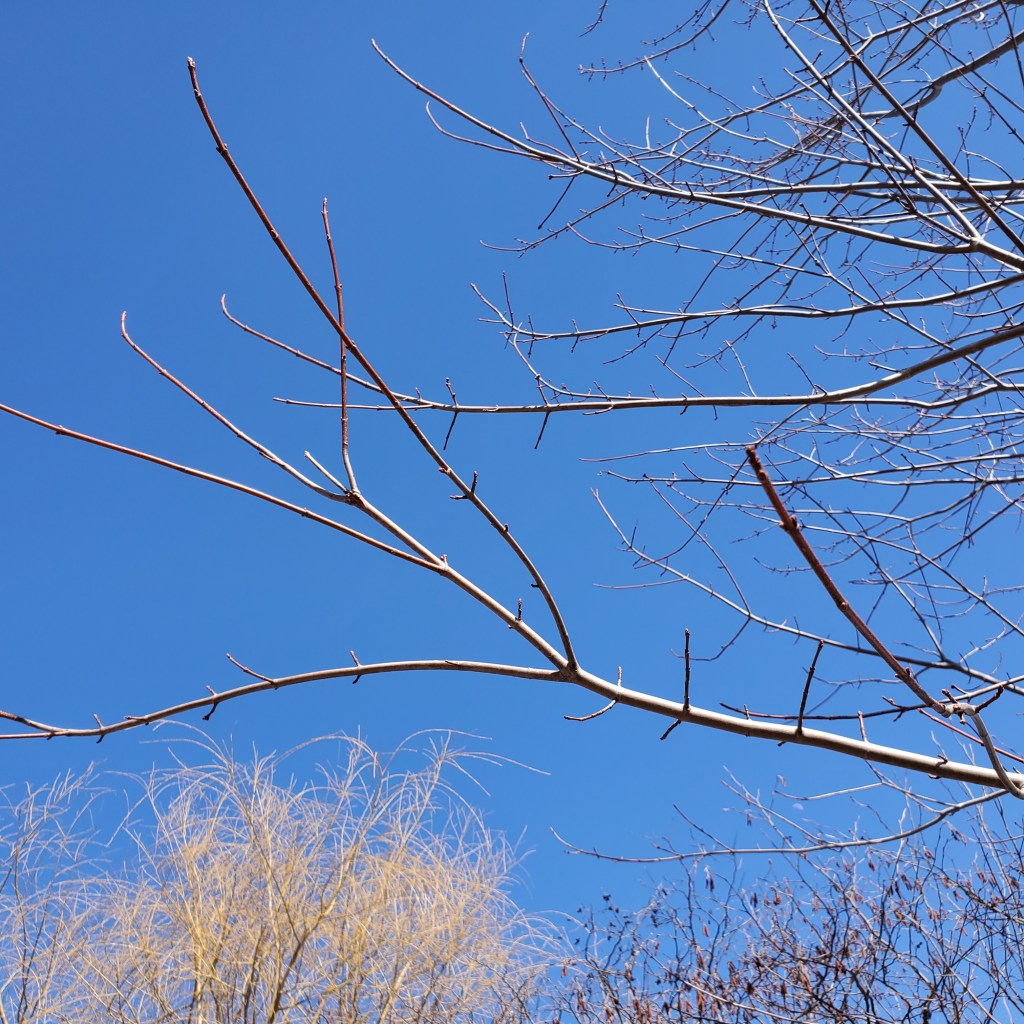
Red maple, the most common deciduous tree of the northeast; recognizable for the redness of its trunk, twigs, and fall foliage. Also, only the maple the ash show opposite rather than alternating branching. See how the twigs on this branch are always paired, directly opposite each other? Most trees will not do this.