Book Corner 2019.36

1426217749_01__SX142_SY224_SCLZZZZZZZ_.jpg

In Praise of Difficult Women by Karen Karbo

I love juicy biographies, and this was 29 delicious bit-size pieces! They run the gamut; Karbo tries to show them all as being “difficult” in one way or another. Difficult, whatever – they were all interesting and awesome. And I learned things.

Josephine Baker – how did I know next to nothing about this woman? What an amazing life!

Rachel Maddow – OK I shouldn’t admit that I didn’t know Rachel Maddow was gay, but I need to express the weird disappointment I felt at learning that. I always admired how she rocked short hair and glasses. I thought she was a really cool straight woman who rocked short hair and glasses. But she’s lesbian. So the look kind of goes with the territory. I’m sure this should be embarrassing for me not only because of my ignorance but because it surely comes off as not very homo-friendly of me, but I don’t mean anything bad by it!

Eva Peron – I didn’t know much about her either. It was worth having an earworm in my head all of the next day to read about her.

Vita Sackville-West – another learning experience.

Janis Joplin – OK, nothing new for me to learn in that department! Just always fun to read anything about her.

I could go on. Couldn’t wait to get back to this book every night. ( )

Book Corner 2019.35

0060853980_01__SX142_SY224_SCLZZZZZZZ_

Good Omens by Terry Pratchett & Nail Gaiman

A crazy slouch towards Armageddon. I’d say it was more Pratchett than Gaiman. The jokes just never stop.

It was long and rambly, with a cast of characters to match. There were some I loved every time they appeared (Crowley, Aziraphale, Anathema – her name alone has to make you love her). At the other end were some that I really found repulsive, and disliked whenever they got airtime (Shadwell). I wasn’t crazy about Newt. As for the kids, they were good kid characters, but being American with little exposure to Britain, I just couldn’t reconcile those heavy accents (and ideas) coming out of children’s mouths. E.g., “I don’t see what’s so triffic about creating people as people, and then gettin’ upset ‘cos they act like people…” This is the 11-year-old Antichrist speaking. To me it just sounds like Andy Capp or one of those dimwitted Python characters.

Yes, the Antichrist; so anyway – the purported plot of the book is that the Antichrist comes to earth but gets switched at birth, and grows up without the proper diabolical “training.” So he just turns out to be a boy with a few superpowers, and isn’t really evil at all.

Meanwhile what happened to the baby who got the training? I’m not sure. If he turned up again at all, it was extremely rarely. So I thought this was going to be a big “switched at birth”, “nature vs. nurture” kind of subplot, but it wasn’t so much.

Then there were the Four [Motorcycle] Riders of the apocalypse. I read in the afterward that this was Gaiman’s main contribution. Those portions are a little less jokey, but I don’t know, things just didn’t really come together. Everything was just kind of wacky.

If you like Terry Pratchett, I think you’ll love it. if you’re looking for more Gaiman, I don’t really see it. (A crazy slouch towards Armageddon. I’d say it was more Pratchett than Gaiman. The jokes just never stop.

It was long and rambly, with a cast of characters to match. There were some I loved every time they appeared (Crowley, Aziraphale, Anathema – her name alone has to make you love her). At the other end were some that I really found repulsive, and disliked whenever they got airtime (Shadwell). I wasn’t crazy about Newt. As for the kids, they were good kid characters, but being American with little exposure to Britain, I just couldn’t reconcile those heavy accents (and ideas) coming out of children’s mouths. E.g., “I don’t see what’s so triffic about creating people as people, and then gettin’ upset ‘cos they act like people…” This is the 11-year-old Antichrist speaking. To me it just sounds like Andy Capp or one of those dimwitted Python characters.

Yes, the Antichrist; so anyway – the purported plot of the book is that the Antichrist comes to earth but gets switched at birth, and grows up without the proper diabolical “training.” So he just turns out to be a boy with a few superpowers, and isn’t really evil at all.

Meanwhile what happened to the baby who got the training? I’m not sure. If he turned up again at all, it was extremely rarely. So I thought this was going to be a big “switched at birth”, “nature vs. nurture” kind of subplot, but it wasn’t so much.

Then there were the Four [Motorcycle] Riders of the apocalypse. I read in the afterward that this was Gaiman’s main contribution. Those portions are a little less jokey, but I don’t know, things just didn’t really come together. Everything was just kind of wacky.

If you like Terry Pratchett, I think you’ll love it. if you’re looking for more Gaiman, I don’t really see it. ( *** 1/2 )


Book Corner 2019.34

1250155037_01__SX142_SY224_SCLZZZZZZZ_

This Fight Is Our Fight by Elizabeth Warren

I don’t agree with Warren on all things. She doesn’t have a single good thing to say about business, ever; the Washington Post put it well in an editorial I just saw today about her latest proposed bill about regulating financial equity: that, typically, she was “overreaching” and “overwrought.”

For example, in the book she cites a commencement speech given by Michael Bloomberg where he criticizes the right for being too quick to demonize minorities, and the left for being too quick to demonize big business.

Her reaction is, well, overwrought. How dare he “equate” poor minorities with powerful big business? How come everyone else is not up in arms!

Because he didn’t “equate” them; not surprisingly, Warren fails to see she is a perfect example of what he’s talking about.

The book was big on elementary history lessons and rants. I wished there were more autobiography, and more of the informal case studies she starts off with. I really do like Senator Warren, respect her, and at the core of her message, agree with her – I would love to fix the system so that it works for the majority of Americans; that’s what the system is “for.” So, without overreaching or overreacting, let’s get to it! ( )


Book Corner 2019.33

0525558020_01__SX142_SY224_SCLZZZZZZZ_

Burn the Ice by Kevin Alexander

This book had a five-star introduction, which can stand on its own, about how we have to by now have reached Peak Foodieness – there are too many restaurants, too many products, too many trends moving too fast, all chasing too few dollars. He hopes his book will be a kind of “You heard it here first!”

But then, the body of the book is entirely different. He attempts to tell the story of this rise of the unsustainable fetishization of food, by means of the stories of various individuals – chefs, restauranteurs, bartenders. The individual stories don’t always go from start to finish, but are broken up in spots that feel random and scattered around. And they attempt to convey a mood of fever pitch by means of relentless lists and name-dropping, name-dropping, name-dropping. I found myself helplessly carried along in the hopes of reaching some satisfying climax and denouement, all the while saying, “I don’t care. I don’t care. I don’t CARE about these people I’ve never heard of and the exact locations of their establishments, in cities I’ve barely been to! I don’t even LIKE cocktails!”

The two chapters I liked best were like the introduction in that they could easily stand on their own as essays – maybe Alexander should in fact stick to writing essays. They were the bits about Guy Fieri, which was written entirely in the form of questions; and the Pioneer Woman, Ree Drummond. It helped that I actually know who these people are.

Ultimately there was no climax, I guess because the crash hasn’t happened yet. Why didn’t he at least have a final chapter conjecturing how it all might end? I really couldn’t help but feel ripped off. ( )

Book Corner 2019.32

0802128238_01__SX142_SY224_SCLZZZZZZZ_

Small Fry by Lisa Brennan-Jobs

Brennan-Jobs is the first daughter of Steve Jobs, born out of wedlock in the 1970s and unacknowledged by him for the first years of her life. This book is about her childhood from birth through her entrance to Harvard with a small coda that takes place during her adulthood around the time of Jobs’ death.

The book feels like a brain dump of all her memories, interesting or not. Mixed emotions are part of virtually every paragraph – her mixed feelings towards her father, her mother, and theirs towards her. Nothing congeals. Steve is a weirdo*. Her mother tries but is overstressed by life as a single mother. Lisa bats from house to house, and nothing gets better. The story lacked “narrative arc.” her childhood wasn’t bad enough for this really to stand as a “victory over adversity” novel. It’s just an inside peek at someone’s childhood, someone who happened to be related to somebody famous. It got tiresome. ( )

* See the NYTimes profile at the link.  Lisa’s mother describes Steve as “on a slide whistle between human and inhuman.”

Noodle’s Extremely Succinct Summation of the 20 Democratic Presidential Candidates Based on Their Books

Yes, Book Corner was on a little bit of a hiatus, as I undertook a little reading side project.  Kindle lets you sample books for free.  I decided to sample the/a book of each of the (then) TWENTY Democratic presidential candidates, in alphabetical order; and see if there were any that I felt I could stomach reading in their entirety.  Surprisingly, there were quite a few.  But I’m a pushover for memoir.

Note that the length of samples on Kindle varies wildly.  Sometimes I would barely get through an introduction before they’d cut me off.  Other times I wondered if I had accidentally bought the whole book.

Here are my extremely brief opinions based on mostly extremely brief samples.

Bennet – (I know, Who?) – Seems to have an interesting background with a mix of business & government experience.

Biden – idyllic 1950s Catholic childhood.

Booker – emphasis on how he “stands on the shoulders of giants”.

Buttigieg – Very interesting introduction, not about him, but about his Midwestern ex-factory town having gone bust.  This one is in my top 5 to read entirely.

Castro – Beginning is all about his Mexican immigrant orphaned grandmother’s childhood migration experience.  Wait a minute, I might have mixed this one up with Herbert.

DeBlasio – no book.

Delaney – Proud to have been voted Congress’ third-most bipartisan member!  Yay!  I’m all about the aisle-reaching.

Gabbard – Has a book… but no sample, for some reason.  It is possible the book is too short for a sample to be monetarily feasible for Amazon.

Gillibrand – Big on the feminist woman stuff.

Harris – All about her superstar independent Indian mom.

Hickenlooper – Surprisngly dull, considering he has a background in running brewpubs.  Writing style is very digressive, and the story contains lots of relationship crap about his marital troubles.

Herbert – (I know, Who?) – See Castro

Inslee – A TOTALLY different book from the others, about climate change.

Klobuchar – Midwestern Swiss grandparents.

Ryan – Mindfulness.  Ugh.

Sanders – Surprisingly one of the most interesting ones, considering I have no time for his one-note socialism  But he’s got that New Yorker-turned-Vermonter thing going on, so as a memoir, I’m into it.

Warren – Wow.  I’ll come back to this one.

Williamson – Louise Hay 2020!!!

Yang – Off topic.  WAY off topic.

And I’m leaving one out.  I forget who, someone else besides De Blasio who didn’t have a book.  Oh – must have been Swalwell.  Who’s out, anyway.

The one book I am definitely going back to is Elizabeth Warren’s.  This one’s a game changer.  I had not much interest in her before, as a candidate – I respected her Trump barbs and courage and outspokenness in Congress, but policy-wise, she just seemed like Sanders Lite.  Well, I’m hooked now.  I’ve left Team Biden – he is just going to majorly screw up somewhere along the way and lose the election, is my fear… I’m Team Warren now.  She makes me feel how lucky I am to have been born when and where I was, a time and place (and genetics and parents) that enabled me to launch myself into the middle class and beyond quite easily.  Now I see how the young and even not-so-young people of today don’t have it that easy.  I used to think it was all a big sob story…. but kind of like when I read Grapes of Wrath, this book is making me actually see the error or my ways.  Not many books do that.


Book Corner 2019.30

love.jpg

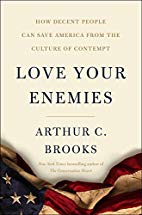
Love Your Enemies by Arthur C. Brooks ****

This message can’t get out there enough.  If there is one idea with which the whole of my being resonates, it is that compassion and understanding are the way forward from the current unspeakable mess that we have lately made of this country, which is the shame of my generation.

Brooks’ message has a lot in common with that of my boyfriend* Jonathan Haidt, of THE RIGHTEOUS MIND and THE CODDLING OF THE AMERICAN MIND.  In fact he quotes and draws on Haidt’s words and research.  I recommend the above as companion volumes, particularly RIGHTEOUS MIND.

I will be looking out for Brooks’ column in the Washington Post from now on.

* Jonathan Haidt is not actually my boyfriend.  I use this term whenever I am madly in love with a particular author’s work.


Book Corner 2019.29

elephant.jpg

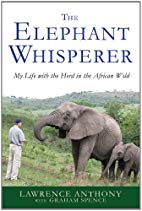
The Elephant Whisperer by Lawrence Anthony, with help

1/2

Snapshots from his efforts to introduce a small herd of wild “problem” elephants into his South African game reserve. My experiences with “problem” goats had me relating very much to many of these incidents; sympathizing wholeheartedly with members rejected by the herd and babies born deformed; and seeing the same emotions and smarts we attribute to ourselves in our fellow mammals. We’re all cut from the same cloth.

Anthony’s descriptions of ‘communicating’ with his herd do not devolve into the unbelievable or anthropomorphizing – though many of his brink-of-disaster stories do sound almost unbelievable; still, I feel they were too crazy for someone to have risked making up. His descriptions of the Zulus who inhabit the country with him are fairly even-handed; they are portrayed as individuals, but it’s always a fine line, and they do always feel a bit “other”.

Anthony develops relationships with this herd because they come to him with problems that must be overcome – they need to learn to trust him and accept his reserve as their new home. Ultimately, though, the saddest part of the book is the end where we are reminded rather suddenly that Anthony is really running a game reserve, not a petting zoo. His reserve is a place for wild animals to live wild. Thus, he develops no relationships with the newer additions to the elephant family. Presumably he does not even give names to the new babies anymore. That felt sad, but right.


Book Corner 2019.28

0552172359_01__SX142_SY224_SCLZZZZZZZ_

Happy by Derren Brown

**

This book didn’t make me happy. Frankly I skimmed a lot of it. I thought it was going to be a kind of self-help guide to applying Stoic principles to a normal everyday life. But lots and lots of it was the author’s personal feelings about fame and his weird psychoanalytic digressions on relationships. Derren Brown apparently has some small amount of fame in the UK as a magician of sorts. So we get to hear about how he feels about that. I didn’t care. Nothing he said about relationships ever really resonated with me. And when it was actually about applying stoic principles to modern life, it wasn’t the best treatment of the subject I’ve ever read, either. Still, I had some takeaways. You know how we think about what we would say if we could go back in time and talk to our younger self? Why not imagine that your older self has come back to talk to you? What do you imagine she’d say? Mine would probably say something like, “Relax, idiot, enjoy life.”