Book Corner 2019.46

096774136X_01__SX142_SY224_SCLZZZZZZZ_

The Unknown Rockwell by James “Buddy” Edgerton and Nan O’Brien

Interesting as a slice-of-life memoir of a rural Vermont childhood spanning the 30s, 40s, and 50s. I never knew or had much interest in Norman Rockwell, so the links to the famous guy were just part of the picture for me. I had to Google the images of many of the illustrations to which the author referred, not being at all familiar with them – then I discovered that many are included among the photos in the book’s middle.

For background, this is the memoir of someone who grew up next door to the Rockwell family in Arlington, Vermont. It’s written as a recollection in vignettes by “Buddy” Edgerton as an old man, with assistance from a writer. Some of the vignettes were rather dull. “That’s just the way he was” as the tag line, describing Norman, got a little old by the end. Edgerton tries to make you feel that his life really was a Rockwell painting come to life; not just because he, his family, and his neighbors were models for so many pictures, but because life really was like that. I found myself buying it; then I remembered facts like the fact that Buddy, the Boy Scout model for so many illustrations, was never a Boy Scout. What other things are left out of the story, perhaps uncomfortable things? Vermonters don’t talk about uncomfortable things – that was made very clear.

But I love memoirs, and this one will make me look twice next time I see an old Vermonter or read one’s obituary. ( )

Book Corner 2019.45

c1b8c58fabcc1d45930727a5367434f414f4141.jpg

Fatu-Hiva by Thor Heyerdahl

Xopher spotted a copy of this in a used book store, and picked it up upon noticing that it is actually autographed by Thor Heyerdahl himself, 1974! Heyerdahl was the instigator of the famed Kon-Tiki expedition in which he and others successfully navigated a raft from South America to Polynesia, to prove that Polynesia could have been first populated by indigenous Americans.

This book is about events pre-dating Kon-Tiki, when a coming-of-age young Norwegian named Thor decides he’s fed up with civilization – but unlike most teenagers, gathers the wherewithal to do something about it. He convinces his university professors and parents to aid him in a trek to an isolated part of the world where he can live “in nature” in as primitive conditions as possible. Against all odds, he also manages to find a girlfriend eager to go with him! Thus after completing their university studies, newlyweds Thor and Liv set out for the tiny spot on the map which they decided was destined to become their own island paradise; that spot was Fatu-Hiva, an island in the French Marquesas group.

And the craziest thing is, they do find their paradise; it’s just not a permanent situation. They are troubled by mud, mosquitoes, tropical diseases, and other people. But through it all were blissful days upon days where they traipsed through their longed-for garden of Eden.

They seem to find an extended period of peace and nirvana on the far side of the island, living alongside a longtime hermit and his pre-teen adopted daughter, far away from the other islanders, by the shore where the mosquitoes are few. The idyll is eventually destroyed, however… no spoilers, but it seems hell is indeed other people. That, and demon drink.

There are many pages where Thor just goes on about the beauty of nature around them, which can get a bit monotonous. His philosophy tends towards the simplistic – civilization bad, white man bad, state of nature perfect, etc. – especially towards the beginning of the story; and he tries to bend all his observations to his philosophy – diseases come from the white man, diseases would never happen when living correctly in a ‘state of nature’, for example. He seems to mature a bit over his long year on the island, however.

There is little to no sidelong mocking of the natives in this book… individuals and behaviors often get his scorn, but each islander is presented as a full human being, never a caricature. Indeed, Thor conveys his growing realization during the year that the islanders are people exactly like us, with every bit as much intelligence; he observes that we tend to think of illiterate people as childlike, which is a gross injustice and blindness. We are all human beings, doing everything we can put our minds to, given the resources before us.

But while it seemed to me that Thor was generally refreshingly respectful and equitable in his treatment of his fellow islanders, there was one exception where his behavior left me flabbergasted. He and Liv begin a collection of human skulls which they take from areas considered “tabu” by the natives. There are photos of Liv grinning happily while surrounded by human skulls. This seemed horribly disrespectful, not to mention ghoulish.

Liv was an absolute saint, by the way. By all accounts, she had all the eagerness for the adventure as did her husband; the book is by and large written in first person plural, not singular. It is Thor and Liv as a unit who discover, learn, enjoy, suffer together.

There are lots of amazing black-and-white photos throughout the book. I was truly astounded by them, for various reasons. a) Some of the photos have both Thor and Liv in them, in some remote situation – who took the picture?! b) How did they manage, through all their soggy trials and travails, to keep their camera and film with them, and dry enough to be functional? c) What faith did it take to keep taking pictures of things, with no ability – I presume! – to develop the film until if and when you or the camera made it back to civilization? I don’t know, maybe there was a Foto-mat in nearby Tahiti where they were sending things.

I found myself thinking at the book’s beginning, as the adventure first gets underway: but what about modern medicine? What about birth control? How will they keep healthy, and is Liv prepared to birth babies without assistance on an island? They never really address the latter, except one passing remark towards the end that Liv might “at any time” by “blessed” with a baby; so apparently no birth control. As for medicine, illnesses and injuries are dealt with as they came, and both heroes lived to tell their tales.

This book really did make me think about nature, civilization, and the commonness of human ingenuity. ( )


Book Corner 2019.44

1588343774_01__SX142_SY224_SCLZZZZZZZ_.jpg

Maine to Greenland  by a couple of dudes

OK, I skimmed some parts. But it’s mostly a photography book and I read all the photo captions. I read the chapters on Maine, Newfoundland, and southern Greenland with particular interest. I was disappointed there was nothing at all on New Brunswick or Nova Scotia – the title led me to believe we’d be visiting all the maritime provinces. I’m just back from Maine and I’ve been to southern Greenland – these pictures actually do it justice, and take me back to all the beautiful sites we visited. Newfoundland has been on my short list, now more than ever after reading about and seeing the pictures here of L’Anse aux Meadows. It’s a big, lovely part of the world, the “Maritime Far Northeast.” Note that you will learn more here than you’ve ever heard in your life about the indigenous people of the Arctic and sub-Arctic – Innuit, Innu, Pre-Dorset, Thule, etc. Climate change also plays a starring role in the text. But the photographs are the stars. ( )


Book Corner 2019.43

0316478520_01__SX142_SY224_SCLZZZZZZZ_

Talking to Strangers by Malcolm (sigh) Gladwell

Malcolm Gladwell’s latest is as much an engrossing page-turner as any. It goes off on many tangents but all are related to the theme of how we “get things wrong,” particularly when judging and trying to interpret strangers. His goal is to try to examine in detail what happened in one particular case of a traffic stop come to a tragic end. Sandra Bland was pulled over for failing to signal; she was rude to the cop; things escalated, and she was jailed. She killed herself in her jail cell.

Gladwell brackets the book with the story of Sandra Bland. Ultimately, he comes to the explanation that the police department in question was applying an aggressive kind of “stop and frisk” as applied to cars that had no place in a low-crime area such as the rural Texas road where Bland was pulled over. Police departments across the country have misinterpreted an approach to preventive crime fighting that was proven effective in extremely targeted high-crime areas, and are applying it globally.

So, the results of a study are misinterpreted. This puts two strangers in a confrontational situation they should not be in. And they get it tragically wrong.

Thus, a book about the bigger picture of “Talking to Strangers”. There is a chapter about the Penn State child abuse case; and one about college drinking, blacking out, and date rape; and one about the murder case that happened in Italy involving American students. I particularly liked one about how the suicide rate in England plummeted as the nation switched from what they called “town gas,” which will kill you if you stick your head in the oven, to a new formula of natural gas which was not lethal. Turns out (“turns out” – there’s a cliché that that phrase is what all Gladwell books boil down to)… people don’t so much want to kill themselves in general, as to kill themselves in a particular way. Take away that method and… they very well might not. People’s desires are situational. Thus, efforts to put life-saving nets off the Golden Gate Bridge; and, of course, handgun control. Impediments like these, which take away or effectively hinder the possibility of ending one’s life in a particular way, can save lives.

So, um, where were we – that’s right, “Talking to Strangers”! It’s really hard in retrospect for me to remember how all these things tied into that overarching theme. It’s a bit of a stretch, but they do all seem to contribute to the narrative of “things going wrong” in the Sandra Bland case. I didn’t mind the stretch. I love Gladwell’s books and I can’t resist being happily carried along into any tangent he cares to take me to. ( )

Book Corner 2019.42

0316551244_01__SX142_SY224_SCLZZZZZZZ_

Dopesick by Beth Macy

This was a really hard book to get through. There was no narrative arc – even a work of nonfiction should have narrative; but this was just one bad thing after another. I chalked up seeming non-sequiturs to my lack of ability to focus; but by the end I was spotting them for sure. For example, on page 264 there’s a paragraph about how “Female user-dealers are incentivized to lie in their quest for what the government calls substantial assistance,” which comes out of nowhere and goes nowhere. The chapter isn’t about females, it’s about Ronnie Jones.

There are no happy endings here. I get that that’s reality. There’s no cure for addiction, just struggling every day to avoid the likely relapse. The closest we get to any hopeful notes in the book are the nods to medically assisted treatment, or MAT, as the best evidence-based route available to clean and sober living. So OK – couldn’t we read a story about someone holding down a job and family with the help of MAT? Just one little success story, one thread of hope, could make the difference in a reader coming away inspired to act to be supportive of addicts and MAT in their communities, vs. finishing the book horrified and hopeless. ( )

Postscript: Last night my book club met and covered this.  It was the most emotional book club meeting I’ve ever experienced in 20-odd years as a member.  One of our members recently lost her son to opioid addiction.  During the meeting she told his harrowing story.

I’m the club coordinator, and as such I’m the one who digs up possible titles and suggests them to the group.  I had been second-guessing myself for even putting this one out there, in light of the bit I had known about this woman’s experience.  But she had been the first one to vote we do it.  She said it was certainly a painful read for her, and it obviously wasn’t easy to tell the story she did; but her goal in having us discuss it was to help remove the stigma surrounding addiction, to hopefully change people’s way of thinking.

Mission accomplished.  I don’t think I’ll ever look at addiction the same way again.  This is a disease.  It alters the brain.  It needs to be medicated.  Unfortunately it’s an extremely long-term, sometimes lifelong disease.  A little bit of 12-stepping isn’t a cure.


Book Corner 2019.41

0802129099_01__SX142_SY224_SCLZZZZZZZ_

Kathleen Hale Is a Crazy Stalker by Kathleen Hale

I was intending to read only free samples on my Kindle all night, and not buy a thing – but this sample left me in the middle of the first essay with such a cliffhanger, there was no way I could leave it. So I actually bought this thing and read the whole thing, and ended up grateful it was only six essays.

The first one is about how the author couldn’t stop obsessing over this possibly-fake person who has given her a bad review on Goodreads. Apparently there is a world of book bloggers on Goodreads and elsewhere in the blogosphere who can make or break a book, and get very personal about it; and there is a world of people out there who cannot simply shut down their dang computer before things get wacky (that I knew).

NONE OF IT IS REAL, PEOPLE, I want to say – go step outside and breathe the fresh air!

So the next essay was about the author’s molestation in a shady massage parlor when she was a college freshman; and the jury trial she participated in to keep the man behind bars. This was gripping and sad. But she kept dropping one-sentence paragraphs of foreboding that didn’t end up leading much of anywhere.

Then there was a strange one about hunting and killing a feral hog I didn’t understand or enjoy. Then one about attending a Miss America pageant, which I enjoyed more; then a couple more wacky ones, including one about searching for a mountain lion, to end the mini-book.

I am usually really into the personal woman’s essay, but I don’t relate much to Hale and her weird dangerous wild animal obsessions. ( )

Book Corner 2019.40

0892968192_01__SX142_SY224_SCLZZZZZZZ_

Folks, This Ain’t Normal by Joel Salatin

I love Joel Salatin. He is a crazy libertarian organic farmer in Virginia. I have his EVERYTHING I WANT TO DO IS ILLEGAL; and I’ve read his YOU CAN FARM. The latter is his attempt to inspire and instruct young people considering embarking on a life of farming. I loved it, even though there is no way I am ever going to become a farmer.

Here, Salatin rants about how far we have gotten away from “normal” (hence the title) with our industrial food system. He ends each chapter with positive suggestions, some more realistic than others, for taking individual action to end the insanity and start doing something normal again – growing a tomato plant, keeping chickens as pets, etc.

This totally resonated with me. The crazy thing I’ve always thought about books along the lines of “My Year of Growing All My Own Food” and such, is that they treat what used to be normal as a miracle – indeed, case in point, the title of Barbara Kingsolver’s ANIMAL, VEGETABLE, MIRACLE. What we think is fodder for an entire book used to just be LIFE. Of course your grew your own food. People of 200 years ago would be might puzzled that anyone would want to read or write a book about it.

It’s NORMAL. Salatin uses the word “birthright” in this book; it was actually in reference to hunting, but I like to think of it in relation to the whole shebang of agriculture and enjoying nature. It’s our BIRTHRIGHT.

The book is repetitive and ranty, not exactly a masterpiece of literature, but it has been so inspiring to me, I go with 5 stars. I’m inspired to actually double down on my local food intake. I’m researching local grain and upgrading my dairy; I’m using more butter in place of vegetable oils (big sacrifice there, not); just putting a lot more thought into it. And I wasn’t exactly unconscious to begin with.

Salatin even ends the book by confiding in us an experience where he actually broke down in tears as he was about to leave his homestead for a month or two, a very long stretch of traveling for him. He had to stop the car and cry before he had even left the lane leading to his house. I’m touched, I really am.

And although I no longer identify as libertarian – and was not interested in the rants against the government which at times lurked just below surface, and at other times reared their ugly heads – I have to say simply that there’s something refreshing in reading arguments for organic, back-to-the-land living coming from a place other than basic hippie liberal. It’s just different and enlightening and proves that these things don’t have to be “polarized.” Everyone benefits from better food. It’s ridiculous that this should be a politically one-sided issue – like climate change. ( )

Book Corner 2019.39

1582434778_01__SX142_SY224_SCLZZZZZZZ_.jpg

Corvus: A Life with Birds

I couldn’t get past the dense, distant writing style. Esther Woolfson begins her “Life with Birds” when she comes by some doves… I think they came with the property when she moved in. From there, she gains a parrot or two, then begins collecting a stray, abandoned baby bird here and there, until ultimately she earns some recognition as a kind of Bird Lady who will take in any distressed baby bird in need of a home.
The book discusses the rats, doves, and parrots who pass through her life, but ultimately spends the most time on the corvids – particularly a rook, whom she calls “Chicken”, who lived closely with her for many years; and a magpie christened “Spike.”

Somehow, despite her voluminously worded attempts, she just never managed to explain to me the appeal of these pets. I get that she sensed an intelligence on a level comparable if not exactly equal to her own when she looked into those corvid eyes. I get the interest. I just never feel the attachment. I think that sums it up best.

And frankly, her many, many off-the-cuff “oh just Chicken being Chicken” descriptions of the corvid habit of “cacheing” – i.e. hiding things – including such delectable things as bits of ground meat, pieces of seafood – and her finding these lovely gifts in the fold of her pants leg or under the rug untold amounts of time later – yeah, that didn’t really hit home the appeal of birds to me, either.

The only aspect of the book that really kept me reading was totally unrelated to anything avian – Woolfson dwells in Aberdeen, Scotland, and her descriptions of place were very enjoyable to me. ( )

Book Corner 2019.38

0751547387_01__SX142_SY224_SCLZZZZZZZ_.jpg

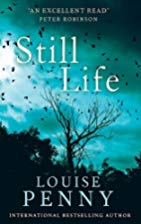
Still Life by Louise Penny

(Book Club selection)

Like science fiction, murder mysteries are a genre I rarely if ever read; so when I do, the novelty is very pleasant and I find myself thinking, “Why, this is so clever!” But the important thing for me is that the “genre-ness” not interfere with it being a well-written story. STILL LIFE is only occasionally cheesy; the gay characters were a little over-exaggerated, for example. I really wanted to get back to it every night, though; and no, I never did guess “whodunit.” ( )

Book Corner 2019.37

9f9d9deb34052e0593967325167434f414f4141.jpg

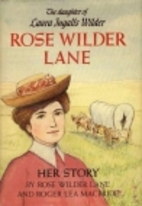
Rose Wilder Lane: Her Story by Roger Lea MacBride

This is a “perfectly genuine fictional autobiography.” It was written not by Rose Wilder Lane, but by her protégée Roger Lea MacBride. It covers the period of Rose’s life beginning with her leaving Mansfield, Missouri for the west coast; through her stint as a telegraph operator; and her marriage to and divorce from Gillette Lane. Altogether it covers at least three years. It is factual that Rose did work as a telegraph operator in California, and that she married and divorced Lane. I am not sure anything else in the plot is true.

In particular, the figure of Paul Masters looms large – Paul is the boy who traveled south with his family in a wagon from Dakota to Missouri, along with the Wilders, when Rose and Paul were wee children. I am not sure that he grew up to be a genuine love interest of Rose at all; here they are informally engaged, indulging in passionate lovemaking several times. Paul appears constantly in her life out in California – I am not sure it is at all true, either, that he ever went West.

But what can I say – it’s a gripping yarn! I hardly wanted to put it down. MacBride writes a great little story… perhaps there is enough of Rose’s actual material here too, shining through enough to enamor me.

Oh, the cover has got to go, though – its illustration shows a behatted Rose and is obviously based on a famous photo of her, but in the background is a Conestoga wagon traversing an empty prairie. The Wilders were traveling in this style some 10 years or more before the book ever takes place. There are no prairies or covered wagons in the story. This isn’t LITTLE HOUSE, Garth Williams – or Garth Williams wanna-be, can’t tell. ( )