Book Corner 2020.41

History of Living Forever

by Jake Wolff

A teen-age boy loses his lover, his chemistry teacher, and inherits his journals, which give us all the backstory of his pursuit of the secret elixir of eternal life. It’s always nice to read a book about scientists rather than more writers and writers thinly disguised as artists. This book had a lot of action and mystery, which isn’t what I was expecting from the beginning. The plot seemed to hold together well, though I did get confused about a lot of things, so don’t hold me to that. In the end, though, I didn’t really care very much. (  )

Book Corner 2020.39

The Member of the Wedding

Wow, this was even more amazing than I remembered. I think it had been over 20 years since I read it. I had read more recently HEART IS A LONELY HUNTER – and boy, I thought that I loved that; but I only loved one of the two plots of that story, whereas this was 100% amazing through and through.

I had to look up the year that child actress Anna Paquin starred in the TV movie version of this – 1997. I found that movie too literal, and Paquin cast too young; she was so small, and Frankie was supposed to be so tall. The scenes with the solder were VERY disturbing when played with such a small girl. That said, I’ll never forget her performance in the climactic scene.

I did not recall how close to the end of the book the wedding happened – i.e. how little “happened” afterward, or rather how crammed all the “after” was into so few pages, as was the wedding itself. Which is part of the writing’s power. I think McCullers is just amazing in how she brings her stories to a head, making the payoff as good as the journey, which is not a common thing in a modern novel. Usually you get a really good bunch of pages but summed up with kind of an anti-climax; or, you get a real whopper of a narrative arc and ending, but don’t enjoy the journey so much. MEMBER OF THE WEDDING is flawless – maybe being relatively short at only about 150 pages is a help. Modern novels probably just go on too long.

I won’t bother with much of a plot summary. Southern eccentricity, lots of mood and pictures of intimacy; 12-year-old Frankie spends the dog days of a deep-South summer in anticipation of her big brother’s wedding. She’s on the cusp of big change, and at times truly manic in her passions and her desire to quit town for good. There’s something very powerful in stories about girls this age that always draws me in. McCullers is the best.. (  )

Book Corner 2020.38

The Address Book

I didn’t know exactly what to expect from a book all about addresses, but I was still disappointed. I feel it lacked focus. I mean, it was all over the map. HA HA HA

I was pulled in by the story of the efforts to give everyone in West Virginia an address – how hard it was to find people, as apparently roads don’t have names outside of a few major cities. And darned if the guy whose job it was to name all the roads didn’t dang run out of names long before he was through!

I think my favorite quote was about some elderly Chinese immigrants who referred to streets that their new tenant didn’t recognize. “Mulberry Street, with its many funeral homes, had turned into Dead Person Street… Division Street was Hatsellers Street, Rutgers Street was Garbage Street, and Kosciuszko Bridge, named after a Polish leader who fought in the American Revolutionary War, somehow became ‘the Japanese Guy Bridge.'”

I’m gonna call it that from now on. (  )

Book Corner 2020.37

temp

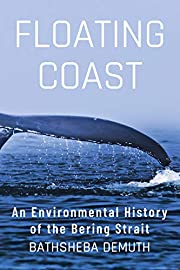
Floating Coast by Bathsheba Demuth

I am so glad I read this. I don’t have any particular interest in the Bering Strait, but this wasn’t a typical history. Demuth is an exquisitely thoughtful writer. Her “environmental history” is what I would call spiritual.

The book is not devoid of historical facts and narratives. Frankly, much of it could even be a bit of a slog. In chronicling “Beringia”, the land masses which border the Bering Strait, Demuth covers both USA and USSR history. After a while, reading about the fox farming and reindeer farming booming, then crashing, then booming; the quotas on whales being this high, then that low, then this high again… put me into a lull.

But when Demuth is poetic, she is sublime. Most of these moments came towards the beginning and towards the end. Tastes:

“[T]he world is not what we make of it; it is part of what makes us: our flesh and bones, and also our inclinations and hopes.”

“An ecosystem is the aggregate of many species’ habits of transformation, their ways of moving energy from its origin in the sun across space & condensing it over time. To be alive is to take a place in a chain of conversions.”

“We all live in more than one time… The evidence is all around us, in the layered world: a mossy, decaying mission store in Gambell, built near an ancient whale-butchering place, across from a row of tidy new homes… [A] house with Soviet concrete walls, but a roof made of walrus hide so fresh, it smelled.”

Finally:

“Fossil fuels freed the use of energy from human toil, allowing human history to seem separate from the rest of time… This made possible a new idea of liberty, released from the constraints of the matter that made us, and from the precariousness of being.”

That does sum up for me where we find ourselves.  )

Book Corner 2020.36

temp

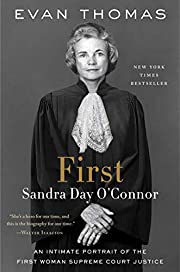
First: Sandra Day O’Connor

You know when there is no Book Corner for a while, I’m reading something heavy.  Either that, or sampling around and unable to settle on anything.  This time it was was something relatively heavy.

I’m afraid the first half of her life dragged for me – too much detail. And Thomas seems to emphasize especially in the first half her conservative, “Junior League,” “family-first” demeanor; when I looked up an interview with her on You Tube to remind myself how she really looked and talked, her directness and sharpness came as a stark contrast to the Sandra he had depicted for me.

The book picked up and things started swinging when she joined the Supremes. The copious detail was now welcome rather than tedious.

I already knew the sad ending to her story, having read Jeffrey Toobin’s THE NINE years ago, but it was even more heart-wrenching to read here. In short, O’Connor left the court while still in her prime, with her husband succumbing to Alzheimer’s, for both love of and duty towards him. Within months, he sunk lower than what she could deal with alone. She had to put him in a home. Top it off, her longtime friend (and sometime college boyfriend!), Chief Justice William Rehnquist, passed away around the same time.

While she would never again be as powerful a figure, in such a challenging and rewarding and influential a role, as she was as an active SCOTUS Justice, O’Connor succeeded for a while in finding true fulfilment spearheading efforts to teach civics to middle school children. You can still see the fruits of her labor online at http://www.icivics.org Today, Justice O’Connor is still with us, 90 years old as of this writing (born 1930), but suffering dementia herself.

Sad all around. But admire her for her never-ending drive and her pragmatic jurisprudence. In stark contrast to Justices Scalia and Alito, who believed that law should be treated like a catechism, O’Connor seemed to realize that we are all “just muddling along,” in the words of one of her clerks quoted here. “It was, wait a minute, we’re not doing this as an intellectual exercise. We’re doing this to run society. It’s just us people running things.”

Try to take heart that we had people like Sandra Day O’Connor “running things” for a while, and could one day again.  )

Book Corner 2020.35

temp

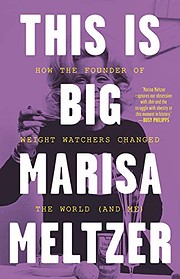
This Is Big by Marisa Meltzer

Chapters that offer the biography of WW founder Jean Nidetch alternate with the author’s own “My Year of Doing WW” and meditations on being fat and diet culture in general.

Nidetch was a self-described “Former Fat Housewife” from Queens who founded Weight Watchers International in the early 1960s. Meltzer doesn’t have an awful lot of material to work with, but makes the best of what she has; after Nidetch stepped down from the presidency after a decade or two, the second half of her life seemed kind of sad coda. She divorced, gambled, lost a 49-year-old son (tumor? addiction? the jury seems to be out). She never gained back the fat; yet here’s proof that thin is not sufficient to make for a happy life.

Meltzer’s own life musings are a cut above those found in many other of the “My Year of” genre. I love the scathing attacks on ‘wellness’ culture – dieting by another name; “such a performance of loving yourself, of health, of fun, of flattering angles and good light and tight cropping.” “Wellness has become an excuse for doing what was once considered superficial; under the banner of wellness, the same activities are important, necessary, maybe transformative.”

Reminds me of points made in Smash the Wellness Industry, a NYT editorial I clipped and still keep smushed in a journal.  My favorite line being, “Nobody is telling men they need to love their bodies to live full and meaningful lines.” It was really a “I could have had a V-8” head-knocking moment for me to read that.

My own wellness goals entail being so busy pursuing my fulfilling life that I honestly no longer notice my tummy or butt size. Note this is still in the ‘goal’ stage.  )

Book Corner 2020.34

temp

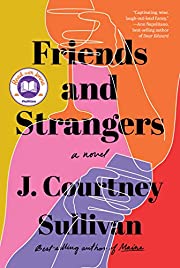
Friends and Strangers by J. Courtney Sullivan

Elisabeth is purported to be a former NYT journalist and published author of two books. Yet what we see is a foolish (gives away a HUGE sum of money to an obviously worthless sister), grossly immature woman (maybe I can just tell my husband [no spoiler] instead of the truth about how [no spoiler]). I really didn’t buy her as a successful adult in any realm.

The babysitter she hires, Sam, for her new baby, is a wide-eyed college senior in awe of everything and willing to see the best in everyone. She’s bowled over by the ‘peaceful vibe’ of Sam’s expensive home and lifestyle. She’s also got hero worship for the president of her college, and she’s buddies with all the Hispanic ladies she formerly worked with in the school cafeteria. Finally, she’s also engaged to and in love with a much older guy in London, Clive, with whom she’s had a whirlwind long-distance relationship.

I didn’t understand Clive or Sam’s enamorment with him. I guess the sex was really hot, though we are thankfully spared most details; and she’s young, so that’s probably all lit takes, but we never really see the appeal. The one thing Elisabeth ever gets right is her first impression of Clive: icky and wrong for Sam.

The plot of the book is our slow discovery of how low Elisabeth really will sink in her selfishness; how long it will take Sam to realize her idols are false; and what will happen with Clive. In the end I was disappointed that it wasn’t more interesting.  )

Book Corner 2020.33

1501123211.01._SX180_SCLZZZZZZZ_

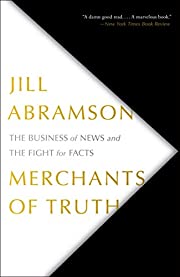
Merchants of Truth by Jill Abramson

Jill Abramson offers a thorough overview of several major news organizations’ transition to the digital age, with a focus on four in particular: NYT, WaPo, BuzzFeed, and Vice.

This book is dense, with very few breaks in the very long chapters. Much was uninteresting to me, but I kept reading for the sake of the tidbits that offered me glimpses of what goes on behind the scenes to give me the news I consume every day.

I was least interested in Vice – the interests of its barely-legal male target demographic in no way coincide with my own. NYT & WaPo, OTOH, I read weekly and daily respectively, so those were the inside scoops I was really showing up for.  )

Book Corner 2020.32

temp

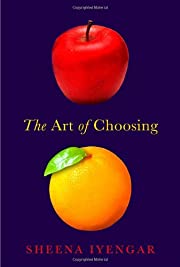
The Art of Choosing by Sheena Iyengar

I don’t know, I just didn’t really learn anything. The most exciting part was when she starts talking about the famous jam study, and how everybody seems to know about it but everybody gets it slightly wrong; and then she reveals that she should know because she’s the one who actually conducted the jam study. Mind blown!

[The jam study offered people a taste test of 24 different jams, then repeated the experiment with only 6 jams, and found that 24 jams attracted more attention but 6 jams resulted in more sales.]  )