Book Corner 2025.37

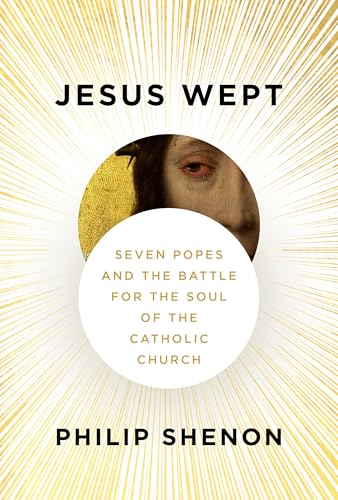
by Philip Shenon

Papal biography through the lens of Vatican II. John XXIII is the hero it’s impossible not to love. His anti-hero is Cardinal Alfredo Ottaviani, who reminded me of the Bad Cardinal in CONCLAVE. That movie floated through my mind frequently during this book.

I was occasionally zoning out over a lot of the details over 500 pages – the Vatican fights, the bios of minor players, all the sex abuse scandals and all the Latin American drama.

I had no idea how close we were to having the Church approving the use of birth control! And I had no idea what a wimpy and fearful and anti-reform personality Paul VI was – the first pope of my lifetime, from 1963-1978.

One thing I appreciated about the structure of the book was how every pope’s life story was jumbled together chronologically – you learned all about Ratzinger and Wojtyla through the years of Vatican II while it was happening, for example; instead of just taking each pope in a vacuum getting his own section. I liked instead how this showed the flow of history and provided a lot of background of the popes before they were popes, situated within their times.

And boy, Paul VI was bad, but John Paul II was a real horror show in this book. I kept flashing back to something a girl said in one of my high school religion classes – this was the 80s – “He wants to take the church BACKWARD instead of forward; he won’t even HEAR about women in the priesthood – I think he’s one of the worst popes we’ve ever had!” You didn’t come out and say this in religion class at my school… but the more I read about him, the more I thought, “Damn, you were right, Kerry!”

Unfortunately, John XXIII and the forward-looking hopes of Vatican II end up feeling like the aberration over recent history, rather than the other way around. The author has an agenda – this is not simply a book of papal biography, but a narrative about our loss when we lost John XXIII and what the Church could have been. He never makes this parallel, but I was certain thinking about JFK, who died within months of John XXIII, and also took with him the possibility of a much different course of history that we will never know the extent of.

Bergoglio (Francis I) was interesting. His humility was irresistible. Ratzinger (Benedict) was also interesting in how his reform-mindedness in youth turned to fear and shutting down of dissent during his papacy – interesting, but not likeable. There was a LOT about Ratzinger here. I was much more interested whenever we turned to Bergoglio. Guess I put Francis I as my ‘favorite’ pope since John XXIII. But the book ended during his reign and didn’t cover our Leo. Who knows what his papacy may hold? We may get birth control yet?

Book Corner 2025.36

by Kingsley Amis

I picked up this book on someone’s recommendation and because I’m interested in sexual mores before the big revolution of the 60s. This book, published in 1960, was eye-opening.

Jenny is a pretty 20-year-old, away from her hometown for the first time, that men literally cannot stop throwing themselves at (despite her bust being only 34 inches, so she must have been QUITE a looker). It goes to show how horrible it must have been for a pretty girl back in the day when men could just make passes at you, and if anyone looked askance, it was to blame you.

The whole story was something like a train wreck I couldn’t look away from. On various levels, it was nothing less than horrible; yet I was dying to know, “Will they or won’t they!?”. The characters were almost all dislikeable. I only liked Jenny and – of course – Julian. Not coincidentally, Julian was the only man in the book that DIDN’T bodily throw himself at Jenny. Patrick Standish, her love interest, was a monster who just kept getting worse. I kept thinking, “he can’t possibly sink any lower”, and finding out that he actually could.

The book is humorous, in a way. But the many passages aiming for humor just, almost, never quite, managed to hit the mark, exactly.

Book Corner 2025.34

by David Mitchell

Utopia Avenue is a fictional late 1960s ensemble rock group. The band has no leader, and similarly, the book seems designed to have no main character – sort of. Bassist Dean really is kinda the leader of the band, and similarly, he really is kinda the main character, getting a bit more page space and depth of character than keyboardist Elf, guitarist Jasper, and drummer Griff. Still, we do get separate story arcs for each band member.

Jasper was the most compelling to me. He’s fighting schizophrenia and you really want to see him turn out OK. Much more seems on the line here than with Elf’s subplot of sexual discovery, and Dean’s woebegone travails of being a schlemiel. Griff’s plot twist was telegraphed way too far in advance.

But who doesn’t want to spend time in the psychedelic heyday of rock’s adolescence? I couldn’t possibly give this a bad review.

Book Corner 2025.33

The Rolling Stones: All the Songs

by Philippe Margotin & Jean-Michel Guesdon

The authors are at their strongest when identifying who played on what track, and exactly what instrument they were playing. Did you know Charlie Watts played a “Gretsch kit”? He most certainly did. You’re reminded of that every other page.

They’re at their weakest in understanding lyrics. They were constantly just slightly, or entirely, missing the mark. For example, “Hang Fire” off TATTOO YOU was not exactly an indictment of Thatcherite economics. It was more an indictment of lazy people, a feeling which Mick would explore more explicitly a few years later in “Let’s Work”. But hey I could be wrong.

The best parts were often when I’d go back and put the CD on to a certain minute mark where the authors had pointed out a flub. What incredible ears they must have – usually I could barely even hear what they were talking about. But particularly on the early tracks, it was often amusingly obvious. The book was worth the price of admission for expounding on the way Keith’s fuzz guitar comes in a note late on the second refrain of “Satisfaction.” I had always noticed that, even as a wee tot, and I always really liked the effect. Now I know that he was late turning on the fuzz pedal, which he turned on for the refrains and off for the verses! And for the third refrain, he’s a note or two too soon, though that’s less noticeable.

Book Corner 2025.32

by Ann Napolitano

The story had a very slow, rather dull start. I found myself at first disliking Julia and pitying William; soon I was finding Julia to be a little too much like myself. Too bad she was portrayed as a semi-monster by the end. Noteworthy: A family of six Italians, and nobody cooks?? All the sisterly love was very wearing; reading about extremely close families like this always leaves me feeling smothered. These were definitely storybook people in storybook relationships. By the end, I was just skimming; I didn’t care, and did not enjoy the story. I was glad when I was finally free.

Book Corner 2025.31

by Mike Campbell

Great to spend some time with Mike, Tom, Benmont, Howie, and Stan, and all the stars they crossed paths with.

It always warms my heart to see rock stars married to the same person for decades.

I didn’t realize Campbell wrote “Boys of Summer”. He wrote the music and played most of the instruments on it. That made him richer than being in the Heartbreakers.

Particularly great Bob Dylan anecdotes.

Tragic how drugs took Howie’s life and then Tom’s. Glad that Benmont recovered from addiction.

Book Corner 2025.30

by W. Somerset Maugham

Could this book have been a little bit shorter and been just as effective? At 684 pages, of course. Yet I am so glad I stayed with it.

I nearly did otherwise. Midway, it felt like nothing more than the story of a young man making one bad decision after another. And it was definitely that! Then came the philosophy.

“He could not be positive that reason was much help in the conduct of life. It seemed to him that life lived itself.”

“He did not act with a part of himself but altogether. The power that possessed him seemed to have nothing to do with reason: all that reason did was to point out the methods of obtaining what his whole soul was striving for.”

Philip Carey is orphaned young and lives a hard life. The story does not take some of the obvious turns that you think it might. Philip makes a brief stab at being a chartered accountant; tries to be an artist in Paris; then finds his groove as a medical student before falling into penury. He learns much along the way, finally (at page 590) finding a sense of meaning in the meaninglessness of life. “As the weaver elaborated his pattern for no end but the pleasure of his aesthetic sense, so might a man live his life, or if one was forced to believe that his actions were outside his choosing, so might a man look at his life, that it made a pattern.” It’s really a beautiful couple of pages that follow.

To drag out G. M. Hopkins once again: “What I do is me; for that I came.”

Book Corner 2025.28

by Laurie Woolever

This was a very enjoyable read. The author worked for Mario Batali, who comes off like a total (expletive); and Tony Bourdain, who comes off like a total doll. In between she practices serious forms of substance abuse and self-sabotage. I was always happy to come back and spend time in her company and root for her. Keep kicking butt, Laurie.