Book Corner 2022.6

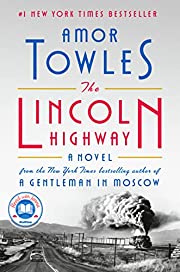
by Amor Towles

Between book club and books people give me as gifts, I’ve read three novels by Amor Towles now, and I don’t even like him. It reminds me of how I’ve seen Elvis Costello at least as many times without particularly liking him either.

At least there were no bratty precocious kids in this one! I even surprised myself by enjoying the first half. I liked the jaunty tone, and I liked following the adventures of the crazy 20-something girls from the boarding house who managed to get so many men to buy them drinks.

But after the first half or so, the story got wacky, and I stopped understanding anyone’s motivation. Also, I feel Amor Towles really does not do Period well; the alleged time period of the story always feels slightly off, though I can usually not put my finger on why. This time I DID catch him in an anachronism – page 227, “he and his brother had hiked the Appalachian Trail for days at a time” in Maine when the character was a boy. The current year is 1938. The Appalachian Trail wasn’t completed until 1937. He couldn’t have hiked it as a boy; not even a proto-trail, as the trail was begun in New York, not Maine. I knew it didn’t feel right.

And Towles’ books are too long, with too many digressions. It’s particularly painful as you’re approaching the end, and realize that yet another long segue is being put in because he felt it was a charming little thing he had to include somewhere, and it doesn’t advance the plot one whit. I’m thinking here of the paper airplane interlude.

It’s such a shame, because Towles really can write well, and has some great ideas; he just doesn’t really know how to write a succinct story without annoyances. It was towards the end that I came across a great quote. I was trying to convey this very thought just recently, but not at all well; here it is:

“In our twenties, when there is still so much time ahead of us, time that seems ample for a hundred indecisions, for a hundred visions and revisions – we draw a card, and we must decide right then and there whether to keep that card and discard the next, or discard the first card and keep the second. And before we know it, the deck has been played out and the decisions we have just made will shape our lives for decades to come.”

A fabulous description of being in one’s twenties.
Book Corner 2022.5

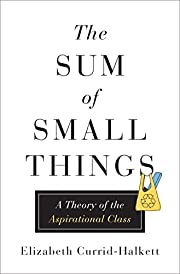
by Elizabeth Currid-Halkett

Most of us no longer engage in conspicuous consumption to signal what class we are in. But we do engage in inconspicuous consumption, and conspicuous production, and conspicuous leisure, to achieve the same ends. To briefly define each of these: inconspicuous consumption is spending more on health care, insurance, kids’ educations, and in-home help. Conspicuous production is emphasis on where and how things are produced. Conspicuous leisure might be breastfeeding and attachment parenting.

It’s different from the days when someone used silver cutlery or drove a flashy car to signal how upper-class they were. Now, an NPR tote bag does the same thing, according to the author. It doesn’t signal that we are rich, because anyone on a barista or artist salary can and does afford such a thing; it signals us as members of a particular class, which she dubs the “aspirational class.”

I had a hard time keeping my head wrapped around how “aspirational class” is different from “liberal.” Also, a lot of this book was a big “ouch” for me. But I LIKE buying overpriced organic vegetables, and supporting local businesses wherever possible! I genuinely like it! I’m not just “signaling” something. I like it because… why? I feel somehow it improves the world, right? Do I really have to start shopping at Wal-mart and buying supermarket brands of everything in order to be “genuine”? Won’t that just be signaling a different thing?

Sayeth the author: “Does being different from others, being better than others at acquiring possessions or the perfect heirloom tomatoes, or making the decision and investment to breast-feed or feed your family organic produce really advance society at all?” When we remember that none of these thing are options for huge segments of society who lack the means, we ought to be honest and recognize that to really make the world a better place, we would do better to work towards flattening out the economic inequality around us.

So, ouch, and touche, and point taken. But it still doesn’t mean people sport their farmer’s market produce in public in order to engage in signaling that they are of the ‘aspirational class’. If they (fine, WE!) are signaling anything, it’s that we are on Team Liberal. It does make me uncomfortable. Food for thought.

Book Corner 2022.4

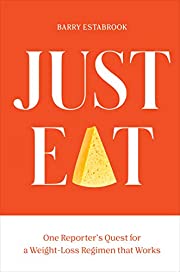
by Barry Estabrook

First, the takeaway: “You should lead a diet, not follow one.”

The author is a former editor of Eating Well magazine and a Vermonter (yay). He goes on the Ornish diet, the South Beach diet, the Mediterranean diet, Weight Watchers, and some others. No, not all at the same time, a la Bridget Jones! He eventually does lose and keep off some weight. Here’s what he concludes:

“I will never go on [a diet] again.”

But seriously, the reason is: “You should lead a diet, not follow one. What you eat and how you do so are deeply personal activities, right up there with sex. They’re nobody’s damn business… For me, successful weight loss began when I examined what I ate and how I ate it, then started making changes…”

I will always have a place in my heart for WW; and while doing a post-mortem at book’s end, Estabrook concludes: “Although I dropped out of Weight Watchers after a couple of months, the point-tracking app… made it abundantly clear that I would never lose weight unless I cut way back on how much cheese I snacked on.” WW left me also with life-altering insights and habits. Now I munch on apples & carrots every single day; and for me, it wasn’t cheese, but french fries and pie crust I learned were unsafe in any dose. “The point is,” he continues, “there are useful weight-loss tips between the covers of diet books,” or in a point-tracking app.

Book Corner 2022.3

by Amor Towle

Much like A GENTLEMAN IN MOSCOW; a more ridiculous story, but otherwise, incredibly similar – what is it with this guy and annoying little kid characters?

The protagonists are stoical Emmet, annoying little brother Billy, strangely mentally incompetent Woolly, and pants-charming scamp Duchess. Normally a character like Duchess tends to be my least favorite of an ensemble – constantly screwing up plans with his irresponsibility and mayhem. But here he ended up being my favorite, because the competition was so low, and because he was the only one to actually call out Billy as the little “know-it-all” that he was, rather than fawning all over him like every single other person.

And man, I thought this story would never end. Indeed I bet left to his own devices Towles could literally go on forever with digressions and whoopsies and now let’s go off in this direction and who stole the car now?

I only read it because it was a gift.

Book Corner 2022.2

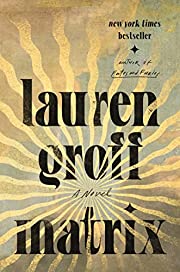
by Lauren Groff

I really didn’t enjoy this. Can’t help but compare it to The Corner That Held Them. I see I came off as a bit negative on Corner, but at least it felt very realistic. This one is fakery. And I wasn’t expecting quite so much lesbianism. No one appreciates strong, central female characters more than I do; and I can respect what the author must have been trying to do by including not one single male character at all. But come on. Where were the priests in all this? Who was saying mass before Marie blasphemously took over? Weren’t the male leaders of the Church giving her a hard time?

Book Corner 2022.1

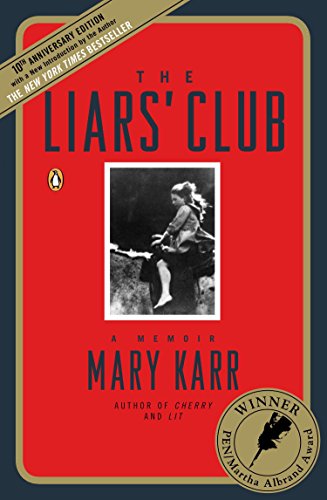
by Mary Karr

I cannot rate this highly, because I spent almost all of my time reading it in a state of either disgust, or frustration, and because I was never eager to get back to it. It has an excellent ending; but the ending doesn’t make it all OK. The world Mary Karr describes is ugly; and she chooses to render some of the most horrifying elements of it in unshakeable, graphic detail.

Book Corner 2021.60

by Harriet Hargrave

I’m not a quilter, in any sense; but I’m wildly interested in textile production.

Who knew? “Prior to the invention of air conditioning & humidity control, only the New Bedford & Providence, Rhode Island, locations had the proper humidity conditions for cotton yarn spinning.” I did have a sense of this, having this year read a whole book about air conditioning; but I didn’t know matters were this precise.

Who knew? “Greige goods (pronounced ‘gray goods’) are unfinished fabrics in their raw state.” Muslin is, often, essentially, greige good. I love the term; I love the thought of those simple raw fabrics – and I love the pictures, lots of pictures in the book of factories and machines and fabric being processed.

Processed, processed, processed! They do SO much to cotton fabric, it’s a wonder how humanity comes up with these things. Singeing! Sizing! Desizing! Bleaching! Mercerizing! Not to mention the dyeing. Oh, the dyeing!

This is mainly a book geared towards choosing better materials for quilting, and was vaguely interesting on its own terms; but obviously I was in it for the big picture, as I usually am.


Side note on the big picture. I received Oliver Burkeman e-newsletter today, and the theme is redefining interruption. Zen teaching: nothing obstructs the activity of anything else.

Book Corner 2021.59

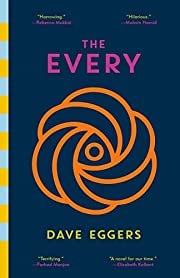
by Dave Eggers

A sequel to The Circle, which I also loved. The Every is a fictional mash-up of Google and Amazon. Characters Delaney & Wes attempt to overthrow the powerful Every from within, by proposing ever more outlandish and horrifying apps, in the hopes that one, finally, will cross the line and be so repulsive as to turn public opinion against the Every once and for all. They start with AuthentiFriend, which will gauge how authentic your friendships are by gauging your friends’ behavior during your conversations. Then there’s Satisfied?, the app that will tell you whether you enjoyed what you just ate. Building on that, Happy Now? will tell you in real time whether you’re happy. Did I? will tell you whether you had an orgasm.

The problem is, no matter ridiculous the app, people love it.

Kerpow!, an app to encourage spontaneity. Thinking of You, which will send a brief message to each of your contacts twice a day, stating, you guessed it, “Thinking of you.” Show Your Love publicizes all messages of love, greeting, etc. so as to count and compare your count to others. Were They? will tell you whether your parents were any good. Departy notifies you of the death of anyone in your network. PassionProject will tell you your passion. “People found it enormously helpful.”

Takes a Village allows you to track, film, and shame children for their misdeeds. FictFix takes old novels and “fixes” them, making protagonists more likeable, updating terminology, etc. ShouldEye asks the general public for an opinion on any decision you have to make.

Super funny-scary stuff.