Book Corner 2023.11

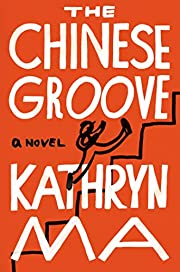
by Kathryn Ma

This was a fun little story. Shelley is a young man who comes to San Francisco from China with dreams of success. Everything goes rather poorly from the start. He had been told his uncle, who will be hosting him, owns a big fabulous department store; but the truth is the family used to own a little corner grocery, but no longer. Furthermore, his uncle and aunt stick him in a tiny spare room and kick him out after two weeks. Hunger and homelessness threaten. But Shelley is positively buoyant through it all. He makes himself useful to his uncle’s elderly father and endears himself to the little boy of a family friend. He endures heartbreak and trickery. And then it’s all tied up in a nice bundle.

Book Corner 2023.10

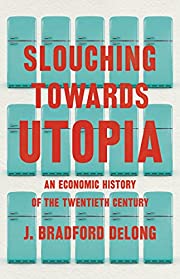
by J. Bradford DeLong

I really enjoyed this. It’s a 500+-page economic history of the years 1870 – 2010. It got really exciting in the WWI chapter, nearly every sentence packing a punch. Here’s just one I bookmarked, about how just 80 years separated Croats & Serbs fighting together as blood brothers in WWI and the breakup of Yugoslavia in the 90s: “To fight one set of wars at the start of the twentieth century to unify Serbs and Croats, and another set of wars at the end of that century to ‘ethnically cleanse’ Serbs of Croats, and Croats of Serbs, seems among the sickest jokes history ever played on humanity, or, more causally accurate, humans ever played on history.”

The overall theme of this history is Hayek vs. Polyani. Friedrich Hayek, I was familiar with, but with Michael Polyani I was not. DeLong sums up Hayek (repeatedly – the book is not afraid to repeat its themes): “The market giveth, and the market taketh away; blessed be the name of the market.” Polyani, if I can summarize: nothing beats the free market for producing general prosperity, feeding technological progress, and allocating capital efficiently. However, people generally want more. They want some stability, some expectation they can keep their job, some fairness, etc. The market produces none of these things, which isn’t a bad thing or a good thing; it’s just not what the market does. Since people will persist in wanting these things, they will take action to make them happen, which is entirely reasonable. This struck me as one of those perspectives with a deep sense to it. Like when I turned away from libertarianism all those years ago. Freedom is great and important, but why should it trump other things that are also great and important? Like Haidt’s RIGHTEOUS MIND – empathy is great and important, but people have other pillars of morality. So, the market is great and important, but there are other things that maybe it doesn’t always trump.

Great food for thought, great history, great read.

Book Corner 2023.9

by John Baxter

Better than I thought it was going to be; because I thought it was going to be, “OMG, Paris is so freaking beautiful, this is beautiful, that’s beautiful, OMG Paris is so beautiful.” Yawn! It wasn’t that. It bounced around severely. It was kind of tied together by the author’s recounting of how he stumbled into a job giving walking tours of Paris; and some of the fun things he includes on his tours. I liked that all the chapters were super-short. I liked the amount of himself he put into the book – enough so you aren’t wondering who in the world is speaking to you; but not so much that it’s a Me-Me-Me book, which is also boring. Altogether, you’d think that I’d love it. Ultimately, though I hate to sound like an ugly American or a jaded snob, I went to Paris once and I wasn’t all that crazy about it. I prefer Italy.

Book Corner 2023.8

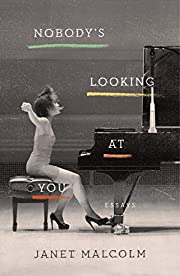
by Janet Malcolm

I’m not sure why I picked this up, except that it was essays, and I’m sure I thought, “Oh! I love essays”, some of them from the New Yorker and some from NYRB and I’m sure I thought, “Oh! Those will be quality.”

Maybe they were, but they were so very, very dated. I guess it was a nice walk down memory lane as we were reminded of the confirmation hearings for now-Justices John Roberts and Samuel Alito, and Jon Stewart/Stephen Colbert’s march to restore sanity, etc.. But the essay about email – what a hoot. “As email’s novelty wears off and its limitations become clearer, we will revert to the telephone…” Ha ha ha!

Essays in the beginning of the book tended to profile people with some unusual vocation or avocation, such as concert pianist or running a rare-print book shop. These weren’t terribly gripping. I have to admit I skipped one about a classic music radio show.

Book Corner 2023.7

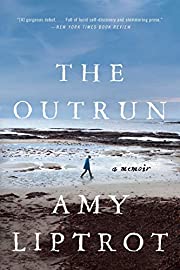
by Amy Liptrot

This is about the author’s alcoholism. She’s from Orkney and returns there for a year when she’s in her 30s or thereabouts and her life has been destroyed by alcohol. Orkney, off the northern tip of the Scottish mainland, is small and isolated to begin with, and she spends a winter on one island that is particularly small and isolated, living alone in a cottage. This is the part of the book that most appealed to me, having Hermit Envy. The descriptions of Orkney only made sense to me because I’ve seen Iceland.

Book Corner 2023.6

by Charles Wheelan

While many of the examples are woefully outdated (published 2002), the concepts are purely timeless. I laughed out loud a couple of times. Well, sometimes because of the outdated examples (“I recently visited a grocery store in Boulder, Colorado, that was experimenting with a self-serve checkout line.”); but sometimes because he was just really (deliberately) funny.

And sometimes because I raise Angora goats, and the great mohair subsidy of 1955 that lasted for about 35 years was one of his great examples of the power of organized interests to get legislation on the books that is a boon for the interests but way outlives its usefulness and isn’t big enough for any non-interested party to get worked up about enough to revoke. Although it seems some people got worked up about the mohair subsidy eventually, it just took 35 years. (We got into the hobby less than a decade too late to sit back and make a tidy living off of it.)

And sometimes I felt personal pride, while reading the whole chapter on the Federal Reserve. While it would be an overstatement to say we’ve forgotten 9/11, we’ve forgotten plenty of the details of those first weeks, months, and year of aftermath (again, publication date of this was 2002). “On September 11, 2001, hours after the terrorist attacks on the United States, the Federal Reserve issued the following statement: ‘The Federal Reserve System is open and operating. The discount window is available to meet liquidity needs.'” This was his example of simple statements speaking loudly. A simple, calming statement, with not so calm people behind the scenes doing not so simple things to make it so.

What was fantastic about this book was that it had no ax to grind. It’s facts and concepts. You judge. This is what government intervention can sometimes do for good. This is what it can sometimes do for ill. Know the basic economics presented in this book first; then maybe you can hold forth with an informed opinion.

Book Corner 2023.5

by Gill Hornby

This really wasn’t bad. A novel where Jane Austen is a character has the potential to be really cheesy, but this wasn’t. It hewed closely to real-life events – main character Anne Sharp was real, was governess to Jane Austen’s niece Fanny, and became very close friends with Jane.

It only broke period and tested my straight face in one respect – when two characters fall ill at the same time, someone exclaims, oh, I hope we didn’t catch any germs from the babies! They’ve closed off the nursery as a precaution. Look, the germ theory of disease had not permeated the Austen milieu of the early 19th century. They thought people got sick from being outside in the rain. The book makes this faux pas once again later, talking about “infectiousness”. Anyone who has read any Austen book knows that people get sick from catching chills, and nobody stays away from them; on the contrary, as long as they are not too fatigued, they get visitors all the time.

This wasn’t enough to turn me off. Things could have gotten a lot more foolish, but our author practices restraint. I thought Henry Austen’s flirtatious behavior and its reciprocation was bewildering, he being an allegedly married man (no wife ever seen with him), but I guess it stayed within the bounds of the possible.

It was an OK read. The bar is low.

Book Corner 2023.3

by Robyn Metcalfe

Who’d have thought a book all about food logistics would be so boring? OK, shut up.

It just never seemed to go anywhere. It felt like any paragraph could have been interchanged with any other. It all just read to me like a bunch of random sentences about food logistics.

I also have a pet peeve about the phrase “farm to plate”, and phrases about food getting to your “plate”, and some variation of this appeared on nearly every page. People rarely eat off of plates anymore.

Oh, and the subtitle: “Growing Bananas in Iceland and Other Tales from the Logistics of Eating.” I don’t remember a thing about growing bananas in Iceland. If it was mentioned, it was short enough for me to zone out over.

Book Corner 2023.2

by Helen Joyce

This book should have been shorter and more balanced. That said, it states some things that desperately needed stating. Pediatric transitioning now seems more disturbing to me than ever.

Something that has always bothered me about our current understanding of trans identity, that I don’t think I’ve ever seen explicitly stated elsewhere, is that it seems to think gender is definable by the most culture-specific, superficial things – i.e. liking pink and liking dresses makes you a girl. Joyce discusses how being trans is explained to children: “You nod along to descriptions of restrictive gender norms, hoping for the right conclusion: that nobody need conform if they do not want to, and that there is nothing wrong with boys playing with dolls or girls playing with trucks. You long to hear that girls (or boys) are people with female (or male) bodies who behave however they damn well please; instead you hear that girls (or boys) are people who behave in feminine (or masculine) ways.”