Book Corner 2021.15

by Robert Paarlberg

The subtitle promises “straight talk” about the state of modern agriculture and consumption. This book is unusual in that it makes many forceful arguments while seldom devolving into polemic. The author is a descendent of midwestern farmers and knows from that perspective of which he speaks. He is here to defend farmers and technology, and to decry food processors and modern animal husbandry. You don’t usually get all that in one package. I found myself enjoying being challenged on some of my daily guiding principals, such as buying organic – as per Paarlberg, it’s at best a waste of my money, and at worse bad for the big picture long term. In short, organic requires more land and labor inputs. That’s bad for the environment. I’ve long known that the special drive I make to the farmer’s market, plus all the special drives that each individual vendor makes to get there, are not doing the climate any good. Since I’m going to the supermarket eventually anyway, cause you can’t live on samosas and greens alone all week long, it’s most efficient for me to stock up on all the vegetables I can handle there at Hannaford’s, where they’ve already traveled their food miles in huge bulk quantities, thus making the environmental cost of each individual bunch of carrots piffle.

But I’m not giving it up, no siree! I loves me my overpriced organic, local food. I just FEEL that I like knowing the food came from nearby, and that if anything were amiss with its production, I would be very likely to find out about it. And yes, I enjoy the bucolic scenery when I drive around, and I have to support the farms in order for that to continue to exist. Or should I put “farms” in quotation marks – good quote from Paarlberg: farms in New England are “usually just one step up from gardening and can’t count as exposure to modern commercial agriculture.” Understood. I know ‘farm’ around here and ‘farm’ in the Midwest are two different animals.

Speaking of animals, while Paarlberg is full of good things to say about modern farming, he draws the line at how we treat our animals. It was very good to hear him speak up for animal welfare, and not just stay to one side of the fence on all things modern in agriculture.

I really love his message about pointing our ire where it belongs, at the junk food producers, not the food producers. “Food products laden with sugar, salt, and fat are now deliberately formulated to ensure eaters will crave them; then they are promoted as innocent fun and placed within easy reach.” I love that phrase “promoted as innocent fun.” That’s the thing, I’m fully susceptible to that kind of message, sophisticate though I may be (ahem). Hmm, says my subconscious, the subconscious that will come up with any excuse to down something delicious… seems like EVERYbody snacks don’t they… EVERYbody buys ice cream… cmon, buy some ice cream. It’s a food staple! Get vanilla, how wholesome can you get! It’s INNOCENT FUN!

The previous food book I read, How to Eat, encouraged the same message as Paarlberg does here – all that stuff in the ‘middle aisles’ of the supermarket is NOT food, and don’t let them fool you, because that is what they are trying to do. You know what food is.

My least favorite chapter was the one about GMO’s, because here it felt like Paarlberg really deviated from the “straight talk” I felt he was delivering elsewhere. While almost all the other parts of the book felt balanced, Paarlberg has absolutely no room for misgivings in any way, shape, or form about GMO’s. They’re harmless. Always have been, always will be. As if there were really no other side to this issue to consider at all?

I end up awarding this book 3.5 stars rather than 4 – above just “AOK” but not quite deserving my “fan” status – for that reason.

I also end by noting I am eating meat only about once a week these days, and not cooking it at home. Tonight I made a kind of mushroom stew over whole wheat noodles. Last night with the same noodles I made this really delectable eggplant parm – no breading or frying, but plenty of cheese. Yes, dairy is still in my life. And the mushroom stew had beef “Better than Bouillon” starter. I’m no vegan, but I’ve become extremely vegetable- and whole-grain-forward. I’ll probably go back to cooking some of my cow/pig/bird favorites one of these days, but perhaps the meat-eating trend for me will continue generally downward for some time. (  )

Give Me Something to Do Already

Thursday & Friday of this week, we had springtime weather, and I spent some lunchtime doing some barn cleaning, and my mood was sky-high, and I don’t need people making fun of me that I get such a natural high cleaning up goat shit or ferrying goat shit to my garden which I’ll be doing later this year, that’s not the POINT. The point was I was so absolutely perfectly happy… “I love my life” I kept thinking. Lapsing into a Monty Python accent, “THIS, is GOOD!” This is it! This is the perfect life! This is all I need… and to get out now and then for a beer. Lapsing into Latke from TAXI, “Then you be happy.”

Yesterday of course it was winter again, and it was Saturday, and I actually don’t do well with a lot of unstructured time. I was depressed as all hell. And yet I was outside of my depression, marveling at it. “This is obviously not some sort of referendum on my life,” I thought – just the day before, the verdict was in, life was PERFECT, no?

Moods are never life referendums. They just come, go, ebb, flow. They’re influenced by externality but no matter how good or bad that externality may be, the moods tend to revert to the mean, and ebb and flow. I think there are exceptions. I can’t put it into perfect words, but there’s a difference between having a particular life circumstance – born rich and a famous success, or born in a shtetl or slum and always scrambling for the next meal – which does NOT affect overall mood (tons of ‘successful’ people kill themselves; interviews with prostitutes in Calcutta find they are on average as happy as anyone else). But I think there are circumstances having to do with awful things being out of your control, of a happier existence just always out of reach, I’m not sure – but I know that I didn’t have much significant happiness the three years my father was dying; and overall that was an exception to my general mood levels, which tend to just ebb and flow.

The recent novel I read, Midnight Library, gave me ideas that I hadn’t seriously entertained before, that have stuck with me (making it by definition an excellent book); that you simply cannot be happy all the time, that all our striving for precisely that, is something we can’t help but do (who’s gonna strive to be UNhappy, after all)… but when you think that the decisions you’ve made are responsible for your happiness or unhappiness, you’re sorely misguided. The decisions you make result in external circumstances that nudge your mood. But they are never going to amount to a happy or unhappy life (again, extreme exceptions exist). Your life is going to average out and contain happiness and unhappiness, no matter what you do.

It’s quite freeing.

Listing to One Side

I don’t need to actually live my life; I’d be content to just list it.

SpringBeetsCylindra
 CarrotsNapoli
 CarrotsRed Cored Chanteray
 LettuceRed Mist
 RadishSchwarz
 RadishSora
IndoorsTomatoEsterina Cherry
 TomatoMoonbeam
 TomatoValentine
 PoppyCalifornia
SummerBeansProvider
 BeansGold Rush
 PumpkinBig Max
 PumpkinLong Pie
 Squash, SummerGreen Machine
 Squash, SummerRonde de Nice
 Squash, WinterDelicata
 Squash, WinterOrangeti
 ZinniaCountry Fair
 NasturtiumDwarf Jewel

Book Corner 2021.14

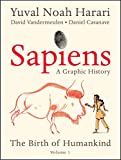
Sapiens: A Graphic History

by Yuval Noah Harari

Considering the fact that SAPIENS by Yuval Noah Harari was one of the best books I have read, EVER, I expected to love this graphical interpretation at least a little a bit. A problem is that I tend to be annoyed by graphic novels. They feel gimmicky. And this one was high on gimmick factor. It didn’t just illustrate Harari’s ideas… it introduced a young inquisitive niece character, Zoe; and an obese Indian woman scientist who carried a small dog everywhere. I honestly have no idea why. Any of it.

Most of the time I felt the book was at the level of the Zoe character – for children; older, genuinely science-curious children, but still… children. (Notwithstanding lots of nudity.) I kept wondering what I was getting out of it.

But in the end – though it seems I always have to spend a lot of any review being a nattering nabob of negativity – I DID get things out of it. It made me think about us all being animals… evolving from and with animals… animals, our brothers, our OLDER brothers, as I read in another scientific book of a different stripe recently, BRAIDING SWEETGRASS. Here in the graphic SAPIENS, the pictures did add something more than a gimmick, I have to admit: I remember a picture of a doe-eyed doe, and it made me think about being a nearly-evolved sapiens looking that doe in the eye, as an equal.

Another idea still persisting in my mind: “Our brains are still adapted for life as hunter-gatherers. Our eating habits, our conflicts, and our sexuality are all the result of our hunter-gatherer minds grappling with a post-industrial world.” I can’t be blamed for the fact that I simply cannot resist a plate of fries or a pie crust when they are sitting right in front of me. The hunter-gatherer in me would KILL – literally! – for that amount of delicious fat.

Also: One reason we can’t look at modern-day hunter-gatherers as a stand-in for what life was like for our early ancestors is that what’s left of today’s foragers are all living in the most marginal places. “Modern forager societies have mostly survived in regions with difficult climatic conditions, and inhospitable terrain that doesn’t lend itself to agriculture.” I’ve always tended to think of hunting-gathering with a big fat “No, thanx!” Agriculture is my favorite invention. When people talk about eating wild foodstuffs, it’s about as appealing to me as dumpster diving. Yay, a handful of fiddleheads, some mushrooms that hopefully don’t poison us; and maybe, if it is exactly the right time of year, some really seedy blackberries! Sounds WONDERFUL! Please, bring on the agriculture already.

But the hunter-gatherers in pre-agricultural times weren’t all trying to make a living on my 3 acres in Vermont. Think about our most fertile agricultural land, our most abundant seacoasts and forests. They lived in the good places. I’m not saying food was as thick on the ground as it is in your intensively cultivated plot of garden, maybe; but then again, maybe it wasn’t far from it, either.

They lived in the good places, and they lived all over the world. Before agriculture, think about it – we were already everywhere. We had an abundance of lifestyles and cultures, just like today. We just didn’t live in towns, or on farms. We all just lived on the land. Like the animals. Because that’s what we are. (  )