

The long ones are called Napoli; the fat ones are called Red-Cored Chantenay, but they didn’t seem to me to have red cores.
The long ones are called Napoli; the fat ones are called Red-Cored Chantenay, but they didn’t seem to me to have red cores.

At top is a “Long Pie Pumpkin.” The other is a Delicata. I only got a few Delicata this year, and that’s fine – they were really terrible. I don’t know why. They were so starchy. Meanwhile, first time trying this Long-Pie oddball, and baked the thing, and it was delicious. I always plant pumpkins in the manure pile in the goat pen, knowing I’m going to lose some to hungry goats, and this year was no exception. But there are a few that seem to be safely out of their reach. I picked a huge one today. They don’t seem eager to turn fully orange but that doesn’t seem to adversely affect the yumminess inside.
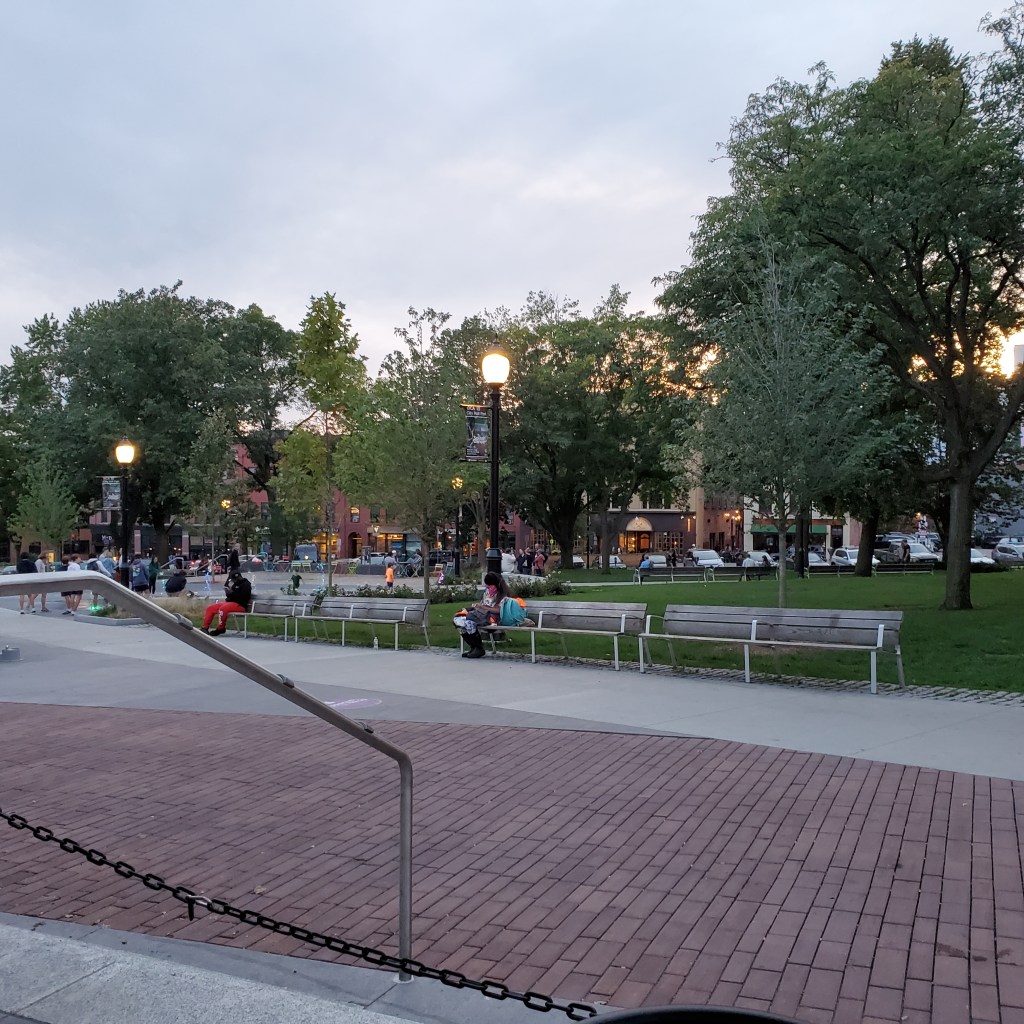
Two nights ago. The sun goes down on outdoor dining season.
Today Xopher started going back to the office after 1.5 years of pandemic WFH. It was a little lonely here, but I could play the radio whenever and as loud as I wanted, I could do odd things without being looked askance at, and I was kind of disappointed when he came home early.
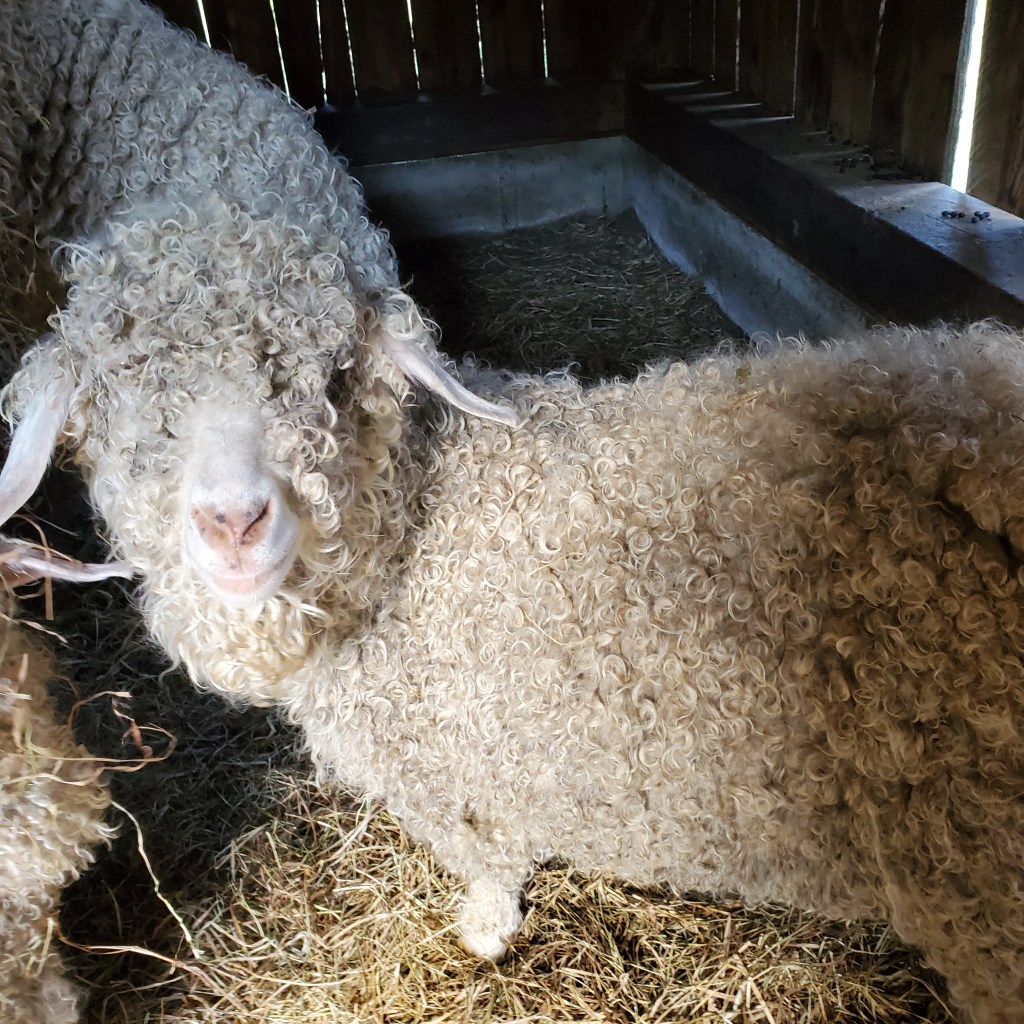
She’s under there somewhere. Shearing time is soon.
It’s 1975, and 14-year-old Mary Jane takes a job for the summer babysitting 5-year-old Isabelle “Izzy” Cone. Mary Jane lives a happy, sheltered life controlled by her mother, who is a 1950s caricature of an orderly Stepford wife gone mad. Mary Jane likes to cook, clean, sing show tunes, and sing in church. But the Cones are a 1975 caricature of laid-back grooviness, and Izzy is a live wire. Mary Jane immediately takes to Izzy and providing some order and good home-cooked meals to her home. Meanwhile, the Cones, with the help of psychiatrist Dr. Cone’s rock- and TV-star resident patients, Jimmy & Sheba, return the favor by opening Mary Jane’s horizons to possibilities she never imagined, starting with objects strewn about the house and ending with free love and talk therapy and beyond.
Mary Jane is loveable and sympathetic. The other characters, however, are one-note; Izzy’s being a particularly shrill note. She is always shouting, being lovable, loving anything Mary Jane wants her to do. She never gets cranky or difficult.
Even so, I liked the story. I like how it showed that Mary Jane’s orderly well-trained background was a plus as well as a sometime hindrance to her; she both contributes and takes from her relationships with the others. As things come to a head with her parents at home, she realizes and tries to explain to her mother that much of what is so loveable about her, Mary Jane, why the others love and need her, are things that came directly from her upbringing; her mother should be proud. And eventually, she is. The father’s another story.
Blurbs on the cover draw apt comparisons to the movie ALMOST FAMOUS. There it’s a sheltered, controlled male who comes into the orbit of rock stars, whose Mom back home has to be made to realize that his growing up and apart is necessary, and that she can not “approve” but still be proud of who he is.
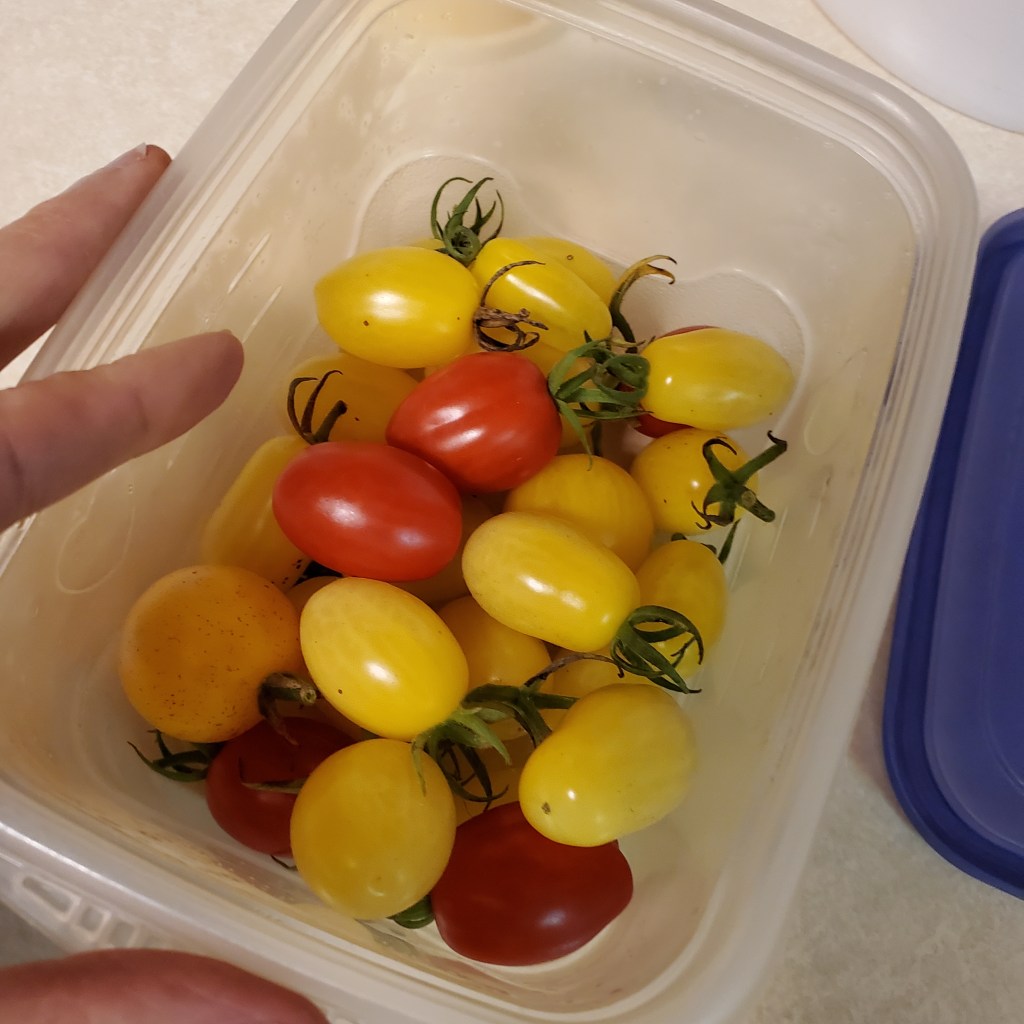
Everyday lunch: homegrown tomatoes sliced in half, drizzled with a bit of olive oil & balsamic and salt. Tear up a couple of homegrown basil leaves. Toast a piece of bread. Slice up an ounce of mozzarella. I had been throwing the mozzarella in the salad but decided I prefer it toasted on the bread. Enjoy… it’ll frost soon enough.
by George Saunders
I only read this short story collection for my book club. It was extremely disturbing and not my cup of tea.
I was interested in air conditioning. But not this much.
And talk about your flowery language. I consider myself a bit of a word person. Even if I can’t define something to the letter, context will usually let me fill in the meaning. But I declared defeat when I encountered “cathexis of mortido.” This sounds like a really bad Batman villain. (It’s something Freudian.)
It certainly does contain the best step-by-step explanation of how CFC’s deplete the ozone layer, and I do feel better informed than I was before – one would hope for such after 400 pages! And just in time for me to come across a small blurb in the paper: this year’s ozone hole over Antarctica is significantly larger than usual. Joyous news. Climate change was going to be bad enough, but, barring a really bad tidal wave, at least SOMEWHAT gradual. A severely degraded ozone layer is going to be super nasty super quick. At least it gets my mind off COVID.
by Catherine Raven
This is a very unique book. Indeed Catherine Raven is a very unique individual. Here she tells a lot about herself by documenting her two-year-relationship with a fox that lives on her property in Montana. Raven lives alone in a cottage on a remote plot of arid land; she’s obtained a degree or two, served as a park ranger, and taught college, but doesn’t know what to do next with her life. When a fox starts visiting her at her cottage, she starts reading to him; she names him “Fox”, and rendezvous with him regularly at the same time and place.
When I say she lives alone, I mean without others of her species. Her other friend is a magpie. As I said, Raven is a unique individual. I admired and envied her closeness to the land she chose to call home. I grew to love Fox as she did. I love how she tells us her life situation without self-pity and with directness, and I love the conclusions she came to over the course of the two years she knew Fox. While at times this book felt a little repetitive and confusing, given the poetic way Raven would skip back in time sometimes to retell a scene in a different way, I would not say I was ever bored.
The central question for Raven was: was she “anthropomorphizing” Fox, and was she within her rights to say that he was her friend? If she had tamed him, or if he had been a domesticated animal, nobody would laugh at her attributing humanoid characteristics to him, or naming him, or saying he was her friend. Why is it different with a wild fox?
Quotes:
“I tried lashing myself to the land, but it wasn’t reciprocating.”
“The American student sits long enough to rival the most sessile organism ever to evolve on planet Earth.”
“Each [elk] cow was searching for her perfect partner, and despite years of research, no scientist has ever been able to discover the criteria that females use when choosing mates. Maybe it’s because each cow chose for herself alone, the one bull that would most displease her mother.”
“On days when I worried over a pile of applications for university jobs that I didn’t want but should have been applying for anyway, I remembered I owned land in a high-altitude desert where tiny five-headed ball cactuses bloomed in the shadow of snow-capped mountains, and I stopped worrying.” I would too.

That was it for Modest Vacation 2021. Join us next year for, we hope, more exciting adventures.
Now back to book reviews and overthinking and self-absorption, with fewer twilit scenery shots.



 Tytania