Then You Really Might Know What It’s Like

This is what it’s like.

I look at a picture of Tom when he was young, and Vera when she was young.

I look at a picture of myself.

I think how I look a little like him, a little like her, and a little like myself.

I think how I’m probably a little like him, and a little like her, and a little like myself.

I picture the three of us together.

I picture people seeing the three of us together.

I picture them seeing us and thinking, that’s Tom and Vera, and their daughter.

I think of it registering, and making sense, and people nodding and moving on.

.

Think about having a pain, or an itch, or an anxiety.

Think about having had it so long, and it being so low-level, that you don’t think about it anymore.

Now imagine taking a drug, or getting a warm bath, or a professional massage, that makes it suddenly go away, for however long, maybe just for a moment.

For however long, this thing lifts that you didn’t even notice anymore.

You feel what it would be like to live without that.

.

That’s the best I can do at describing what it’s all like.
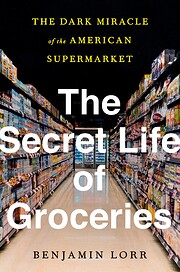
Book Corner 2021.19

by Benjamin Lorr

Not what I was expecting, exactly. Little story arc; more of a series of discrete journalistic investigations. Some of them were very difficult to read – the perpetually debt-ridden life of a trucker; the horror story of being an enslaved, maimed captive on a Thai fishing boat; even the ostensibly benign story of the woman furiously driven to make “Slawsa” a success (and climb out of debt) was a little sad.

But Benjamin Lorr’s style is really captivating. He’s just trying to make sense – doesn’t have an ax to grind; doesn’t constantly make himself the center of the story; ultimately doesn’t come out with much in the way of answers. For those who want reform, he wants us to “consider that any solution will come from outside our food system, so far outside that thinking about food is only a distraction from the real work to be done.”

As a temporary sidetrack, Lorr mentions a prior book about the world of yoga, where he wondered what it was all FOR, all this yoga – it all seemed to be just be able to do more yoga. I feel that way when I wonder about why we care so much about being healthy. Why lose weight? To be healthy. Why be healthy? To live longer in better health. For what though? What’s all this health ultimately for? Anyway – he finds an eerie analogy in the world of groceries and our god of convenience. What are we making everything so convenient FOR, ultimately?

Anyway I do love those philosophical questions. Like he said – thinking about food itself is just a distraction. (  )

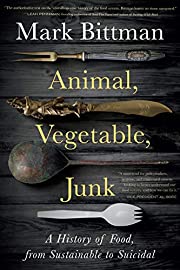
Book Corner 2021.18

by Mark Bittman

What a contrast with my previous food read, Resetting the Table. I had a feeling I was being swayed too much towards buying this book based on the title. It is not my style at all; it’s just one bad thing listed after another. Everything that has ever happened to our food system since the dawn of history has been bad – did you know that? I don’t care how many facts may be in it; I never find unbalanced works like this to be educational.

I thought that midway through we would finally shift gears towards directing the barbs merely at the junk food industry, but the general negativity towards all modern agriculture never ceased.

I would love to get Bittman and Paarlberg together for a debate. Here are just a few ways they would explicitly part company:

– Normal Borlaug, leader of the “Green Revolution.” To Bittman, he “virtually ignor(ed) what was traditionally grown” in his blind zest for bringing in chemical fertilizers and pesticdes.

– Whether organic farming yields would fall far short of levels that could effectively feed the world’s current population – Bittman calls it “a moronic argument”.

– Whether Alice $100-a-plate, I-never-step-foot-in-a-supermarket Waters has anything of value to teach us about food systems

I had to rub my eyes in disbelief when I read this on page 243: “Although it’s immoral and cruel, and overseen by mostly immoral and cruel people – only a few of whom were sadistic masterminds – the [food] system is largely the result of incremental decisions…” What?! People who work in modern food businesses are “mostly immoral and cruel”? “Mostly”! You might think the majority of them misguided. But “immoral” and “cruel” are some really nasty words to depict “most” people overseeing an industry. (  )