Book Corner 2023.13

by Peggy Ornstein

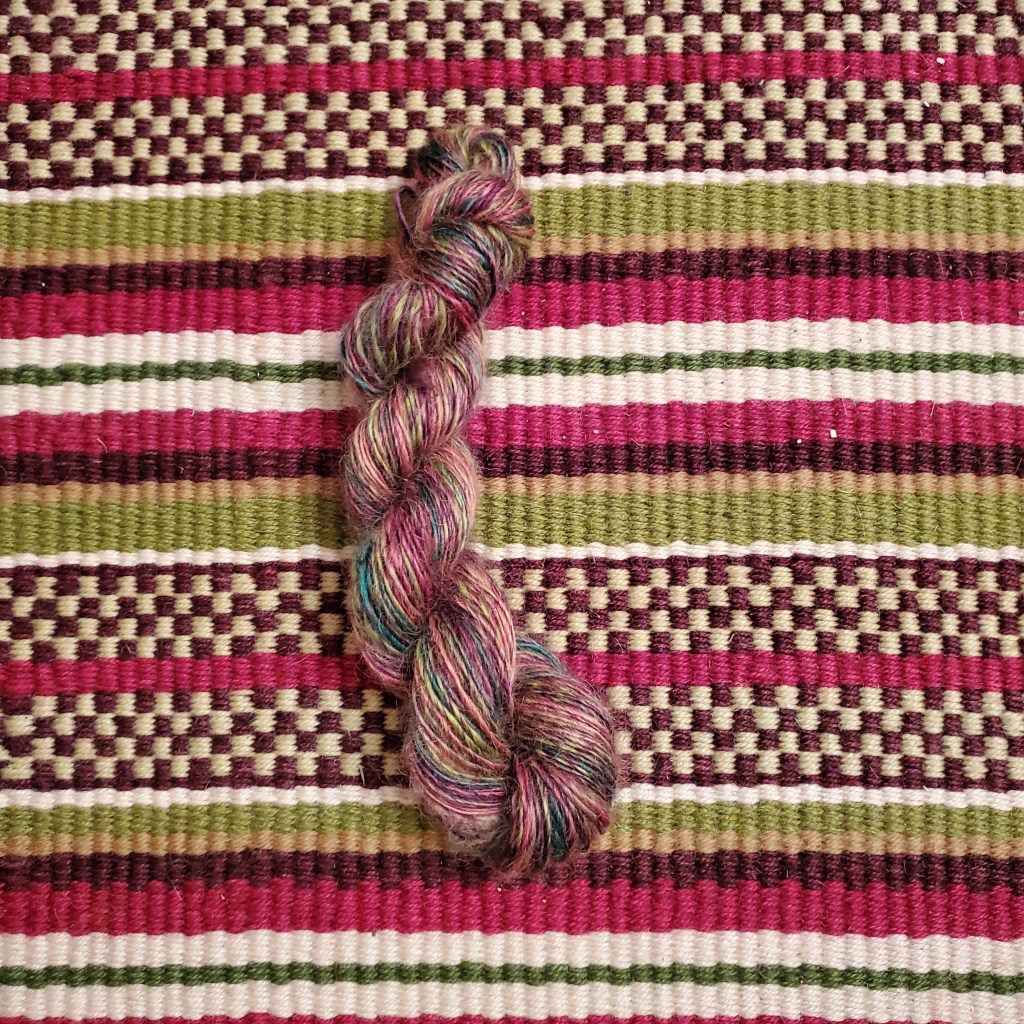
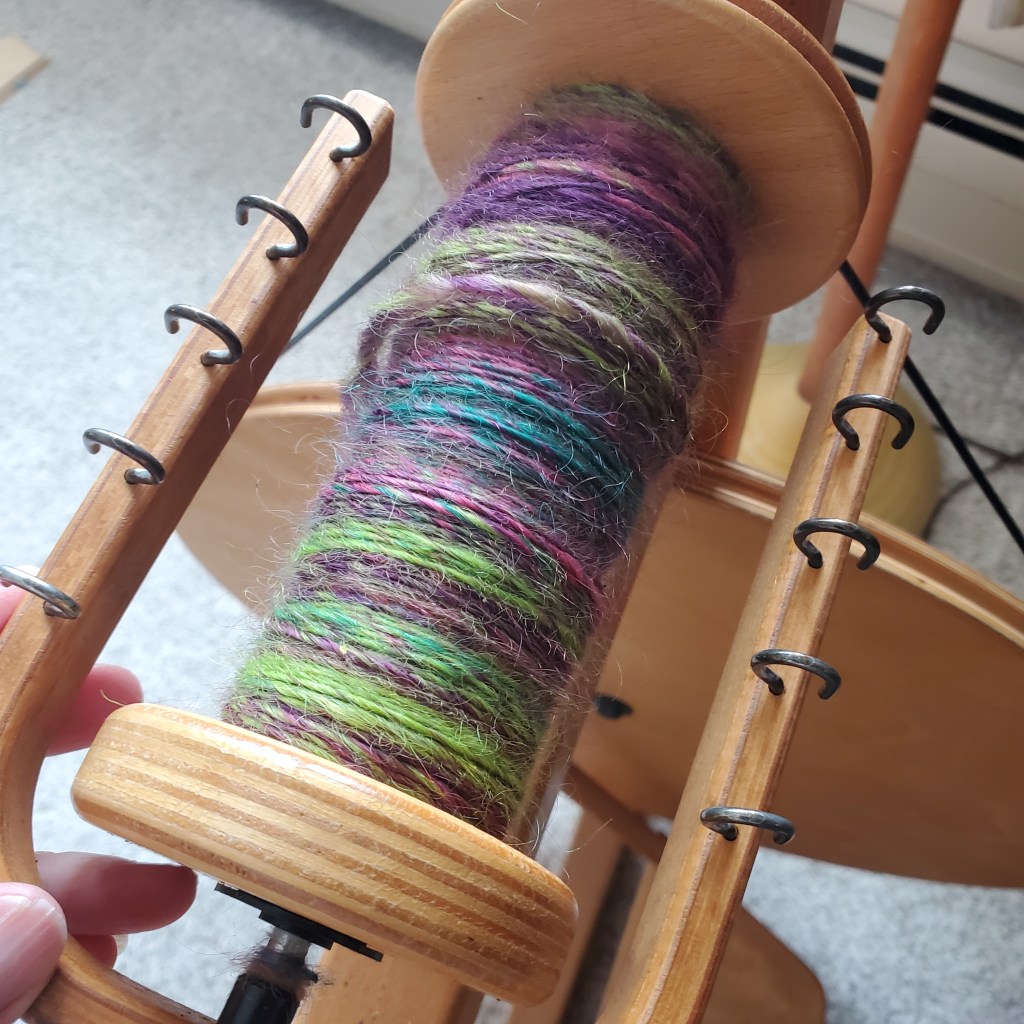
Basically, this woman tries all of my hobbies.

Specifically, she shears, cards, spins, dyes, and knits “the world’s ugliest sweater.”

She does this during pandemic times – and megadrought times. I can’t believe she undertook dyeing with a drought going on – surely negates all her other attempts at being a socially conscious crafter.

There’s way too much digression. For example, a chapter on indigo treats us to two pages on Joni Mitchell’s BLUE album. I don’t like when books do this – purport to be about a certain topic, then stray. I didn’t sign up to read about your affinity for Joni Mitchell or what you did during the pandemic or your family. I signed up to read about shearing, spinning, and dyeing.

So, sticking to the topics at hand:

Shearing isn’t very popular as a lifestyle choice because there are “many other ways to make a living that don’t require bending over for eight hours a day while an ungulate kicks you in the face.” Well put! In another blast of the reality of shearing, a sheep comments on her technique by letting loose a “gigantic mound of poop pellets” during the process. Shearing: well captured. Onward!

Carding and spinning chapters weren’t so interesting, so let’s skip to the dyeing. Acid dyes for home use might as well not exist; Author seems to think she has to do natural dyeing. Thus, the reader “might notice I mention yellow a lot.” Confirmed: trying to dye with natural materials you find in your immediate environment means you had better like yellow. Natural dyeing: spot-on! Next!

Knitting. Author undertakes a sweater even though she knows it would have been wiser to choose a shawl or cowl pattern. One small reason she chose the unwiser path is that she admits to “never, under any circumstances, wearing either of those garments.” Yes – let’s face it. Shawls and cowls are just not normal wardrobe options. They’re things knitters like because they are easy and/or use little yarn.

I was put off by Author’s mathophobia. Mathophobia is tiring to read about. “Even writing the phrase ‘set of ratios’ gives me a headache.” Po widdle bebby. Math is hard!!

BUT… Author wins my love again when she correctly identifies the kinship of knitting with programming! Knitting is coding – “with knits and purls replacing the standard binary 0s and 1s.” Knitting patterns are programs (this is me talking). Garbage in, garbage out. Follow the steps, get a repeatable result.

Certainly could not resist this book and hope it encourages just one person out there to try their hand at – almost said ‘sheep-to-shawl’ crafting, but let’s make it ‘sheep-to-article-you’ll-actually-wear’ crafting.

Book Corner 2023.12

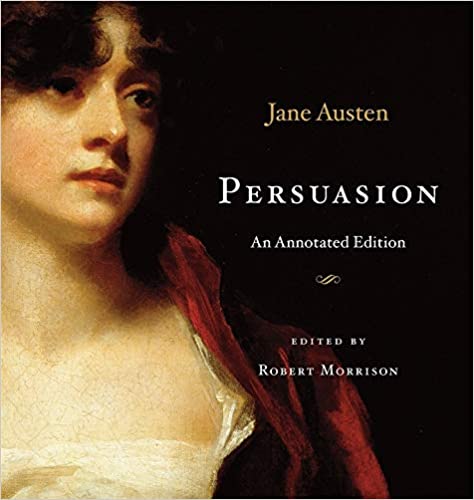
by Jane Austen

This was a re-read, of course.

My new impressions this time were how insufferable Mary Musgrove was. I always remembered her as merely a bit of a whiner.

The BBC adaptation that came to theaters in America in September 1995 always sticks with me. Of course, I don’t remember the very date we saw it, but September or October would have been likely, as Maggie & I would have run right out for it. Most memorable was that Xopher came with us, and didn’t hate it. He was different then.

Flashback

Bono has been joining me lately during my crafting hours. These are such beautiful albums. How much do I love the song “One”?

Of course they also bring me back to my super-young adulthood and periods of psychological unrest. Aren’t we glad we’re past all that now? Aren’t we? Then again I wasn’t doing so well 10 years ago, either. It’s more like I have intervals of Ordinary Time, but that doesn’t mean I’m ever ‘better’, or ‘beyond’, or ‘quite right now’.

Book Corner 2023.11

by Kathryn Ma

This was a fun little story. Shelley is a young man who comes to San Francisco from China with dreams of success. Everything goes rather poorly from the start. He had been told his uncle, who will be hosting him, owns a big fabulous department store; but the truth is the family used to own a little corner grocery, but no longer. Furthermore, his uncle and aunt stick him in a tiny spare room and kick him out after two weeks. Hunger and homelessness threaten. But Shelley is positively buoyant through it all. He makes himself useful to his uncle’s elderly father and endears himself to the little boy of a family friend. He endures heartbreak and trickery. And then it’s all tied up in a nice bundle.

From the Dept. of F*ck It

Ya know it doesn’t seem to matter how much or how little I sleep. I can have a lousy night and still feel just average the next day; I can sleep seemingly plenty and still feel like crap. And in a similar vein, Saturday night I eschewed burgers and fries and ice cream when we went out to eat, yet I still had a lousy night. I feel so exhausted today, and I didn’t even buy into that DST bullshit (I’m protesting and shifting my life an hour later, which is to say, NOT shifting my life). I really can’t remember the last time I felt physically “fine”, in fact. So just f*ck it. Do what you want, body. You’re gonna do what you want anyway.

Book Corner 2023.10

by J. Bradford DeLong

I really enjoyed this. It’s a 500+-page economic history of the years 1870 – 2010. It got really exciting in the WWI chapter, nearly every sentence packing a punch. Here’s just one I bookmarked, about how just 80 years separated Croats & Serbs fighting together as blood brothers in WWI and the breakup of Yugoslavia in the 90s: “To fight one set of wars at the start of the twentieth century to unify Serbs and Croats, and another set of wars at the end of that century to ‘ethnically cleanse’ Serbs of Croats, and Croats of Serbs, seems among the sickest jokes history ever played on humanity, or, more causally accurate, humans ever played on history.”

The overall theme of this history is Hayek vs. Polyani. Friedrich Hayek, I was familiar with, but with Michael Polyani I was not. DeLong sums up Hayek (repeatedly – the book is not afraid to repeat its themes): “The market giveth, and the market taketh away; blessed be the name of the market.” Polyani, if I can summarize: nothing beats the free market for producing general prosperity, feeding technological progress, and allocating capital efficiently. However, people generally want more. They want some stability, some expectation they can keep their job, some fairness, etc. The market produces none of these things, which isn’t a bad thing or a good thing; it’s just not what the market does. Since people will persist in wanting these things, they will take action to make them happen, which is entirely reasonable. This struck me as one of those perspectives with a deep sense to it. Like when I turned away from libertarianism all those years ago. Freedom is great and important, but why should it trump other things that are also great and important? Like Haidt’s RIGHTEOUS MIND – empathy is great and important, but people have other pillars of morality. So, the market is great and important, but there are other things that maybe it doesn’t always trump.

Great food for thought, great history, great read.