

This is Bill Wyman, the late-blooming lilac behind the back porch. The varietal is actually named “Donald Wyman,” but we changed this guy’s name to Bill early on.
This is Bill Wyman, the late-blooming lilac behind the back porch. The varietal is actually named “Donald Wyman,” but we changed this guy’s name to Bill early on.

by Lily Brooks-Dalton
Finally, I like the book club pick! This author does a good job of building and sustaining drama, and crafting characters you care about. Strong plot line, strong women – that’s a book for me!
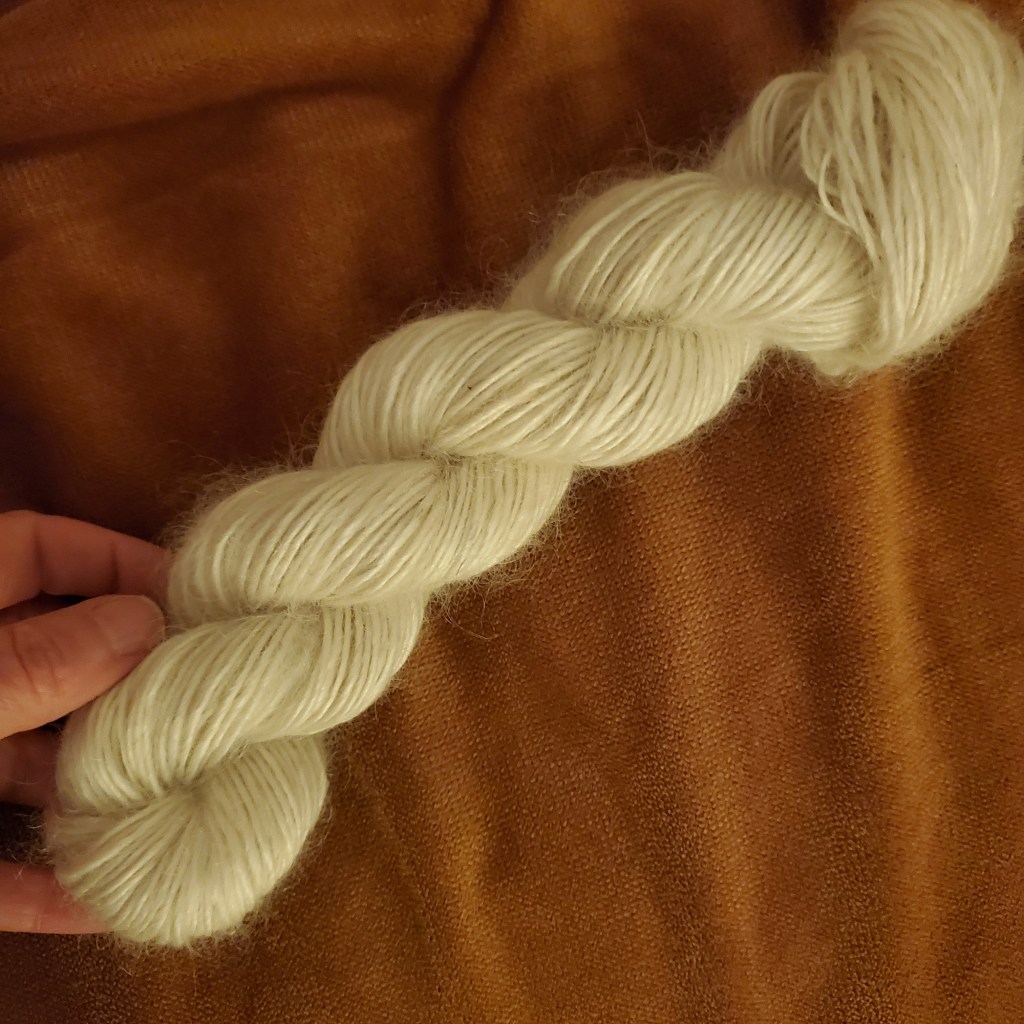
I finished that skein of white.
by Dr. Jan Pol
He had a co-writer so it should have been a better read. It really had no organization, just one anecdote after another, and it got repetitive. I feel sorry to give it a negative review, because we used to enjoy the show. I would have liked a more chronological narrative approach. Instead it was, “Then there was the time I saw an animal do this and I did this. Then there was the time I did this and the animal did this.”

I finished a scarf.
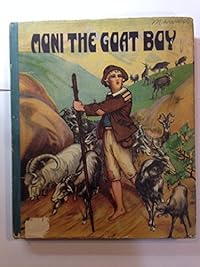
by Johanna Spyri
Another Johanna Spyri book. Makes HEIDI look like great literature. Seriously, a slight book where the goat-boy wrestles with his conscience over being a party to a misdeed, all for the sake of the love for his little goat kid. It does suffer by comparison to HEIDI; there’s no gruff old grandfather to love.

Let’s focus on the positive. I was stymied trying to fully surround my spring plot with rabbit-deterrent chicken wire. But I got a good start. And just look at that lettuce.
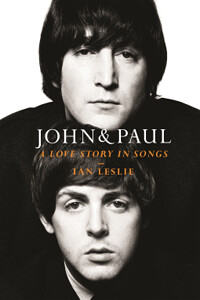
About the relationship between John & Paul. Very sympathetic to Paul; John comes across as an extremely damaged person at best, mentally ill at worst. The cruel things he wrote to and about Paul after the breakup were the rantings of an immature and insecure individual. Paul, in this telling, was just stoic, perplexed, bewildered. I felt so bad for him.
Both young men endured terrible losses early in life; John had the much more confused and unstable upbringing, despite his Aunt Mimi’s efforts to supply the opposite. Each man named his first child after his mother.
The premise of the book is that we can read the John/Paul relationship as a bromance conveyed in their songs. Men in that time and place could not openly express their feelings, especially about each other. I guess it’s what Jim Croce said: “I’ll have to say I love you in a song.” The song analyses in the book are spot-on and convincing.
Favorite quotes:
Actually an Arthur Schopenhauer quote. “Talent hits a target no one else can hit. Genius hits a target no one else can see.” The Beatles were just on another plane.
“All of the Beatles, with the partial exception of Ringo, were promiscuous; what distinguished Paul’s philandering was the scale of it, and his attention to logistical detail. He really put the work in.” Isn’t that so him?
Paul seemed “annoyed by John’s dalliances with avant-garde art. (When Lindsay-Hogg asks, ‘Where’s John?’ Paul replies, ‘Probably in a bag in his dressing room with Yoko. I think they brought their own bag with them today.’)” Everybody’s talking about bagism.
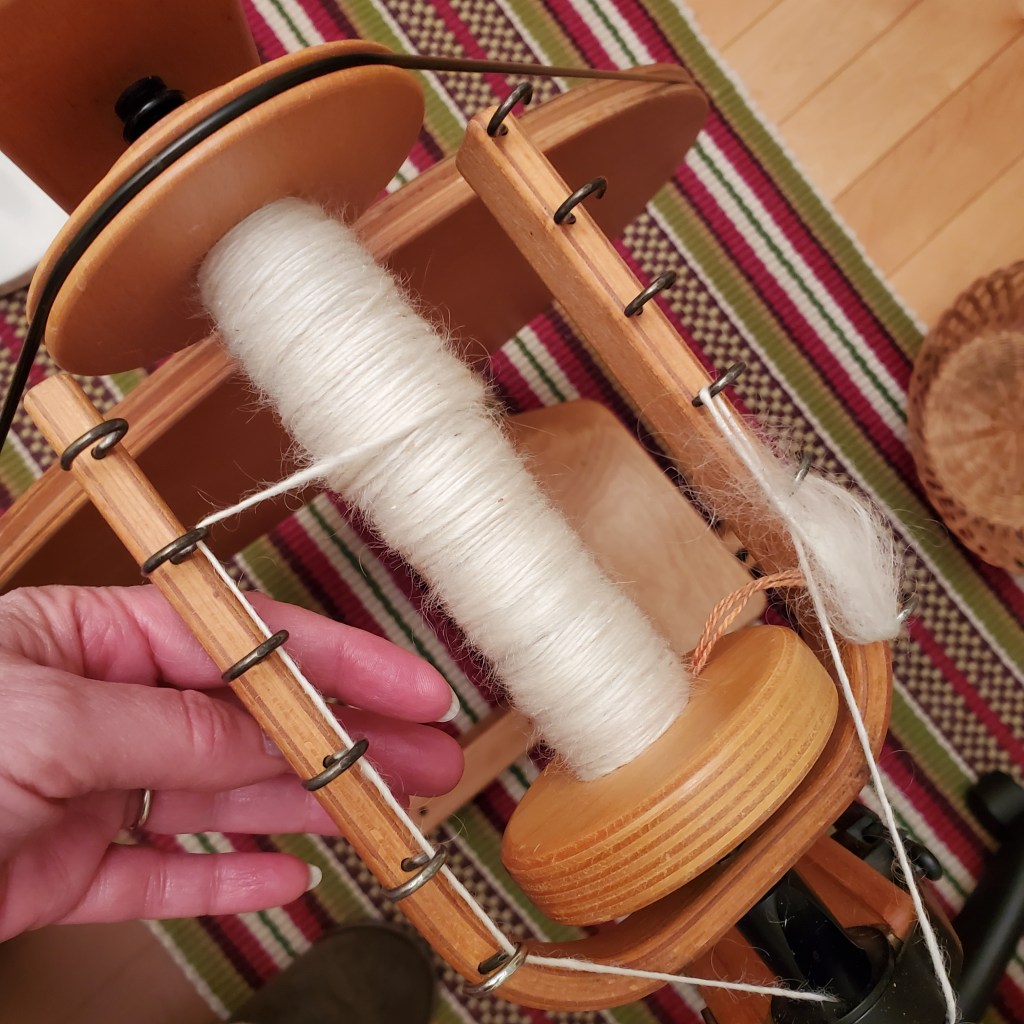
I do like spinning white! Makes me extra-conscious to pick out every tiny bit of debris & make it perfect.


 Tytania