Book Corner 2020.3

temp.jpg

The Lighthouse Keeper’s Wife by Connie Scoville Small

It’s funny how I got this book. My husband was telling his mother about the Maine Lighthouse Museum in Rockland which we visited this past September, and how he found it to be a very haphazardly run place considering their impressive collection. Yeah, I piped up, and told a little story about how they had talked up this memoir written by a lighthouse keeper’s wife, and got me real excited and wanting to read it, and there wasn’t nary a copy of it in their bookshop. My mother-in-law said, oh, I think I have that book; and she fished it out. Sure enough, this was the very book!

“[A] life of people risking their own lives to help men and ships; a life of order and duty.”

This is how Connie Scoville Small describes her life of living in lighthouses along with her husband Elson, in the near-conclusion of her memoir, THE LIGHTHOUSE KEEPER’S WIFE.

From 1919 to 1947 the Smalls tended lighthouses up and down the Maine coast. I myself have little experience with life on the sea, and little patience to read through long descriptions, along with little ability to place myself in long-drawn-out scenes of nature with which I have little familiarity. I don’t think it was just me, though; Connie often seems to drop us into scenes with little in the way of helpful background explanation.

That said, I kept reading because I love slices of ordinary life from early in the last century and beyond. I could not easily picture the lighthouse-specific and maritime and boat scenes, but I loved reading about the family’s cats and cows… and of course the food. Lots of baked goods!

Rarely does Connie give us deep insight into what she, or, perish the thought, Elson, are feeling about the big picture. But here is a glimpse:

“I put inside of me my desires, my longings, things I wanted to do, if they came in conflict with what he wanted. I felt what I wanted were selfish desires… I gave and I’ve never been sorry… I wanted to rebel, desperately so at times, but I didn’t… I filled my life with Elson… I’d be so busy making it work and doing things he wanted me to do… I forgot to be unhappy and found joy.”

So different from us today. That’s why I like to read old memoirs. ( )

Check out the title link for her obituary – she died at 105!

Book Corner 2020.2

20200108_184025.jpg

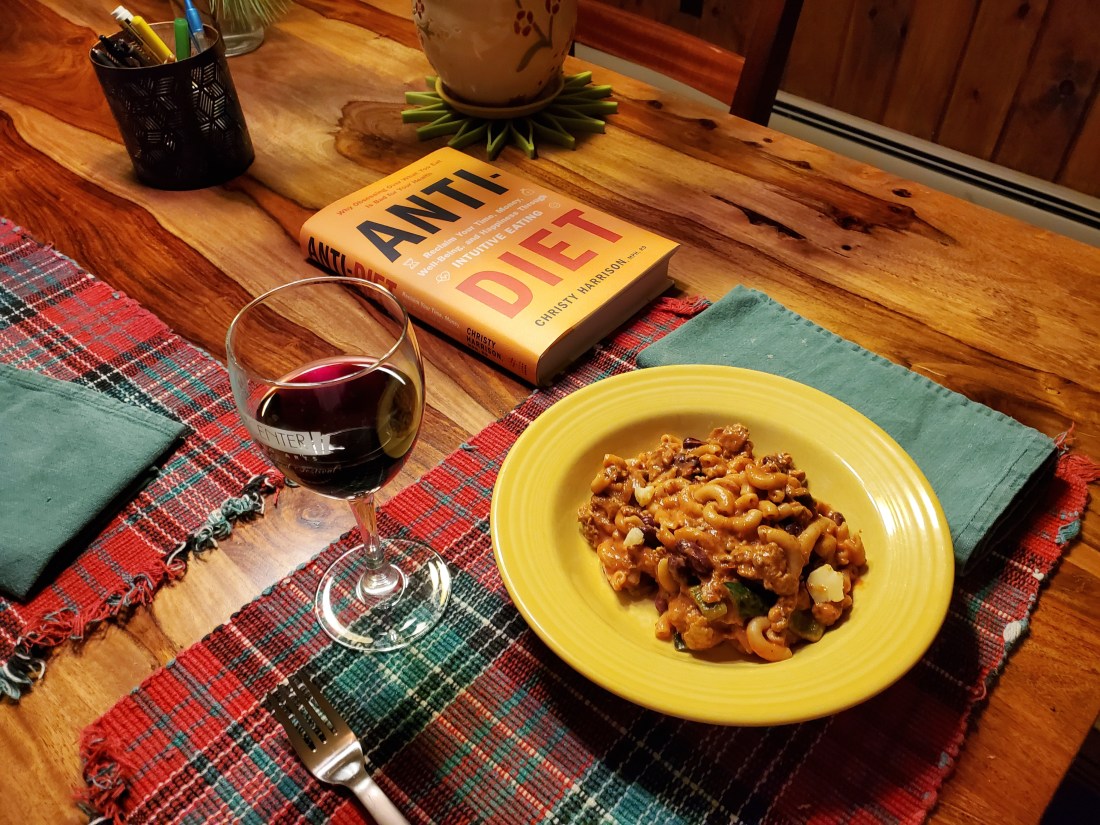
The Anti-Diet by Christy Harrison

Just like THE F*CK IT DIET by Caroline Dooner but with very little swearing. Harrison is a registered dietician, and uses what she knows to convince you that Health At Every Size (HAES) (TM) is the only way to go. Lots of proof showing that diets don’t work, don’t last, and actually make you gain weight (NOT THAT THERE’S ANYTHING WRONG WITH THAT!). Seriously, Harrison is always bending over backwards not to offend (with constant shout-outs to non-binary-gendered people), refusing even to use the words “overweight” or “obese” without quote marks.

There is only a very short chapter about how to do truly intuitive eating. Like THE F*CK IT DIET, this book warns you that by “intuitive eating” we do not mean being obsessed with hunger cues, which is just dieting by another name. F*ck-it-style intuitive eating means: just eat. Whatever you want, whenever you want, however much you want. Enjoy.

Who couldn’t get behind that?

Harrison gives lots of reassurance that this will NOT ruin your health. After a honeymoon phase with brownies, you will settle in, your weight will settle in, and your health will be fine – or not – but if not, it won’t be because of eating the wrong things. Lots of factors contribute to health, including many beyond one’s control. And dieting is about control, so that’s not a message many may want to hear.

But it’s true; and other things that are true are: adipose tissue itself has NEVER been proven to DIRECTLY cause health problems. It’s just body tissue, after all. And: being health-obsessed, or even health-conscious at all, is not a moral obligation. There are no “good” and “bad” foods because an apple and a hamburger are MORALLY EQUIVALENT. Running a marathon and watching a Netflix marathon are MORALLY EQUIVALENT. What is “health” for, anyway? To let you live longer and more productively … to do what? Whatever is meaningful to you, THAT is the moral obligation; not health per se.

This would all be obvious if not for what Harrison terms “diet culture,” the water we all swim in. We are all afraid of being or becoming “fat” and what it will mean for our status. But this sounds shallow so we cloak it in talk of health-consciousness and “wellness.”

Just chuck it all. In other words, F*ck It. ( )

S’E2S’E #8

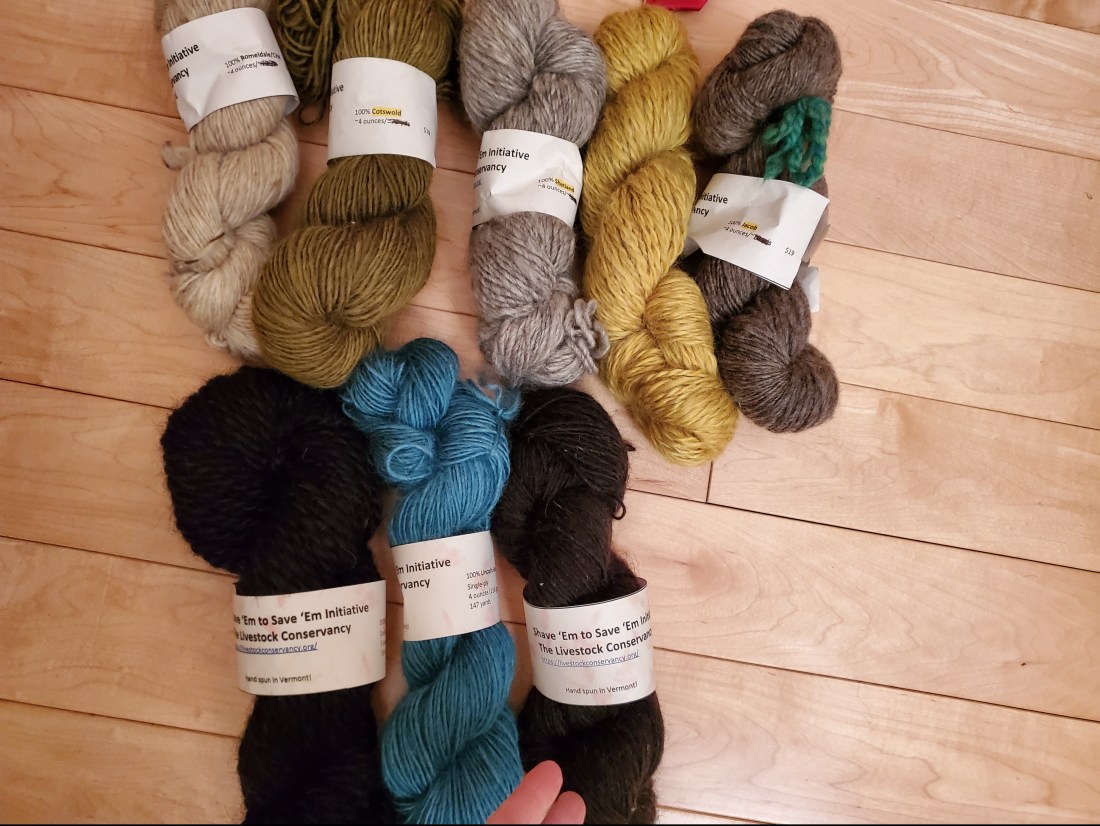
Then there were 8:

thentherewere8.jpg

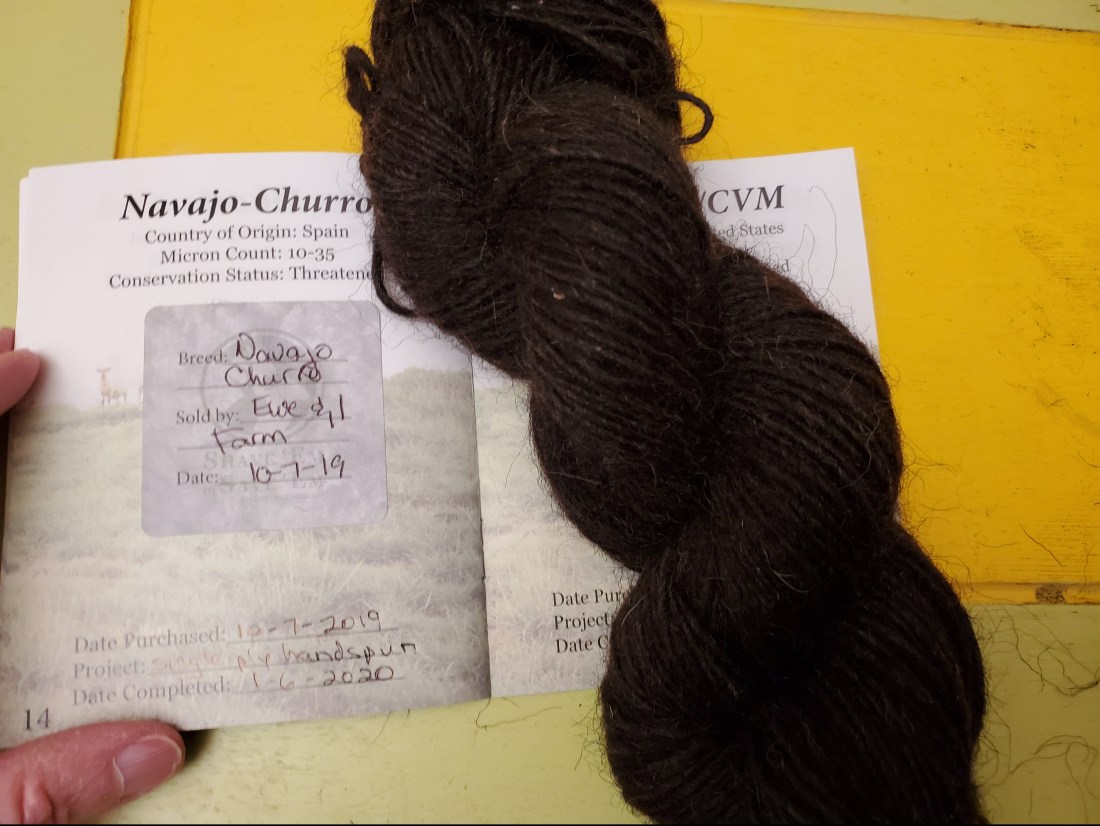
Here’s #8, a Navaja-Churro Lambswool single-ply.  Sheds all over.  I bought it as roving, and spun it directly.  When I put it in hot water to set, lo and behold, I discovered it was FILTHY!  So, one wash in Tide detergent later…

navajochurro.jpg

Book Corner 2020.1

1250146054_01__SX142_SY224_SCLZZZZZZZ_

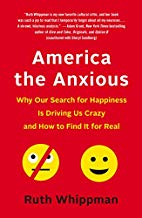
American the Anxious by Ruth Whippman

Started out strong, and had a hysterical, dead-on chapter about meditation, or as Ruth puts it, “Meh”-ditation. The theme really isn’t about how Americans are too anxious; but about the ridiculousness of the happiness quest and its associated industry. Ruth’s discovery seems to be that happiness is other people. I beg to differ, but I still cheered on her take-down of mindfulness.

Unfortunately it frequently devolved into that kind of non-fiction book I hate, the kind that reads like a research paper. “Research shows this. It seems that that. Turns out that…” And chapters about parenthood and Facebook were boring, with nothing we haven’t heard a zillion times.

Even amidst all of that, though, I still found myself frequently laughing out loud – not just chortling but outright guffawing. Maybe it’s the Britishness of her humor. ( )

Hey [20]19

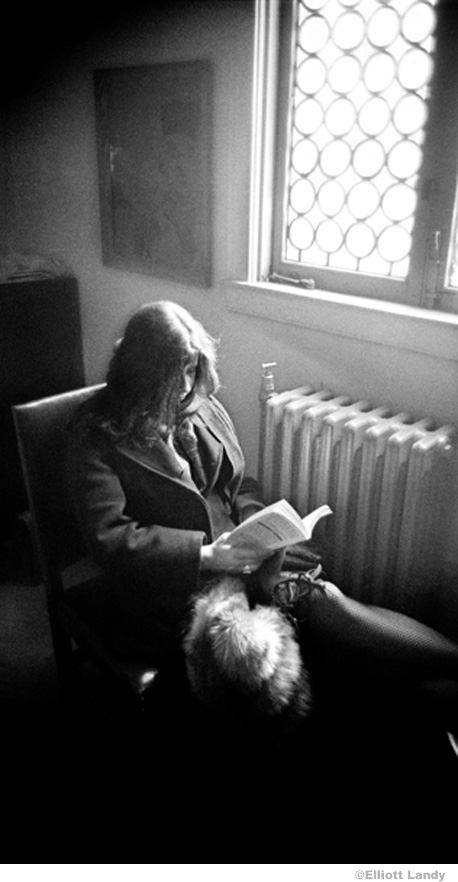
180 Janis Joplin, backstage, Grande Ballroom, Detroit 1968.

I read 57 books in 2019.  Thanx to Tyler Cowan, who taught me to discard with abandon books I start but end up not enjoying.  Read only what makes you really excited to get back to your book, and you’ll make the time to get back to your book.  And have a better time when you do.

Best fiction discovery: Lionel Shriver.  I discovered her starting with The Mandibles and ended up reading four more, my favorite probably being We Need to Talk About Kevin for its sheer staying power, closely followed by the Post-Birthday World.  I really love parallel universes.  So Much for All That would have been another favorite were it contained to the main plot, and had it discarded with the subplot.

Best non-fiction discovery: Meghan Daum.  She writes essays that just talk out of my own brain.  See: the Unspeakable; this year’s Problem with Everything.  Some of Life Would Be Perfect If I Lived in That House also resonated.  She has also written a novel, the Quality of Life Report, which I read years ago before I knew she was herself.

What happened in my life this year that didn’t take place on my couch under the reading lamp?  I turned 50, obviously, and got some clean medical screenings.  My spouse and I greatly enjoyed 2 weeks in coastal Maine.  A new mudroom was completed on the back of our house.  All of this could have been predicted; the real wild dominoes fell at my job.  My manager experienced a life-changing injury in late February; and [the product that I work on] experienced a 6-hour outage on April Fool’s Day.  As a result, one of my best work-pals is now my boss, and we haven’t done any meaningful work since April.  You just never know.

Book Corner 2019.57

1984822179_01__SX142_SY224_SCLZZZZZZZ_

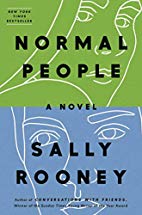
Normal People by Sally Rooney

The first part was excellent. Marianne is a high school outcast who barely registers, let alone cares, that she is an outcast. Connell is a well-liked, smart and athletic boy who is nevertheless awkward and introspective. Marianne is part of a rich family, and Connell is the son of their housecleaner. They begin a sexual relationship, which they keep secret. The secrecy is not because Marianne is associating with a working-class boy beneath her station; it’s ironically because Connell is dallying beneath his station in the high school popularity pecking order. Small spoiler for part one: Connell finds out after high school is over that a) everyone at school kind of knew all along about the relationship, and b) now that high school is over, it doesn’t matter at all that he was seeing Marianne, because that whole part of life is over. So all the secrecy was for nothing, and this hits him hard, because he knows he should have done better by her.

After that, the story seems to thrive on misunderstandings and unspoken things between Marianne and Connell, who both attend Trinity College. It became a bit less interesting as Marianne turned out to be not so much a free-spirited iconoclast but a broken girl from an abusive home; Connell became the more interesting character. I’ll try to avoid spoilers by stopping here, but the ending wasn’t bad. ( )

Book Corner 2019.56

b677751430429c3597276347451434f414f4141

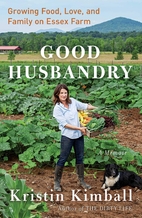
Good Husbandry by Kristin Kimball

Having first met Kristin Kimball in THE DIRTY LIFE, we follow up now to see how her marriage to Mark and Essex Farm are doing.

Well, one observation of hers that I liked was an interesting angle on the by-now over-observed ‘curated’ nature of our lives today.  Someday, she said, future generations will look back on how we only showed a positive picture of our personal lives, and marvel at what a load of shit it was, the way we look back at the Victorians and their ostensibly prudish mores and know that they got down and did the nasty just like every other generation.

So Kimball purports to pull back the curtain a bit and show us some of the miserable bits of existence on a farm with a nutjob husband who wants to dress the kids in sacks.  But of course, overall the, arc of the book has to bend towards positivity, or else it wouldn’t be a product of its time; or else, nobody in this time would want to read it.

The second kid they have basically wrecks everything.  Kimball starts to feel separated from the farm and its work and from Mark as she spends all her time taking care of babies and cooking.

It’s so easy to see the solutions to other people’s problems – that’s why I like reading advice columns so much.  I wanted to shout, YOU’RE DOING TOO MUCH.  Why do you guys think you have to fee the entire town?  Feed yourselves – and a few extra people as gravy!  You can do that easy!  At no time or place in history did an entire town get fed from a single freaking farm.  What on earth do you think you’re trying to do?

As for the martial problems, I wanted to shout: is Kristen a partner in this farm business or is she a hired hand?  If she’s a partner, why can’t she decide to spend a few dollars improving a room in the house, or taking a freaking afternoon off to go to Plattsburgh – with the kids, to buy a piece of plumbing equipment for chirssakes – it’s not like she even wanted to go there to buy shoes, although that should have been perfectly acceptable too.  You know, world, not every physical step taken in a marriage has to be we, we, we.

I really liked DIRTY LIFE and I still like reading Kimball because I share her feelings about growing and cooking food.  I envied the meals she described making – not because they sounded so delicious, though I’m sure they were, or creative or anything, but because they were all so hard-earned, which is its own special sauce.  Some people aim to work hard and play hard.  I wish I could work hard and eat hard.  I really like that about vacations where we bike & hike – I like basically wrecking our bodies all day so we can just fill them up with abandon at the end.

Anyway as we feel Kimball’s worry and read about their privation through hardships and setbacks on the farm, only towards the end of the book does she mention the help they got from a royalty check from her first book.  It made me conk myself on the head and say, oh yeah, there is that.  They did have an alternate potential source of income this whole time, which she never mentions – she’s a writer.  They aren’t only holding on by their fingernails on the farm.

One last observation is about how they struggled with flooding; their farm is low-lying and they had no drainage until some weirdo in town decided to voluntarily finance it for them out of the blue.  She touches on the realization that the ‘bad’ years of wetness actually were outnumbering the ‘good’ years, and it takes years for people to slowly realize that a particular piece of land or region of the country maybe isn’t all that suited to what they envisioned doing with it during an odd beautiful year.  Reminds me of an old quote I read about early white settlers in New England, to the effect of, “When I think of the glowing pictures of this place that they wrote to us back home, I can only think, they must have been writing during strawberry time.”

In the end things started looking up for Essex Farm.  Key things seemed to be the book royalties, and opening up their market to the rich weirdoes in NYC.  Yay rich weirdoes.

****