Wolf Hall

I wanted to save a couple of quotes from Wolf Hall before I return the book.

“How can he explain to him? The world is not run from where he thinks. Not from his border fortresses, not even from Whitehall. The world is run from Antwerp, from Florence, from places he has never imagined; from Lisbon, from where the ships with sails of silk drift west and are burned up in the sun. Not from castle walls, but from countinghouses, not by the call of the bugle but by the click of the abacus, not by the grate and click of the mechanism of the gun but by the scrape of the pen on the page of the promissory note that pays for the gun and the gunsmith and the and the powder and the shot.”

“And beneath Cornwall, beyond and beneath this whole realm of England, beneath the sodden marches of Wales and the rough territory of the Scots border, there is another landscape; there is a buried empire, where he fears his commissioners cannot reach. Who will swear the hobs and the bogarts who live in the hedges and in the hollow trees, and the wild men who hide in the woods? Who will swear the saints in their niches, and the spirits that cluster at holy wells rustling like fallen leaves, and the miscarried infants dug into unconsecrated ground: all those unseen dead who hover in winter around forges and village hearths, trying to warm their bare bones? For they too are his countrymen: the generations of the uncounted dead, breathing through the living, stealing their light from them, the bloodless ghosts of lord and knave, nun and whore, the ghosts of priests and friar who feed on living England, and such the substance from the future.”

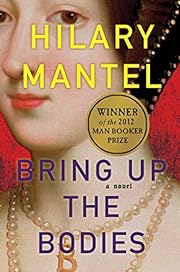
Booker.

Book Corner 2024.41

by Hilary Mantel

Getting my hands on the sequels as soon as possible.

I had no idea how much I would love this book. I didn’t think I cared about Henry VIII and the Tudors and the machinations of powerful now-dead people. But watching the Protestant Reformation unfold in England turns out to be an incredibly exciting excuse for simultaneously enjoying some absolutely beautiful prose. Two bookmarks:

“How can he explain to him? The world is not run from where he thinks. Not from his border fortresses, not even from Whitehall. The world is run from Antwerp, from Florence, from places he has never imagined; from Lisbon, from where the ships with sails of silk drift west and are burned up in the sun. Not from castle walls, but from countinghouses, not by the call of the bugle but by the click of the abacus, not by the grate and click of the mechanism of the gun but by the scrape of the pen on the page of the promissory note that pays for the gun and the gunsmith and the powder and shot.”

“For they too are his countrymen: the generations of the uncounted dead, breathing through the living, stealing their light from them, the bloodless ghosts of lord and knave, nun and whore, the ghosts of priests and friar who feed on living England, and suck the substance of the future.”

I didn’t care that I didn’t know precisely what was going on sometimes. As I’ve said before, I don’t refer back or forward to “casts of characters” or some such. A novelist has to make sense to me as the story flows; I’m not doing a book report here. And this all made sense; even when I didn’t grasp every detail as it flew by, I was always quickly regrounded.

Book Corner 2024.39

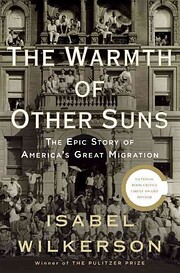
by Isabel Wilkerson

I did a lot of skimming, skipping most of the historical digressions in favor of the three life stories. I can appreciate this as a piece of reporting, but no way is this the second best book of the century. It was so repetitive. Wilkerson will tell you the exact same thing mere pages apart. “She had heard that they strapped women down during delivery” (page 245). “She had heard that up north, doctors strapped women down when they went into labor” (page 267). Within two pages, “their respective corners of the echoing mansion… feeling too small for two people so different from each other,” and “that so full a house would come down to just these two,” and “marooned in a house that was too big, but not big enough to escape each other.” This isn’t great writing to me.

Book Corner 2024.37

by Percival Everett

This book had me hooked in the first paragraph. I was sampling various “top books of the century” as per the NYT, and I had just sampled about four in a row where the narrator was a writer. One of my peeves. If the narrator isn’t a writer, s/he’s an artist, i.e. a thinly veiled writer. This book opens with, “I am writer of fiction. This admission pains me only at the thought of my story being found and read, as I have always been severely put off by any story which had as its main character a writer.”

This book is very odd, as is its narrator. I’d call it ‘experimental.’ Enough to scare me at little at first. But it was so worth the ride. It’s going to be the best novel I read this year, I can predict. But I’m afraid of its being too politically incorrect to recommend to a lot of the people I know.

“Now a major motion picture!” Which I definitely will not go see.

Main thread: Thelonious Ellison is a writer of abstruse mostly unread books. He is black but uninterested in the fact. He becomes incensed when an atrocious book of denigrating black stereotypes becomes a runaway best-seller and decides to write his own awful book of denigrating black stereotypes, making it a broad parody. But it’s taken seriously and makes him millions.

Another thread: violent deaths of his father and sister, and slow loss of his mother to Alzheimer’s. I can relate to the difficulties of parental decline, simultaneous genuine grief coupled with genuine selfish thoughts.

Thelonious would probably be called “on the spectrum” or “neurodivergent.” Also “brilliant.” The writing is all of the above and I adored it.

Book Corner 2024.35

by Andrew O’Hagan

This book was long, confusing, and long. I did get a hang of who all the characters were by the end, but it’s the kind of book that gives you a “cast of characters” list up front. I NEVER use such lists. I refuse to do that kind of work for a novel. If I can’t keep track of who’s who, you’re doing a bad job as a novelist.

Reading it on Kindle I had no realistic idea how long it was going to be. If I’d picked it up in real life, I probably would have put it down again.

I can appreciate it as a pretty well-written piece of lit. But it was kind of a downer. Not many good things happen.

Book Corner 2024.34

by Lucy Grealy

So much pain.

This is a childhood cancer memoir, though the wonderful afterword by Ann Patchett does not want you to think of it as a cancer memoir, but as a beautiful piece of writing. OK, but it’s about a girl who went to chemo every single week for two years.

And SPOILER alert. I found myself thinking, “I can’t believe they killed her father and both her horses!!!” I don’t know why my mind phrased it that way, “they”, as if it were a movie, rather than a true story. But yeah. It’s not bad enough she has bone cancer and disfigurement.

I was planning to go on to Ann Patchett’s TRUTH AND BEAUTY next, which is about the adult friendship between Patchett and Grealy, but I just felt like I’d had enough. So much pain.