Book Corner 2020.50

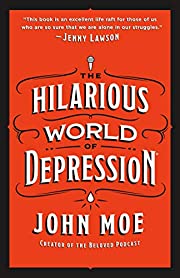
by John Moe

Depression IS hilarious! Laugh-out-loud funny!

OK it isn’t exactly depression that’s hilarious; it’s John Moe, a Person with Depression. I’ve got laugh-out-loud funny bits bookmarked, but they tend to be scenes that go on for a little while rather than one-liners, so not ideal for quoting.

I’ve also bookmarked more Serious items which are funny in a less ha-ha way and do lend themselves to recording here. John reminisces about the group of friends he hung out with in high school. Each could be classified as the good-looking one, the rebel, the philosopher, but John isn’t sure what role he played. Maybe the funny one, but he isn’t sure. “Depression has solidly imprinted that era as a time when I was worthless, so I honestly don’t know why anyone hung out with me.” I feel the same way about my high school group! I don’t know what role I played! I feel that way about my current friendships as well! What role do I play? I have no idea why anyone hangs out with me.

OK, one laugh-out-loud funny: John has a job where he’s being expected to do the impossible. “It was like being told to build an airplane but with no blueprints and also you’re a cocker spaniel.”

Back to more Serious: John lives near the Mall of America. To people around the world, the MoA is a cartoon, a symbol, etc. To John, it’s a nearby mall that has a lot of things that sometimes he goes to. “For people with depression, suicide is kind of like” that. “It’s a real thing… we know that it’s a real place you can drive to.”

And “Comedian Mike Drucker says he can’t commit suicide because all his friends will just write three paragraphs about themselves on Facebook, and ‘someone’s going to get two hundred Likes off my death.'”

Finally my favorite: Your problems have maps. “You can’t move to Minnesota and get away from all your problems. Or New York or Los Angeles or Rome or Melbourne or Mars. Your problems have maps, and they will find you.” (  )

Book Corner 2020.49

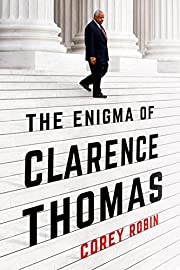
by Corey Robin

A well-researched and thickly detailed yet not overly long book; the whole thesis is perfectly laid out in the introduction, while the rest is just supporting evidence. What do you know about Clarence Thomas? I was with most Americans: the only things they “know about him are that he once was accused of sexual harassment and that he almost never speaks from the bench.” And that he’s a black guy that always voted with the late Scalia. Hence the enigma of the title.

Corey Robin’s well-supported thesis is that Thomas is not a conservative who happens to be black. His conservatism is on the contrary rooted in black radicalism. Thomas grew up in the Black Power movement and read and listened to the speeches of Malcolm X repeatedly throughout his life. His vision is one of black separatism based on the traditional patriarchal values he grew up with, raised by an autocratic grandfather. His grandfather, a self-made black businessman, is also the basis for his vision of a black separatist capitalism and feeds into his jurisprudence on cases of economics, the free market, and decisions like Citizens United, which deemed corporate entities entitled to free speech rights.

It’s a thing to wrap your head around: Thomas is so radical he’s conservative. And yet it’s all out there in plain sight in his writings and his decisions on the Court. The book lays it out in detail. Yet somehow we don’t know this – I didn’t. We don’t see it. We see a black conservative and just kind of think, “Well, these things happen.” Robin’s book begins with a quote from Ralph Ellison’s Invisible Man: “I am invisible, understand, simply because people refuse to see me… When they approach me they see only my surroundings, themselves, or figments of their imagination – indeed, everything & anything except me.” Reading this book is exactly an eye-opening exercise. (  )

Book Corner 2020.48

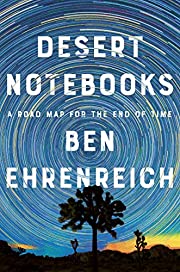
by Ben Ehrenreich

Disappointing. I don’t even have any good quotes bookmarked. It reads much like somebody’s “notebooks”, and I guess I should have taken the title more literally, but I’d been expecting something a little more coherent. Ehrenreich spends about half the book reporting from Joshua Tree, and the other half from Las Vegas where he is temporarily living due to having earned a fellowship there. The book is best describing the desert; his love for Joshua Tree shines through. Naturally, Las Vegas is described as being like some circle of hell. It’s so miserable to read; I get it, Vegas is crazy horrible, but you’re presumably there for a reason, right? The institution that hired you, your colleagues, surely there is some beauty or bright spot to be found? COULD WE HEAR ABOUT IT? Likewise, the guy seems to have the biggest horror movie scrolling on his phone’s Twitter feed. He’s always putting in asides where he looks at his phone and sees somebody being decapitated or watches the polar ice caps melt before his eyes; and again I wanted to shout, STEP AWAY FROM THE PHONE, DUDE. You don’t HAVE to subscribe to these horrible things. You don’t even have to be on Twitter! Sorry, I am probably missing some deep, dark beauty enveloped in this book, but it obviously didn’t find me. (  )

Book-Corner-to-Be

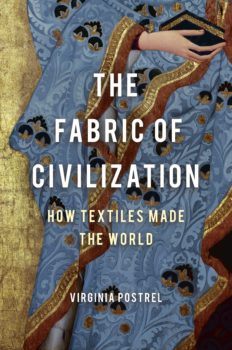
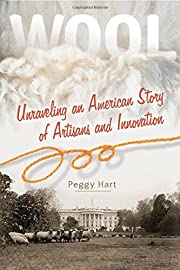
I can’t wait for this book to come out. I listened to a podcast tonight about it with the author, Virginia Postrel. I’m going to be interested in every single page. I know the author from the days when I used to read Reason magazine and she was the editor. I also read another one of her books, over 20 years ago. I’m very happy that as part of her research she learned how to weave on a hand loom, and took dye classes as well. I loved sitting on the floor listening to her talk about textiles while I sorted my carded fibers.

Book Corner 2020.47

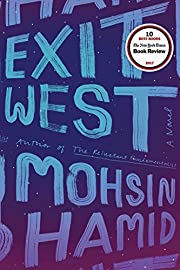
by Mohsin Hamid

I don’t know what to say about this. It wasn’t my kind of book. It went from horrifying to sad. 

 )

Addendum: I was coming down with Headache the night I wrote this and gave it short shrift. I could at least illustrate my commentary with representative quotes.

It started as horrifying: Saeed and Nadia are living in an unnamed nation being taken over by “militants.” Regarding how life can seem to go on in a normal, mundane way even when your nation is collapsing: “[O]ur eternally impending ending does not put a stop to our transient beginnings & middles until the instant when it does.”

[This was particularly depressing to me in light of a piece I read a few weeks ago arguing that we are already living in a failed nation. Lots of aspects of life may seem to be going on as normal, but that’s normal even in a failed nation. The piece was allegedly written by someone from Sri Lanka, where they had a civil war.]

And after the two of them escape, we go from the horror to the sad, as we get to read about the decline of their relationship: “…not unlike a couple that was long and unhappily married, a couple that made out of opportunities for joy, misery.” Ugh.

And: “[O]nce begun such cycles are difficult to break, in fact the opposite, as if each makes the threshold for irritation next time a bit lower, as is the case with certain allergies.” Ugh.

And finally, “…tension ebbing & flowing, & when the tension receded there was calm, the calm that is called the calm before the storm, but is in reality the foundation of a human life, waiting there for us between the steps of our march to our mortality, when we are compelled to pause and not act but be.”

Book Corner 2020.46

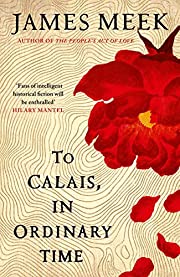
by James Meek

A wonderful story and a wonderful read. We follow the journey of a motley group of pilgrims attempting a venture from the Cotswolds, England to Calais, France, in the year 1348. Among our group:

– Lady Bernadine, daughter of Lord of the manor in the small town of Outen Green, who ventures forth to escape an odious arranged marriage and chase down her erstwhile paramour, Laurence Hacket

– Laurance Hacket, who is eventually encountered and added to the group, who turns out to be perhaps not all Bernadine hoped for and dreamed of

– Will Quate, good-looking young labourer, whose bondsman/freeman status is vague, and who journeys to Calais to join the fight against the French as an archer

– Hab, lowly pigboy back in Outen Green, who follows Will because he’s in love with him, and spends most of the book cross-dressed as his “sister” Madlen

– Thomas, Scotsman by birth, now scribe and proctor of a church in Avignon, France, to which he now hopes to return (I wasn’t clear what brought him to England in the first place)

– A band of archers with whom Will has thrown his fate, each one more grotesque and morally questionable than the last

– Cecile, or “Cess”, a Frenchwoman raped and abducted by the archers back during their last round of fighting in France, now a captive of one of them, the one who goes by the name of “Softly”

But I encourage you to Google “1348” and “plague” to see the main character of the story. OK, never mind, I’ll tell you: in 1348, the Black Death arrived in England.

The story is good enough, but what is hypnotic is the writing. Will, Hab/Madlen, and the archers speak an English untouched by any French or Latin. Bernadine’s speech is replete with French flourishes, Thomas’ with Latin. But to the lowly, words we today find mundanely English such as “doubt” or “punish” have them staring with incomprehension, protesting, “Too many French words for me”.

The story’s narration takes place alternately from the perspective of, and in the language of the archer contingent; Thomas; and Bernadine/Laurence. Here’s a random sample of the writing when the archers are the focus:

“The drum beat faster, Mad sang of a freke who went with an elf, and Sweetmouth hopped with two high-born maids who laughed so hard they had to hold each other to keep from falling over.”

And Bernadine:

“‘Had I passed Laurence a message saying I desired him to ravish me of my family and marry me in secret, I’m sure he would have responded.'”

And Thomas (whose passages are all excerpts of missives he is writing to two people back home named Marc & Judith):

“‘What, Judith, is the significance of my indulgent confession that I desired to be desired by you, carnally as well as spiritually?'”

There’s just a taste of how the story goes. I thought the switching between the different voices, which is done frequently, sometimes three times per two pages, was a wonderful device for moving the tale forward, and I delighted each time in hearing the different perspectives. The characters of Bernadine and Madlen were particularly deep; Laurence comical, seeming closest to a modern-day personality; Thomas a bit inscrutable (he’d like that word). I admit I had a little trouble juggling all of the archers’ backstories, real names, and “ekenames” (nicknames). Follow them all through the English countryside, and try not to freak out too much as you watch “the pest” (pestilence) following them as well… (  )

Book Corner 2020.44

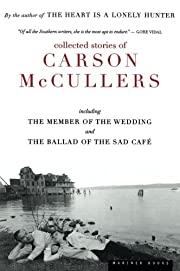
McCullers is at her best when her stories are about adolescents (almost always motherless, often gender-bending, and with a father who’s a jeweler) on the cusp of change. But I loved immersing myself in her world in every story.

This collection of short pieces culminates with MEMBER OF THE WEDDING; but I’ve read that very recently, so it wasn’t time for a re-read. For me it culminated with BALLAD OF THE SAD CAFE. This is a very sad piece (as the title warns) featuring a grotesque cast of characters and a miserable ending. It is not “my thing”; but it was still a story to grab me by the throat, and it provided all of the collection’s best quotes.

“It is known that if a message is written with lemon juice on a clean sheet of paper there will be no sign of it. But if the paper is held for a moment to the fire then the letters turn brown and the meaning becomes clear. Imagine that the whiskey is fire and that the message is that which is known only in the soul of a man – then the worth of Miss Amelia’s liquor can be understood.”

“The atmosphere of a proper cafe implies these qualities: fellowship, the satisfactions of the belly, and a certain gaiety and grace of behavior.” That should be put on a sign and sold to cafe owners everywhere.

“In order to come into the cafe you did not have to buy the dinner, or a portion of liquor. There were cold bottled drinks for a nickel. And if you could not even afford that, Miss Amelia had a drink called Cherry Juice which sold for a penny a glass… There, for a few hours at least, the deep bitter knowing that you are not worth much in this world could be laid low.” (  )

Book Corner 2020.43

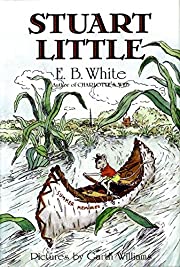
Stuart Little

by E. B. White

I have no idea how this disjointed mess became a classic of children’s literature. (  )

I’m so depressed. I feel like I pissed away these past two weeks. The windows project is never going to end. It’s raining. We ordered and paid for hay that hasn’t been delivered. Milkweed has been off his feed for going on two weeks. I don’t want to do my live video tomorrow. Warm weather is over. I can’t sleep anymore without chemicals. I have to go back to work Monday morning. My work iPhone locked me out. and Oh! we live in a failed state and soon we will all know more & more people who have gotten seriously ill or died from our constant companion the virus.

I do poorly under conditions of uncertainty.

Book Corner 2020.42

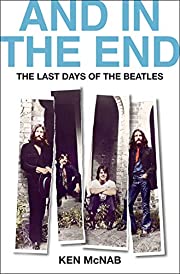
And in the End…

by Ken McNab

A chronicle of Beatle trivia for the year 1969. There was a lot more about the business angle than i was prepared to digest, and McNab does very little to clarify exactly what is going on (who the hell is “Nems”? what exactly is ‘Northern Songs”?). I had little choice but to glaze over during some of the business dealing discussions; I TRIED to figure out the answers to my questions by using the index, thinking it was just my lazy inattentiveness that was the problem; but no, it’s him. In fact he never really introduces Nems or Northern Songs properly; I guess we’re just supposed to know who they are. I get that John, Paul, George, and Ringo need no introduction, and it was fine to throw us right in the middle of January 1969 with little backstory insofar as the personal angle. But I really felt like I had missed some prequel volumes.

It was also repetitive. E.g. I get what a great song “Something” was.

I learned plenty of fun facts though.

– The ending medley on ABBEY ROAD, probably my favorite Beatle “song”, was recorded the week I was being born.

– “Because” is in 9-part harmony. Because they did not have 9 tracks available to tape on, John, Paul, & George had to sing three of the parts together on one track. They had not had to harmonize like that together in years, but they could still do it, even though they hated each other.

– George recorded the guitar solo to “Something” on the same track with the orchestra.

– John wanted “Cold Turkey” to be a Beatle song and actually thought it had great single potential.

– “I Want You (She’s So Heavy)” which I always liked and Xopher always hated (“It just goes on forever”) just goes on forever because it’s actually two different takes back to back. John couldn’t decide which one he wanted so he used both of them.

I love learning tidbits about what went on behind the actual recording of the soundtrack to my brain. (  )