“You figgered I went back on you. Now there’s a thing ever’ man has got to know. Mebbe you now it a’ready. Twan’t only me… Boy, life goes back on you.”
I was mesmerized. I never wanted it to end.
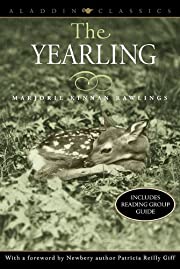
You become immersed in the world of the Baxter family – Penny (Pa), Ory (Ma), and 12-year-old Jody. They live post-Civil War in the Jacksonville area of Florida on a small clearing where they subsist growing corn, sweet potatoes, cow-peas, and cane sugar; augmented by a dairy cow and plenty of hunting. Their nearest neighbors are their frenemies the Forresters, a rough crowd of four or five grown men with their Ma and Pa. Jody has a special relationship with his Pa; not so much with Ma, who is hardened by having buried too many of her babies. Half the book goes by until the main plot commences – Jody finds Flag, an orphaned fawn he adopts, after having longed for years for some little creature he could care for and call his own. You know how it ends.
These people know their land so intimately, they know their game, their predators, their weather, in a way like I imagine most people today have no idea.
It was absolutely beautiful. I love coming-of-age stories. I’m partial to those with girls, and this is a boy’s book through and through, but it was still about that magical portal between child and grown-up.
“Ever’ man wants life to be a fine thing, and a easy. ‘Tis fine, boy, powerful fine, but ’tain’t easy. Life knocks a man down and he gits up and it knocks him down again. I’ve been uneasy all my life.”
Simon Baron-Cohen is a psychology professor and author of six hundred scientific articles and four books. He is proposing a theory of Systemizing vs. Empathizing brain types, with the former associated with both autism (well established) and inventiveness (his new theory). Chapters were most interesting when discussing the brain types, and autistic and intensively systemizing people in particular and in general. There were less interesting chapters about how early we can date true inventiveness on the part of homo sapiens; and whether animals can invent. These things did not seem relevant to the theory to me. Baron-Cohen passionately calls out for better accommodations in society for autistic people – they need remunerative work, and to feel valued, and to have friends. These passages made me want to go out and befriend an autistic person. I guess that proves I have an Empathic side of my brain after all. That’s just a joke – he emphasizes that the “empathy” skills that autistic people lack are not those of “affective empathy” – feeling compassion and a sense of justice for others; but “cognitive empathy” – able to put oneself in another’s shoes, commonly called “emotional intelligence”. There are tests you can take in the appendices to see whether you rate as a Systemizer, an Empath, or a “Balance” of the two. I think there was an error reversing the legends of the axes of the graph in Appendix A, however, so I am not sure if I am something of a “Systemizer” (though I am definitely not an extreme one) or a “Balanced” individual. Another appendix lets you quiz yourself to see how many autistic traits you have. I rate about six; so does my husband; this puts us on the “low” end of being “high” in autistic traits.
I was originally mildly surprised that he wasn’t rating more “systemic” or more “autistic” than me; but upon further reflection, I buy it – I think we are both true Systemizers, but in different ways. He has some spot-on spectrum traits – zeroing in on the details all the time, seeing flaws, seeing how things are constructed. Me… my favorite thing in the world is to apply a system and see how it turns out. I am that person who “follows recipes slavishly”. I love cooking and have tried to study those books who teach you how not to need recipes anymore; but, I LIKE following recipes. I do them to the letter as well as I can, and I don’t peek at the ending. Likewise I follow knitting patterns slavishly. I don’t try to adjust my recipes or patterns as I go along; I am totally non-intuitive, because that is what I LIKE. I want to apply the system, apply the rules, see what I get. Something I used to do when I was a kid was come up with a wacky system for coloring a picture: all the things that begin with “A” will be this color, “B” will be this color, etc. I would end up with something nutty, but the point was not to end up with a beautiful picture – though it would be awesome if that happened – but just to see what would happen. I also used to pick colors at random a lot. I still like randomizing my life. Can’t describe it any better – I just like to see what happens – and the more I think about all the aspects of my life, the more this seems to apply: I like to have systems and apply them.
Recommended to me by a coworker. Tries to teach you how to view problems not in isolation but as systems – interactions of many variables at once. Tries to help you identify the likely leverage points – places where you can most efficiently effect changes in the system, hopefully in the direction you want (not guaranteed).
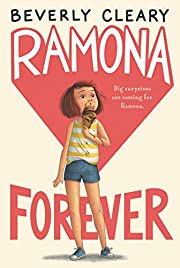
Another Ramona re-read for me. Ramona is back in second grade; and her father has lost his job. Ramona faces her usual grade-school trials and tribulations, but this time her troubles are driven mainly by family dynamics. Everyone is short-tempered, and the cat doesn’t like the cheap cat food, so he eats the jack-o-lantern. Beezus fights with the parents, which makes Ramona cry. She’s reassured repeatedly that the family will get another pumpkin to carve, but that’s not the issue. “Didn’t grown-ups think children worried about anything but jack-o-lanterns? Didn’t they know children worried about grown-ups?”
It’s not all down. Ramona and her friend Howie make coffee-can stilts and delight in stomping all over the sidewalk belting out “99 Bottles of Beer on the Wall.” It takes them all through the evening through a rain shower, but they make it from 99 down to 1. Huzzah! I love the young Ramona who delights in noise.
And the final episode, where Ramona participates in the church nativity scene dressed in a home-made ragtag sheep costume, is priceless. Ramona Forever!
I have nothing good to say about this book. I didn’t like a single part of it. I don’t have a single stirring quote from it to share. It started and ended disturbingly; and in between featured copious amounts of speechifying and boredom.
“Everyone has a story they tell themselves about themselves. Even if they don’t explicitly acknowledge it, their minds are at work retelling or editing or updating a narrative that explains or excuses why they have spent their time on earth as they have.”
“The one shot America had at behaving well, and thus saving itself, was to remove the feeling that ‘the government’ was imposing restrictions on people and re-instill the idea that people were imposing order on themselves, to fight a common enemy.”
“[N]ever in the unwritten history of nasal swabs had nasal swabs been awaited with such anticipation.”
This is a book about the handling of the COVID-19 pandemic in the US; but it’s written by Michael Lewis, so it’s not going to be a polemic or a dry history. It’s a book about a few real-life characters who had some interesting roles to play, and their unique perspectives.
– Scientist Bob Glass: his daughter’s (and, let’s face it, his) eight-grade science project is a model of communicable disease spread, which points the super-spreading finger mainly at children, for their multitudinous and highly physical social interactions. The model concluded that closing schools and keeping children isolated was the best way to stop the spread of a flu-like illness, counterintuitive though it may seen when it’s the older cohorts who suffer the most adverse effects.
– Charity Dean: a California public health officer with a hero complex; I had a hard time truly understanding her character and her motivations under different circumstances. She also just didn’t seem all that important to the story.
– Richard Hatchett: one of the first picks to work on a task force to produce a pandemic plan of action back in the George W. Bush administration; because President Bush had read a book (!) called THE GREAT INFLUENZA about the 1918 flu pandemic, and it scared him into wanting to craft a governmental plan of action to deal with pandemics. (Yes, the last Republican president whose initials were not DJT actually read books – those were the days!)
– Carter Mecher: kind of the main character, someone that Lewis obviously respects a great deal; a doctor at the Veterans Administration, and unofficial leader of the task force.
So the pandemic plan is written with its emphasis on social distancing and closing schools. During the Obama administration, there is the H1N1 scare, and the plan is considered; but they take a gamble and decide it’s too intrusive into people’s daily lives, and they don’t use it. They dodge a bullet; I think there is a comment to the effect that it wasn’t a bullet dodged, but rather that nature had chosen to spray us with buckshot. The pandemic response team is ultimately disbanded, and then we get Trump. There’s also the politicization of the CDC; the CDC is not so much a villain in the story as a tragic anti-hero. They could have been so much better, done so much more. Instead, at first they minimized.. and then surrendered.
It took about half of the volume to finally get the narrative up to 2020 talking about COVID-19. Until then, I was chomping a bit at the bit – get to the good stuff already! These people are all relatively interesting but I didn’t buy a book to read about a bunch of government scientists and doctors with some novel ideas. After all the backstory, things got very compelling indeed. I have long been a Michael Lewis fan and continue to be. Ugly cover, though. ( )
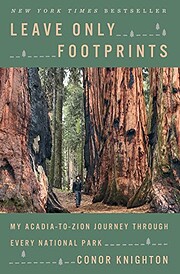
Haven’t had a good “my-year-of” book in a while. Here: visiting every national park in the USA – 59 of them, at the time of writing – in a calendar year.
He doesn’t do it alphabetically, despite the “Acadia-to-Zion” subtitle; nor really geographically. And the book is neither alphabetical nor geographical nor chronological. He picks a few parks for each chapter and unites them with a theme (water, love, diversity, whatever).
The style takes some getting used to. I realize 59 parks is a lot to fit into one book, and I would fully accept giving some of them short shrift. But often a chapter will start out talking about one park, and it could be a mere paragraph or two before you have suddenly shifted your focus to an entirely different one. It often left me, “Wait! Wait! What happened to…” I did get used to it, and grew less and less likely to settle in and form an attachment to any particular park description that might start a chapter, knowing that it would very likely be snatched away from me abruptly at any moment. Still, even though it wasn’t till page 245 that we were introduced to Guadalupe Mountains National Park in Texas, and by then I was used to the device, I really think this park deserved more than a page. Guadalupe, we’re told, is one of the least visited parks in the lower 48, and contains the highest point in Texas. Then we suddenly start talking about Rocky Mountain National Park. It reminded me of the blancmange Monty Python skit where they start following an ordinary couple down the street with a voiceover and then suddenly shift the camera away saying that because they are so ordinary we are now going to turn our attention instead to…
As a companion, the author is amiable enough with no major tics or annoyances. He’s young and has a broken heart, but that isn’t too intrusive a device. I had a couple of favorite parts:
a) When he goes to Volcanoes National Park and hikes out on the lava flow, like we did a few years ago. “Had no one else been standing out there, I would have absolutely turned back. It felt like I was marching into hell. How on earth was this allowed? It couldn’t possibly be safe. Walking across a field of lava felt like driving over downed power lines or skating to the center of a newly frozen river… But up ahead of me, I saw groups of tourists in the distance. There were even a few rangers walking around, answering questions. I had to zig and zag to get where they were standing, avoiding bits of fresh, bubbling lava that had risen to the surface. It felt like dodging puddles on a sidewalk, except in this case a misstep wouldn’t mean soggy socks, it would mean burning my foot off.”
Sorry for the very long excerpt – it’s just that, YES, every single sentence is EXACTLY how it was! I described it as like marching into Mordor.
b) A beautiful thought as he ends a few days Isle Royale National Park, an island off Michigan’s upper peninsula, accessible only by seaplane or boat. As he’s waiting for the boat to take him back to civilization, a fellow park visitor comments, “It’s pretty great being cut off from the outside world.” Author replies, “I think we’re in the outside world. Everyone else is just cut off from this.”
I am dying to go to more national parks – I have such a hankering lately to go west, and that was the reason I was drawn to this book. I particularly want to go to Yosemite, as well as Yellowstone and Glacier. I’m woefully deficient in park experience. I was surprised, though, that I actually have been to six: – Volcanoes, HI – Pinnacles, CA – Channel Islands, CA – Badlands, SD – Wind Cave, SD – Acadia, ME ( )
I hated, hated the Dean character. Whenever he was out of the picture, things settled down, the writing sparkled, the story captivated me. Then he’s back, and everything gets stupid again; and once again I have to slog through paragraph after paragraph, page after page, of him banging two girls at once and saying “Oh yass” and running around in a circle and smoking “tea” and oh what a party it was and listening to bop and having only two dollars left.
Sample paragraph with Dean around: “He giggled maniacally and didn’t care; he rubbed his fly, stuck is finger in Marylou’s dress, slurped up her knee, frothed at the mouth, and said, ‘Darling, you know and I know that everything is straight between us at last beyond the furthest abstract definition in metaphysical terms or any terms you want to specify or sweetly impose or harken back…’ and so on, and zoom went the car and we were off again for California.”
Sample paragraph without Dean: “I took the Washington bus; wasted some time there wandering around; went out of my way to see the Blue Ridge; heard the bird of Shenandoah and visited Stonewall Jackson’s grave; at dusk stood expectorating in the Kanawha River and walked the hillbilly night of Charleston, West Virginia; ad midnight Ashland, Kentucky, and a lonely girl under the marquee of a closed-up show. The dark and mysterious Ohio, and Cincinnati at dawn. Then Indiana fields again, and St. Louis as ever in its great valley clouds of afternoon. The muddy cobbles and the Montana logs, the broken steamboats, the ancient signs, the grass and the ropes by the river. The endless poem. by night Missouri, Kansas fields, Kansas night-cows in the secret wides, cracerkbox towns with a sea for the end of every street; dawn in Abilene. East Kansas grasses become West Kansas rangelands that climb up to the hill of the Western night.” ( )
These were not rereads for me, unlike Ramona the Brave. These started coming out in 1981, when I’d aged out of Ramona.
Now that I’ve aged back in, I can say they were wonderful.
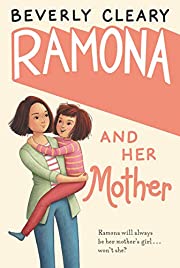
Ramona and her Mother: Ramona just wants to be loved.
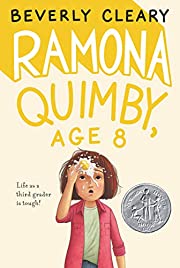
Ramona Quimby, Age 8: Poor Ramona! She overhears her teacher call her a “show-off” and a “nuisance!” From then on, she tries to cause as little trouble as possible. When she comes to school feeling sick, then sicker, and sicker, she is afraid to say anything. Then – she throws up on the floor! She goes to the nurse’s office and cries. She goes home and cries. I could have cried myself.
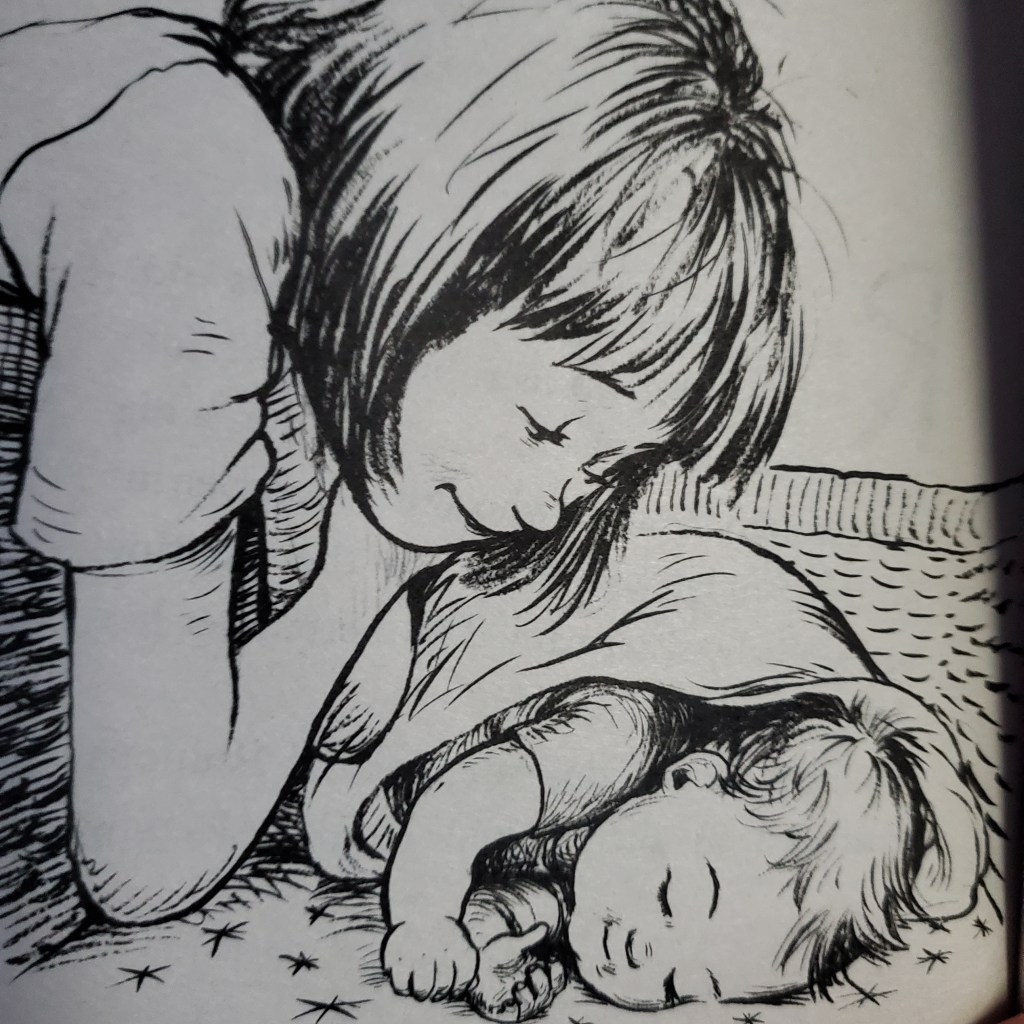
Ramona Forever: I didn’t think I’d much like the plotlines of being in Aunt Bea’s wedding, or the Quimby’s having a third (!) child. But while Ramona may no longer be the baby of the family, she is still absolutely darling (see below).
Ramona’s World: Ramona makes a new best friend and turns 10 at the end, or “zero-teen.” She takes care of her baby sister and doesn’t throw tantrums anymore. We knew she had to grow up sooner or later. Oh how I love to think she kept her spunk all the way through adulthood, became a great artist, and lived to 105 like Beverly Cleary.



 )
)
 )
)
 )
)

 Tytania