Book Corner 2022.21

by Octavia E. Butler

Such wonderful theology, such a wonderful main character. I wish it hadn’t been embedded in such a horror movie.

Cannibalism, burning people alive, relentless killing. It reminded me in that sense of Geraldine Brooks’ YEAR OF WONDERS, which was about the plague. There you had people suffocating in pig manure, someone carrying around a dead baby till its head fell off… same kind of thing, has me reading with steel guardrails around my brain so as not to actually internalize anything.

So about the good parts! Theology! God is change. Your job is to do your best to mold that God to serve your ends.

Main character! It’s all led by a supernaturally strong young African American woman. She is the sower. She calls her religion Earthseed. Each chapter begins with some of her “verses”. “The only lasting truth is change. God is change.” “Create no images of God… The universe is God’s self-portrait.”½

Book Corner 2022.20

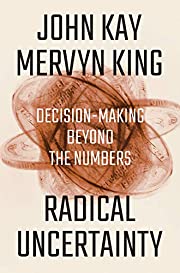
by John Kay & Mervyn King

How did I like this book? Well, I’m not certain.

HA HA HA. It was OK, but it sure seemed to be saying the same thing over and over again for 433 pages and a lengthy appendix: Most situations in life involve a radical uncertainty, rendering them unsuitable for statistical modeling or probabilistic forecasting.

Of all the chapters basically saying the same thing from different perspectives, my favorite was “Evolution & Decision-Making,” which leads with a quote attributed to SF author Bruce Sterling: “Computation is not thinking… You are much more like hour house cat than you are ever going to be like Siri.”

To quote further the beginning of the chapter, “Behavioural economics has identiifed a raft of ways in which humans depart from axiomatic rationality. These behaviours are described as ‘biases,’ signs of human failure… It is as though God had given us two legs so that we could run or walk, but made on leg shorter than the other so that we could not run or walk very well… We are not defective versions of computers trained to optimise in small-world problems, but human beings with individual and collective intelligence evolved over millennia.”

That’s basically what it’s about, although this is the only chapter with an evolutionary bent; it’s all about how ‘real-world’ problems are nothing like ‘small-world’ problems that researchers come up with in the lab.

So take heart! You aren’t a broken machine. You’re an exceedingly smart house cat!

Also memorable, in the chapter “The Use & Misuse of Models,” was a brief historical overview of the collapse of the cod industry in Newfoundland. “The [Dominion] Fisheries Office developed complex models on which its recommendations [for total allowable catch] were based. But cod stocks continued to decline. For the year 1992, the total allowable catch was set at 145,000 tonnes. That proved to be the last year of commercial cod fishing on the Grand Banks.” The authors do not lay responsibility for this solely with the modelers, of course, but maintain that their ‘evidence’ ended up justifying the policy of “greedy fishermen and mendacious politicians” rather than actually protecting fish stocks. This example of mismanagement by model struck me enough to read up on the subject in Wikipedia, where the sad story can be read in more detail: “Over 35,000 fishermen and plant workers from over 400 coastal communities became unemployed… Newfoundland has since experienced a dramatic environmental, industrial, economic, and social restructuring, including considerable outward migration.”

Something of a detour from the main idea of the book; but one example of how the illustrations and anecdotes chosen by the authors are very powerful and well conveyed. Sorry to detour on the detour, but listen to a “No More Fish, No Fishermen,” a song on this topic I heard long ago on public radio and never forgot.

Book Corner 2021 Revisit

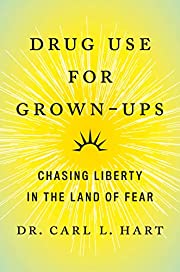
by Dr. Carl L. Hart

I did write a review of this last year for Library Things, which I’ve dug up here for your reading pleasure and for contrast with Never Enough.

To describe this book in one word, I’d maybe choose “scandalous.” Dr. Hart uses heroin & has no intention of stopping. It’s a harmless hobby, like having a drink. “Grown-ups” can responsibly take heroin, and opioids, and meth – there is no drug that should be off limits. Now there’s the general libertarian argument for that, which Dr. Hart espouses; but as a tenured professor of psychology at Columbia specializing in neuropharmacology, he’ll also argue authoritatively that none of these drugs will necessarily harm you, if used responsibly – so it’s not simply a matter of “you should be able to legally destroy your life if you choose”. It’s also that, if you’re a “grown-up” about it, you won’t.

Dr. Hart wrote this risky book to come out of the closet, in the hopes others would follow. I think he will likely find himself forever in the minority. I’ve never read any account of someone in such a prestigious station in life coming clean about so much casual, ongoing drug use (he’s tried everything). But now I have – & I guess he’d say that’s the point of the book.

And I know he’ll say that this is more evidence of how badly the book is needed, but hearing him justify his heroin use and explain how NOT an addict he is made me wonder how long it might take for the inevitable shoe to drop – where will Dr. Hart be a year or more from now? Still a happy user insisting he’s not an addict? Will it be true? I believe it to be true of him now. I do believe his accounts and all the evidence he presents; but being brainwashed by our anti-drug society I just can’t help but wonder…

One constant point of his that I appreciate is this: drugs feel good, and that’s reason enough to take them. He gets really uptight around LSD users because they tend to try to justify their drug use as “different” from others – they’re doing it for mind-expanding reasons or whatever, not to get high. “What’s wrong with getting high?” he cuts one guy off mid-sentence. I love that. The right to pleasure… not currently enshrined in the Constitution, but should be, as Tom Lehrer put it decades ago. He was talking about pornography, not drugs, but the principle’s the same –

“Obscenity. I’m for it. Unfortunately the civil liberties types who are fighting this issue have to fight it owing to the nature of the laws as a matter of freedom of speech and stifling of free expression and so on – but we know what’s really involved: dirty books are fun. That’s all there is to it. But you can’t get up in a court and say that I suppose. it’s simply a matter of freedom of pleasure, a right which is not guaranteed by the constitution unfortunately.”

Book Corner 2022.17

by Judith Grisel

Informative book about addiction by a neuroscientist – and former addict.

Grisel wrote her thesis on the mechanism by which morphine is more addictive in familiar contexts than in novel contexts; a kind of Pavlovian effect triggers an anticipatory process in the brain. This process, dubbed “the b process”, is the brain’s effort to maintain stasis in response to “the a process”, the effects of the drug itself. This is the key to Grisel’s model of addiction, the graph of which she would get tattooed on her body if she ever wanted to get a tattoo. A drug floods the brain with a certain effect, and the brain in response tries to fight back, to counterbalance it. After more and more instances of taking the drug, the “b process” becomes stronger, lasting longer and kicking in sooner. So think of the drug’s effect as “the good feeling”; this means you’re going to get more and more “bad feeling”, sooner, heavier, and lasting longer, until you’ve got a case of classic addiction: you’re no longer taking the drug to feel good. You’re taking it not to feel bad.

The chapters each deal with a different category of drug, based on how it achieves its effects. I read the chapter on alcohol with interest, as I dabble sometimes with the idea of stopping drinking altogether. The more I think about it, the more I feel that regular imbibing is really not such a good idea. Counting alcoholism as one of her past addictions, Grisel is strong in her condemnation of it, and heavy are her lamentations of its ubiquity and heavy advertisement. But I feel she’s remiss in not discussing its central place in so many cultures for so many centuries – people have practically bathed in the stuff, and continue to do so, all over Europe and beyond. Wine accompanies every meal as a matter of course. Is this stuff really so bad for you? Why has it persisted? And she doesn’t discuss its value as a social lubricant. She deals with it merely as a depressive, a downer, and wonders why people want to get depressed and “dimmed” whenever it’s time to celebrate something. But booze is only technically a downer. For me its value is in the way it greases the wheels of interaction with other people. She never mentions this.

Poor Grisel. You really do feel for her… her addiction is still a real living thing. She misses pot so much, and she is so jealous of people who can drink one or two drinks and stop. They absolutely confound her. She sees her husband peruse a menu of microbrews, which lists the alcohol content of each, and can’t understand why it isn’t an easy choice of picking the most alcoholic one. A coworker mentions leaving an event after only two drinks because she has to work in the morning, and Grisel can’t fathom what one thing has to do with the other. I mean, of course she understands these things on an intellectual level, but she can’t make them jibe with her own experience. When she was a drinker, she DRANK.

Meanwhile, I wonder how Dr. Carl L. Hart of Drug Use for Grownups is doing these days…

Funny, I read that book in October of last year, but never posted a review of it. On purpose? Was I afraid of having such a book on my blog?

Book Corner 2022.15

by Stephan J. Guyenet, Ph.D.

A similar conclusion to SALT, SUGAR, FAT by Michael Moss as to why American obesity rates are skyrocketing: the food just TASTES TOO DAMN GOOD.

To find a time when things were different, we don’t have to go back to hunter-gatherer times – although Guyenet does; we spend a hypothetical day with a few hypothetical members of a non-hypothetical tribe of East Africa, who eat a certain fibrous tuber as a mainstay of their diet. You chew the flesh and then spit out the pithy stuff. It’s not very good. Nobody’s very excited about it. Likewise until 20th century convenience foods and ubiquitous restaurant cooking, you had to eat your own household’s cooking. I’m betting that often wasn’t very good either.

It wasn’t Oreos. It wasn’t Big Macs. Now it is. Mmmmmmm.

This particular book is about the brain science behind metabolism, hunger cues, etc. Along the lines of the main thesis I’ve described above, his biggest weight loss tip is to eat food that isn’t very good. Of course you’ll eat less of it, for starters; but it may also have some effect on the brain, and on the levels of something called leptin, to expose yourself less often to the utter deliciousness that is the American supermarket diet.

(He doesn’t phrase it as “eat food that isn’t very good.” He calls it “simple food.”)

But nooooooooooooo I refuse to give up deliciousness. That said, point taken, and it’s always good advice to eat simple food close to the source.

One surprising thing I bookmarked was his allegation that we tend to put on most of our yearly weight gain as a result of the extended holiday season. I always thought that what you did the majority of the year would far outweigh some indulgence at the end; but maybe I’m not really admitting to how lengthy the holiday season is in proportion to the year as a whole. Anyway, to avoid upward creep of poundage, he says to focus on strategies to minimize holiday overeating.

I thought those were a couple of unique tips.

Book Corner 2022.14

by Oliver Goldsmith

Every now and then there’s nothing like a good classic. (Groucho Marx voice:) And this is nothing like a good classic!

It’s wild and crazy. Fortunes are lost, houses burn down, reputations are ruined, ruffians roughhouse, people come back from the dead, and digressions digress a la galore. The vicar has six lovely children, two of them marriageable daughters. At heart, it is a classic Marriage Plot; and that’s OK by me.