Book Corner 2023.47

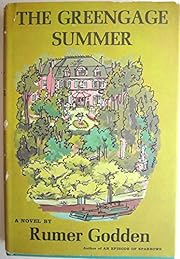
by Rumer Godden

Tremendous. I loved this book. I was so sorry when I finished it. It was an old-fashioned exciting novel. I guess it’s something of a classic (1958) young adult coming-of-age novel, but I had never heard of it – I came across a mini-review, I think in the NYT, which intrigued me and lent me to borrow it.

Five siblings and their mom take a trip to France, from Britain; but mom gets sick on the way and has to be hospitalized. The four sisters and one brother range in age from 16 to 4. They find themselves on their own in a hotel seemingly filled with enemies, and one ally, a mysterious Englishman who takes responsibility for them, but hides deep dark secrets.

Book Corner 2023.46

by Chris Van Tulleken

(Sorry about that awful image, it was hard to find a picture of the book cover.)

I’ve certainly been reading plenty lately about how bad processed food is for you. Problem is, “processed food” has always been so weakly defined. Beer, bread, cheese, tofu? Very processed. But evil? No, but hot dogs, Doritos, baloney – processed and OBVIOUSLY evil. Why? They don’t define the difference.

And then there’s all the talk about feeding your “gut biome.” I even read a study recently that tried to tell me it was healthier to eat a steak than ground beef. Come on! After I chew it, it’s all the same, isn’t it?!

What we have here is a much more in-depth treatment than those attention-grabbing media articles, and I am thankful. Here we get definnitions – and they come from the “NOVA” system of classification. (I don’t think he ever tells us what the acronym stands for, and I think that might be because it’s not English – I think this system came out of Brazil.) Foods fall into four groups: unprocessed; processed culinary ingredients; processed foods; and ultra-processed foods.

A decade ago, everyone’s rule of thumb came from Michael Pollan – don’t eat anything with more than 5 ingredients. Don’t eat anything your grandmother wouldn’t recognize as food. Van Tulleken’s got a similar heuristic to offer – don’t eat anything with ingredients that don’t represent things you can find in your kitchen.

HA! Joke’s on him. My kitchen’s got xantham gum (which he hates).

There you have it. Yes, cheese, beer, and bread are processed. But they are not “ultra-processed.” You could make them in your kitchen (granted they take a little bit of talent and ingredients you can’t get at the convenience store). But you know very well you couldn’t make hot dogs in your kitchen. Or Doritos. You KNOW what ultra-processed food (UPF) is.

A lot of the book was pulling every conceivable threat out of the air that could be associated with UPF – decays tooth enamel and makes your jaw smaller! Seriously! I didn’t care so much for that aspect of the book. Focus. You can convince me very well to avoid UPF without all the threats of Crohn’s disease and mental illness and autoimmune disease and everything else you can throw at the wall.

Funny quote about how he can’t fathom people who aren’t interested in food (ditto). “I still find indifference to food hard to understand. I plan dinner at breakfast. When I’m at a wedding, my whole focus is on the canapes. My holiday itineraries are just lists of restaurants and markets.” I’d say I identify with this 110% except for one thing. You plan dinner at breakfast? Breakfast on the SAME DAY? Amateur.

Book Corner 2023.44

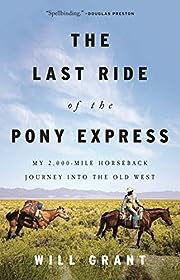
by Will Grant

This guy rode horseback across the original Pony Express Trail, maybe 2000 miles, over 142 days, with two horses, one for riding and one for carrying gear. It was amazing – and what’s truly unbelievable, the point he drove home, is that Pony Express riders used to complete the route in TEN DAYS.

The road goes from St. Joseph, MO, on the Missouri River, to Sacramento. The Midwest did not interest him. The west did. Cities gave him the heebie-jeebies; the biggest one standing in his way was Salt Lake City, and he opted to have the horses trailered around it.

He had LOTS of assistance. His girlfriend mailed him supplies. He used a smartphone. When it came time to cross the dessert, he hired someone to drop off hay and water along the route at given intervals. The desert crossing was scary to consider. There were long stretches with no water sources. If something went amiss with the hay and water dropoffs, well, I was about to say he’d be up shit’s creek, but shit’s creek would have been an improvement – at least it would have had water.

Color photos in the middle made me glad I didn’t read it on Kindle. The picture of the two horses standing utterly alone in the middle of the alkali flat in western Nevada was worth the price. One horse looks at the camera, the other “looks east from where we’d come.” I wonder what is going through that horse’s mind. Something along the lines of, “What the hell are we doing here and can we go back soon?”

They do not go back, they go forward! After the desert, which was obviously the biggest challenge, near the Nevada/California border, Grant got the heebie-jeebies again at Carson City, and just wanted the trip to be over. He did not want to subject his horses to the big city of Sacramento, he knew the hard part was over, so he had the horses trailered to the endpoint. I thought it was a fine decision.

His lesson is that the real heroes of the Pony Express were the unsung heroes: “the station keepers and stock tenders”, the people hauling water out to those waterless spots in the desert, enough to keep ten or so horses in fine condition at all times at each relay station. Astonishing. Astonishing too to think what the whole thing cost. It is very little wonder the enterprise survived for so little time. What in the world piece of mail could have been THAT important?

Book Corner 2023.43

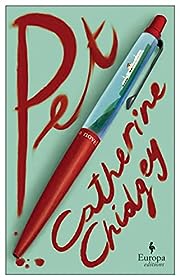
Pet

by Catherine Chidgey

I’m not sure, but this might be what they call a “thriller”? Kind of a mysterious shocking story about a creepy teacher. I was drawn to it because it takes place in a Catholic school in the 80s. It’s New Zealand, so it was fun to learn a few of their slang words and a bit of their culture. I had never heard of a “winceyette” or “abseiling”, for example.

Anyway, a beautiful teacher comes to town and makes various girls her “pets.” She drives a wedge between two old friends. Shocking mysterious things happen which I shouldn’t divulge.

I loved how they got Catholic school spot-on! The dwindling number of aging nuns, who “taught” special subjects like singing. The way, if the principal or priest or anyone would walk into the classroom, everyone had to stand up and say in a sing-song voice, “Good afterno-on, Sister So-and-So!” And, “You couldn’t receive Holy Communion if you had eaten in the last hour; you couldn’t allow the body of Christ to slosh around in your stomach with the cornflakes and bacon.” Nobody else seems to have remembered that rule. And how it was easy to follow because it was at least a half hour in church before communion even started, so you really only had to ‘fast’ the last half hour before leaving.

Book Corner 2023.40

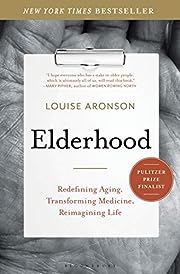
by Louise Aronson

First, the negatives. I am so glad to be done with this 300-page book. Did this woman have any editor whatsoever? She must have put down every single thought on the subject of elderliness that ever entered her mind.

Now the positives. I liked learning about geriatrics. I feel a geriatrician is exactly what my mother-in-law needs – a whole-person doctor. (If only I could get her out of the house to see one.)

And I did feel inspired to bookmark one thing. Why do we all hesitate to call ourselves “old”? “Imagine a forty- or fifty-year-old saying, ‘I don’t like to think of myself as an adult. I’m just a kid who’s been around a few extra years.'” Well, actually, I can and do know at least one person who’s said something to that effect, so, not so shocking… “Or a children’s hospital that eschews the term ‘child’ because of its association with immaturity, and instead markets itself as serving short, unemployed people.” OK, that part is funny to imagine.

Book Corner 2023.38

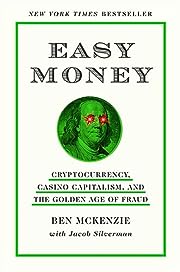
by Ben McKenzie & Jacob Silverman

An antic-crypto screed in which Sam Bankman-Fried (SBF) and the implosion of FTX figures heavily. I spent most of my 2020 workyear researching cryptocurrency, blockchains, stablecoins, etc., so I have an interest. I also have been a follower of the Effective Altruism movement, with which SBF was associated, so that’s given me a double-interest in the FTX story. I read this with glee. It’s not bad; while unabashedly anti-crypto, it doesn’t come off like a bone to pick, but rather one person’s not unreasonable opinion. Ben McKenzie does make constant references to his being an actor, a somewhat famous actor in his day, but I never saw anything with him in it so I didn’t care. (His biggest role was on a show called the O.C. which was for people younger than me.) For an actor, he’s damn smart.

He’s got lots to share firsthand about SBF because he actually once scored an interview with him as well as something of a Twitter relationship. He found the guy to be really weird (no surprise there), intrinsically; and also, it just felt so weird that SBF wanted to talk to him at all – not only that, but really seemed to want him to LIKE him. McKenzie shares some insight he got form a former FBI agent: Just listen. “Tell the suspect you know he is a good person, but you need help understanding what happened…” Bad actors, all of us, need to see ourselves as good people.

So, the FTX story. I remember it well (it wasn’t even a year ago). Binance, a rival crypto exchange, held tons of FTX tokens (FTT). When they announced that “concerns” about FTX’s balance sheet had led to them to decide to liquidate all their FTT tokens, that was the end. The CEO of Binance, “CZ”, had gotten into some kind of bicker-war with SBF, Well, all it took was the announcement of intent to sell a major quantity of FTT, and “Voila, bank run.” “CZ had played his hand well.”

McKenzie’s problem with crypto is that it has no use case, nothing for the here and now – use cases are always presented as “Someday it could…” His fundamental problem is that it seems to misunderstand the nature of money. Money has value because we TRUST the government to back it. We TRUST that other parties will accept it as legal tender because it has the government of the USA backing it. Crypto is “trustless” – that’s allegedly a feature, not a bug. But he doesn’t think that the necessary trust that could make it ever be anything more than a speculative gamble can be conjured out of thin air, or out of trusting the code – code is written by people. I could see having some good arguments with the guy.

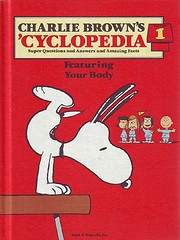
Book Corners 2023.34-37

Volumes 1, 3, 7, and 9

Yes, I’m counting these as four books; wanna make something of it?

I got these off of Paperback Swap. These were the only volumes available.

When I was a kid I had two or three “Charlie Brown’s Super Book(s) of Questions & Answers” – which contained some of the same content as these. So it was a walk down memory lane as well as a chance to spend some time with Snoopy.