
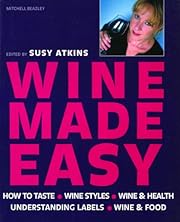
by Susy Atkins et al
IT’S SO EASY!
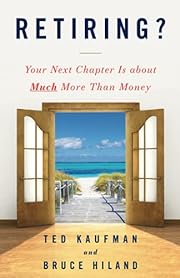
by Ted Kaufman & Bruce Hiland
When I was heavily into weaving school, I thought, I want to retire and do this intensively. The barriers were going to be the just-slightly-too-far distance, and the money. But I would do thought experiments on it – fully cognizant that when the time came to actually retire, my head would be in some other space and I wouldn’t want to do it anymore – but the point of thought experiments is to have fun. I came up with ways I could do it while driving less (buy a crappy car that I kept parked in Montpelier! buy a caravan to live in onsite at the school during sessions!). Now weaving school is moving and likely isn’t going to be in Marshfield anymore, if it continues to exist at all. And it’s being run by different people, naturally. And yes, my head’s moved on. Need new thought experiments.
by Lauren Oyler
This book was nearly insufferable. It starts out with a strong plot, and I was drawn into the documentary-level detail, but I didn’t foresee how off the rails it would go. After part 1, where heroine discovered her boyfriend is a secret conspiracy theorist, and part 2, which flashes back to their meet-cute, super plot twist comes along and twists the plot so severely there is no longer any plot. Then we get an absolutely interminable section where heroine just wanders around. At one point she decides to go on a series of 12 fake dates, during each of which she pretends to be a different stereotyped sign of the zodiac. I felt like I was reading some Japanese fiction where any random thing might happen next, and when things get like that, I just get like WHY!?!?!
And yes, you can totally convince me that I’m reading it on entirely the wrong level, and that all my complaints are “the point.” Nevertheless, complaints they are.
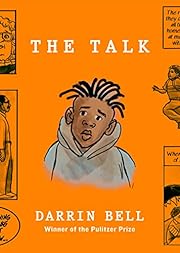
by Darrin Bell
I really enjoyed this book and did not expect to. I did not expect to because I’m a bad person who’s really tired of reading about racism. I also tend to think graphic novels are gimmicky. But this was wonderful, and I wished there was more of it.
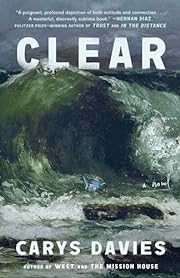
by Carys Davies
SPOILERS SPOILERS SPOILERS
I can’t review this short little novel without giving it all away. I was just so thrilled she pulled off a happy ending! Because I saw tragedy on every other page, until things started to escalate; then I saw tragedy in every paragraph. Thank you, thank you Carys Davies.
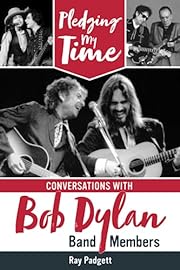
by Ray Padgett
Interviews with scads of people who played live with Dylan from the 60s to today. Could have been edited down a bit. The highlight was Stan Lynch, drummer for the Heartbreakers, who sounds blissed out with every word he utters about playing with Bob, and gives the funniest story. Three songs into a concert, Bob turns and says, “Hey, Stan, what do you want to play tonight?” Stan is like, uh, “Lay Lady Lay”? Bob says, “What key.” Note: Lynch is the drummer. He’s asking the drummer what key. “I see Mike [Campbell] in the corner going, ‘A! A! A!’ I go, ‘How about A?’ Everybody has a big sigh of relief.”
Guitarist Billy Cross offers some of the best insight. “I wasn’t crazy about the sounds that the engineers got. I remember at one point, I was on his case, saying ‘Bob, it could sound better, man.’ He said, ‘Billy, my records are my music played by me and the people with whom I’m playing in that room on that day. That’s what my music is.’ I thought that was a pretty cool way to look at it.” And, “He writes. That’s what he does.” And regarding all the touring, “Once I asked him… ‘All this, how can you do it?’ He said, ‘Billy, that’s what I do.'”
Tour manager Richard Fernandez: “Bob was, if not the most, at least the top two most interesting people I’ve ever worked with.” That sums it up.
The author is incidentally a Burlington resident, and I’ve been trying to find a copy of his book “Cover Me” for some time. I keep checking Crow.
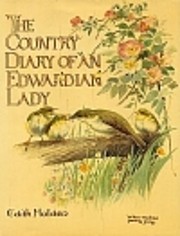
by Edith Holden
I just couldn’t get into the drawings of birds and the poems about nature and the naturalist observations. I would have liked more glimpses into what life was like for a lady in England in 1906. The most interesting parts were the explanations of the names of each of the months, which she got out of the encyclopedia; and the side-leaf that described the author’s brief life (she dies at 49 by falling into the Thames).
by J. R. R. Tolkien
I believe this is my second re-read (three reads total). It can be hard going, but just let it wash over you. Tolkien’s theology, it feels like an otherworldly retelling of the old testament. Occasionally a beautiful tale will jump out of the mirk, like that of Beren and Luthien.
Digression:
Tolkien’s old-school Catholicism is evident, and not necessarily unappealing. I see it this way. Modern thinking in our culture is extremely Freudian. We like to think we’re well beyond Freud, but he’s evident here every day. Every movie and book hero has a backstory “explaining” why he is the way he is. It’s all about his childhood. It made him evil, or good.
Characters in Tolkienland, they’re just evil. Or good. Or a little of both. It seems to me that every creature, lowly middle-earthlings or hallowed Ainur, have the capacity for evil. And sometimes someone just tips over the edge. In other words, it’s in all of us, and it’s just a random spin of the wheel whether you are going to get tipped over at any given moment, briefly, or for a lifetime.
Amen and thanks be to god and also with you.
by V. E. Schwab
It was a good story. I just wish it could have been told more succinctly. There were just way, way too many scenes of Addie going about her day and surprise surprise! suddenly! why, it’s a visit from Luc. AGAIN. And they engage in the exact same non-scintillating banter, AGAIN.
by Gabrielle Zevin
I’ll try to alternate my positive and negative comments, because I don’t want to give the impression that either should necessarily be given more weight, because as of yet I’m not sure myself how I would weigh them…
But first and foremost: it’s a novel about a STEM field. Always a YAY. Not only that, but it’s in large part about a WOMAN in STEM. A woman programmer, no less. Hallelujah!
Next: it was too long. It didn’t help that I read it on Kindle where you don’t get a physical sense of how much more you have to read. I kept feeling, “SURELY it ends here, right?” And it never did. There were so many spots where she could have ended it well.
Great characters. Semi-SPOILER in this paragraph. Marx was such an absolute doll. Too much so? Perhaps he should have been given a rough edge or two. But some people really are dolls. The way his life ended was very moving.
OTOH, Sadie. Sadie was such an absolute (expletive) to Sam! After they moved to California and she decided for some reason he wasn’t really her friend? Where did this even come from? It was awful, her always giving him this crap, “Oh you just want to take credit,” “Oh you just don’t think I can do it do you,” when he so obviously, OBVIOUSLY wasn’t like that. And finally her, “Just leave me alone” ultimatum – even when he started playing a public game with her? When she finds out it’s him, “OH I told you to leave me alone!” I mean Jeez, he’s just playing a game with you. She was just a plain and total (expletive).
Sam was the main character and he felt just a little incoherent at times. Awkward, yet a master showman at conferences? But then, some people really are incoherent. I’ll take this kind of strange complexity over one-dimensional characters any day.
I didn’t really like the pregnancy and baby plot development, because I never do; but at least they didn’t make the kid a main character with a bratty personality that I was supposed to find adorable. But peeve: When these obviously brilliant STEM-focused women in novels, women who obviously have the kinds of brains that are attuned to details and planning, discover, Wow! They’re suddenly pregnant! How did THAT happen? Oh well! It was the same in the abominable LESSONS IN CHEMISTRY. You just accept this plot development, that the woman let herself get pregnant, and what’s annoying is the story DOESN’T EVEN GO INTO which method of birth control she was using failed and how this actually happened. They just treat it like, ha ha of course these things happen! I’m not saying they don’t happen, I’m a walking-around accident myself, but I am saying that intelligent grown-ups like these characters are painted to be take STEPS to make sure as much as possible that they don’t happen, and the novel should at least in passing talk about what steps failed and how they screwed up, and they don’t even mention it. We know this baby wasn’t planned because she and Marx consider abortion; so tell me how the plans went awry.
I guess my final comment is: I can’t see Magic Eye pictures either. I was a little annoyed that at the end, Sam finally saw a Magic Eye picture just by virtue of Sadie on the phone with him saying “My 4-year-old can see them so I’m going to stay on the phone with you until you do!” Yeah, it doesn’t work that way. Some of us cannot see them. I read in the end notes that the author didn’t used to be able to see them either, but now she can. I guess someone got on the phone with her and berated her into seeing them too, because vision works that way.
I want to end as I began, by reiterating that I really do love books about women in STEM. Thank you!



 Tytania