Book Corner 2021.60

by Harriet Hargrave

I’m not a quilter, in any sense; but I’m wildly interested in textile production.

Who knew? “Prior to the invention of air conditioning & humidity control, only the New Bedford & Providence, Rhode Island, locations had the proper humidity conditions for cotton yarn spinning.” I did have a sense of this, having this year read a whole book about air conditioning; but I didn’t know matters were this precise.

Who knew? “Greige goods (pronounced ‘gray goods’) are unfinished fabrics in their raw state.” Muslin is, often, essentially, greige good. I love the term; I love the thought of those simple raw fabrics – and I love the pictures, lots of pictures in the book of factories and machines and fabric being processed.

Processed, processed, processed! They do SO much to cotton fabric, it’s a wonder how humanity comes up with these things. Singeing! Sizing! Desizing! Bleaching! Mercerizing! Not to mention the dyeing. Oh, the dyeing!

This is mainly a book geared towards choosing better materials for quilting, and was vaguely interesting on its own terms; but obviously I was in it for the big picture, as I usually am.


Side note on the big picture. I received Oliver Burkeman e-newsletter today, and the theme is redefining interruption. Zen teaching: nothing obstructs the activity of anything else.

The Problems, You Will Always Have with You

Have I gone on already about how we should count our problems rather than our blessings? From this year’s Best Book Ever, 4000 Weeks, comes the idea of how we often get upset not only at our problems themselves, but somehow, at the mere fact that we have problems at all. We shouldn’t be having problems! Life should be problem-free! If you have a problem, what’s your problem?

The problems, though, you will always have with you.

Suppose, then, every day you listed your top 3 problems. Day after day, you’d see, there’d be no trouble coming up with 3 problems. You’ll always have 3 problems to list. It’s just a matter of what they are.

This way maybe you’ll stop getting upset about having problems.

Book Corner 2021.59

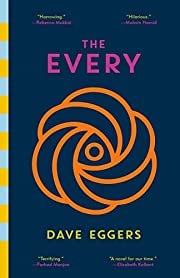
by Dave Eggers

A sequel to The Circle, which I also loved. The Every is a fictional mash-up of Google and Amazon. Characters Delaney & Wes attempt to overthrow the powerful Every from within, by proposing ever more outlandish and horrifying apps, in the hopes that one, finally, will cross the line and be so repulsive as to turn public opinion against the Every once and for all. They start with AuthentiFriend, which will gauge how authentic your friendships are by gauging your friends’ behavior during your conversations. Then there’s Satisfied?, the app that will tell you whether you enjoyed what you just ate. Building on that, Happy Now? will tell you in real time whether you’re happy. Did I? will tell you whether you had an orgasm.

The problem is, no matter ridiculous the app, people love it.

Kerpow!, an app to encourage spontaneity. Thinking of You, which will send a brief message to each of your contacts twice a day, stating, you guessed it, “Thinking of you.” Show Your Love publicizes all messages of love, greeting, etc. so as to count and compare your count to others. Were They? will tell you whether your parents were any good. Departy notifies you of the death of anyone in your network. PassionProject will tell you your passion. “People found it enormously helpful.”

Takes a Village allows you to track, film, and shame children for their misdeeds. FictFix takes old novels and “fixes” them, making protagonists more likeable, updating terminology, etc. ShouldEye asks the general public for an opinion on any decision you have to make.

Super funny-scary stuff.

Book Corner 2021.58

Rebanks’ family have been fell (hill) farmers in Cumbria in the north of England since 1400-something. It’s mind-boggling to think of belonging so truly to a particular spot on earth.

This book is best when he is simply describing his farm, and his grandfather, and his father. The past two generations began to ‘modernize’, ‘get big or get out’, mow down hedgerows, specialize, feed silage rather than hay, and above all apply synthetic fertilizers. These things degrade the land and ultimately the farmers themselves. Rebanks is now trying to rejuvenate his farm by going back to the old ways, and the even older ways of setting nature back to rights in certain areas. He thus has to supplement his reduced farm income by selling books; and I’m only too happy to help him along in the endeavor.

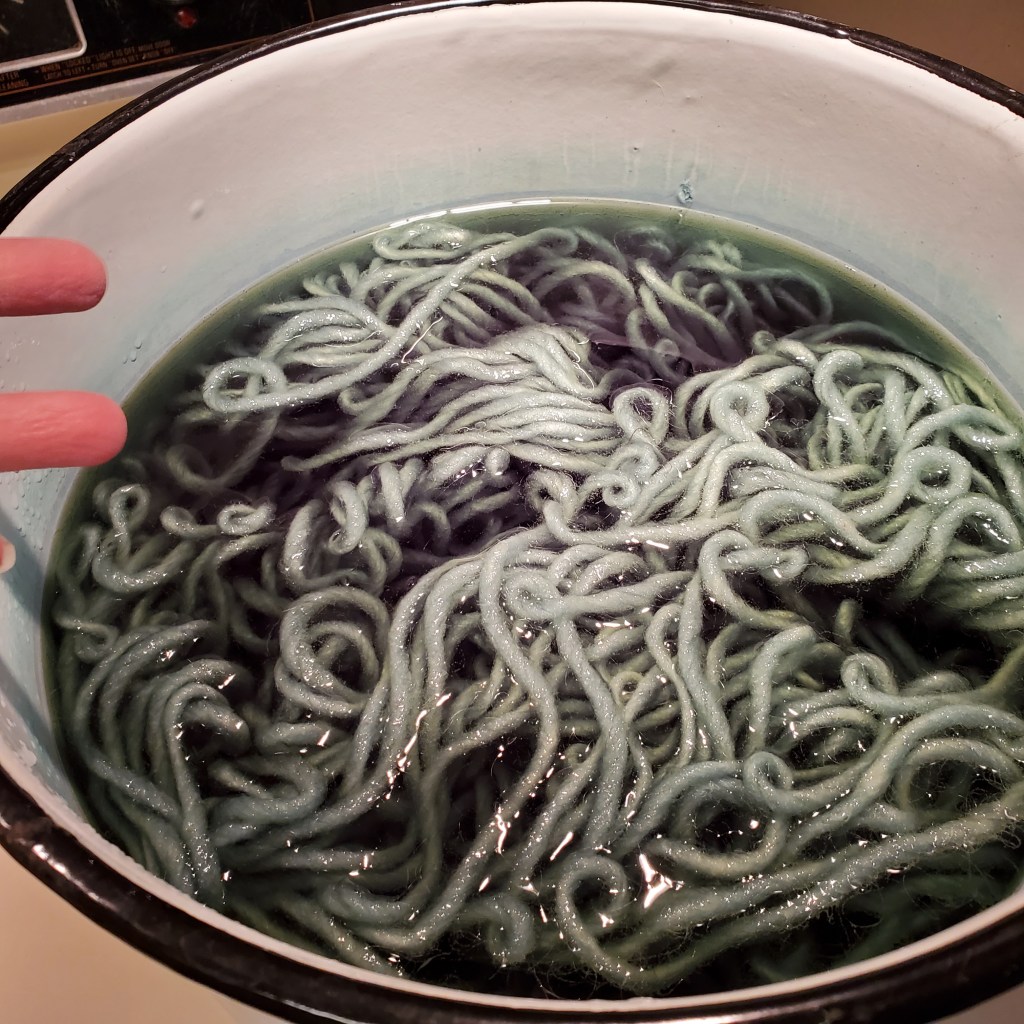
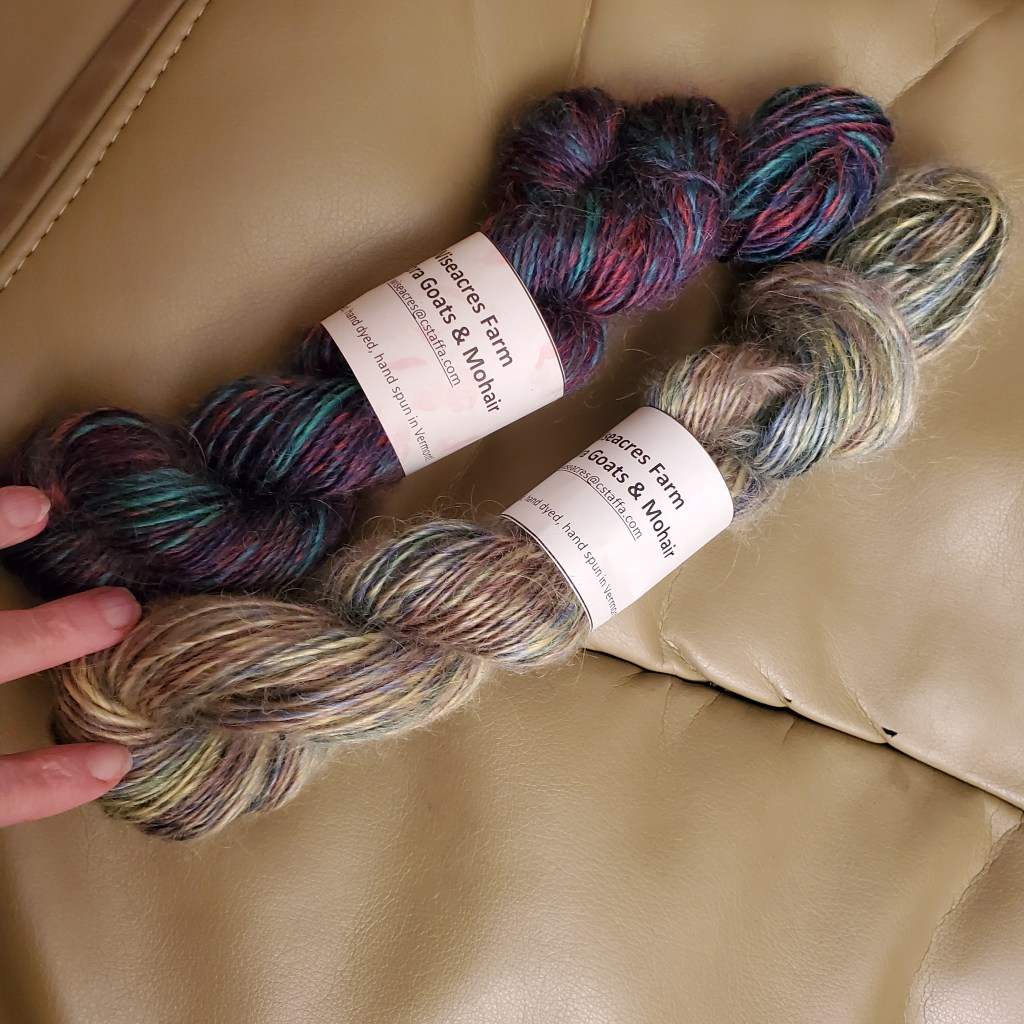
Two!

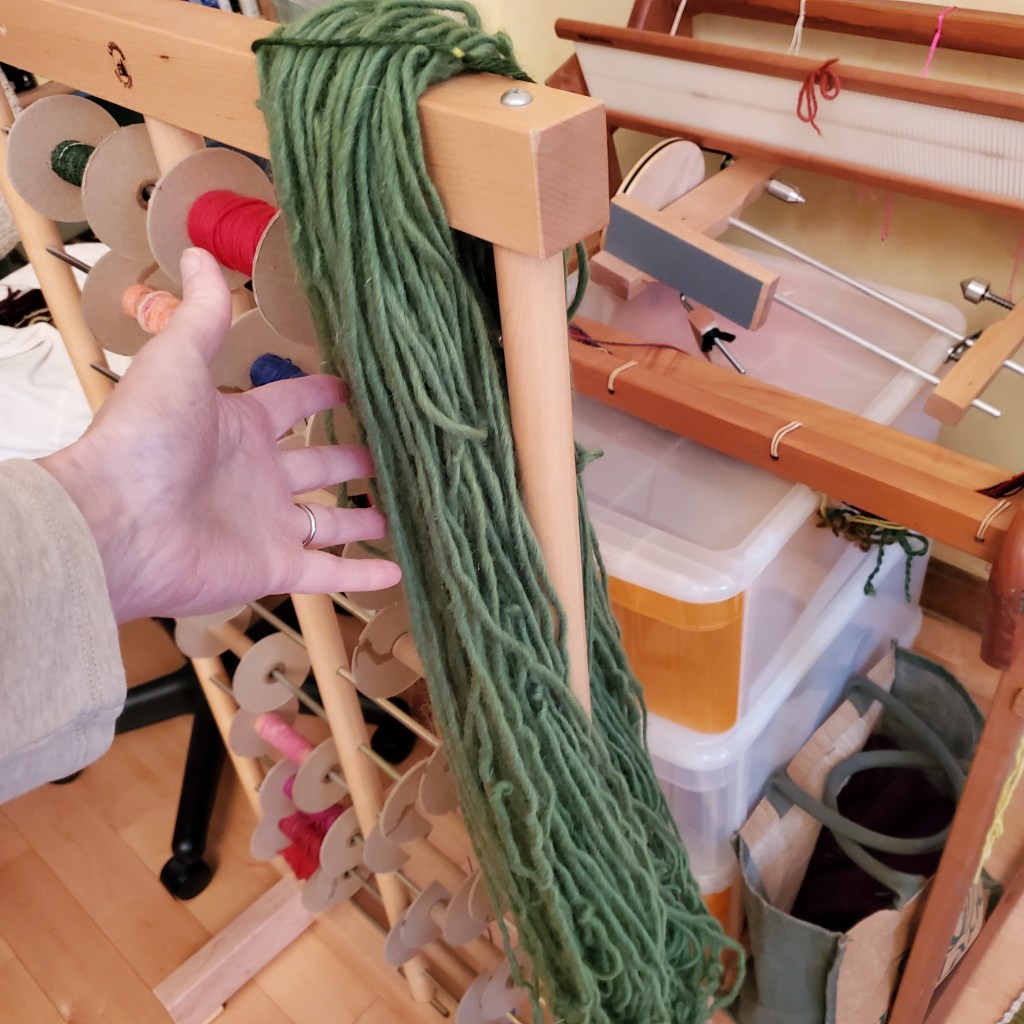
Two!

That one on the right is the one I hated when I started spinning it. But I’m glad I didn’t trash it. It’s not THAT bad. I’ll stay away from that gray in the future though.

Topic change. I always get embarrassed when someone asks me what I’m reading. I feel like I’m expected to name something they’d recognize. Instead of the truth. Which is basically always, “Some weird shit that interests me.”

& I get embarrassed when someone asks if we have cable or Netflix or what-have-you, and I have to say, “I don’t watch TV.” I don’t like that phrase. I always hear it in a snooty voice. But I don’t mean it that way. I used to watch TV. But lately it just doesn’t fit into my life.

Book Corner 2021.57

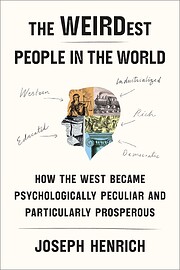
by Joseph Henrich

Along the lines of Jared Diamond’s GUNS, GERMS, & STEEL, this is a big-picture book with a big-picture answer to the basic question: Why did and does Europe rock so much?

In one of the final sections he answers Diamond directly: GG&S is a great theory to explain why Europe was so far ahead circa 1000 AD. But then, why England? Why the Netherlands? TWPITW purports to be The Explanation for why Europe continued to rock so much.

To recap Diamond (and GG&S has always been one of my all-time favorites): it’s agriculture. Eurasia got all the good crops and domesticatable mammals. If you’re stuck eating cassava with nothing to pull a plow, why invent the wheel?

And to summarize TWPITW’s 489 pages of content (there’s a couple hundred more pages of appendix & index)… it’s what the Catholic Church (back then simply the Church) did to the family.

I should probably back up: WEIRD people are Western, Educated, Industrialized, Rich, and Democratic. (Just double-checked myself – yup, 5 out of 5.) And we got this way because our psychology was altered when our vast kinship networks were destroyed by what he calls the Church’s MFP – no, not Maximum Fluoride Protection, but Marriage & Family Program. The Church’s rules said: no more marrying your cousin. No more staying within the husband’s or wife’s parents’ house after marriage. No more arranged marriage. No more polygyny, “or even moderate bigamy” as THE KING AND I song goes. No more marrying your former in-laws.

And this was all a tremendous shock, and a heck of a lot of work to get people to go along with – it took centuries for it all to really gain a foothold. And that’s because being proto-WEIRD is truly weird – we, meaning humans, have always lived within vast kinship networks. Marrying cousins or in-laws kept everything in the clan. Polygyny and arranged marriage cemented patriarchal power. Family/clan/tribe has always meant everything it was to be human. Now, disassociated from that source of meaning, protection, and power, individuals had to look elsewhere – to strangers, voluntary organizations, the Church (how convenient) – and within. This made us more trusting of strangers, and more literally self-centered, than we were when were all Family Guys.

It played a lot of other psychological tricks too. 400 pages worth. Yes, this was a difficult book to read, physically – every night was a weight-lifting exercise. In the end I do like the theory; definitely a fascinating way to look at things. But I guess I have two faults to find.

a) It wasn’t the book I thought I was going to read. It starts out with in-depth looks at non-WEIRD societies, and contrasts with our own – but I thought it was going to be mostly, or more of, that. It’s actually a lot more rah-rah cheering for how great us WEIRD societies are, and less about how, well, weird we are.

b) Why exactly did the Church do all this, fight for centuries to come up with weird new rules for who and how and how many to marry? The reasons were “many and varied.” I kid you not. That’s the extent of the explanation.

So just keep in mind, next time you’re reading a blithe statement about human psychology – it may very well apply only to WEIRD human psychology. Things we think of as rational “givens” aren’t givens. The ideals of democracy, human rights, etc. – these are not self-evident, with apologies to Thomas Jefferson. They are ideas cooked up by WEIRD minds.

Great food for thought – WEIRD thought.