
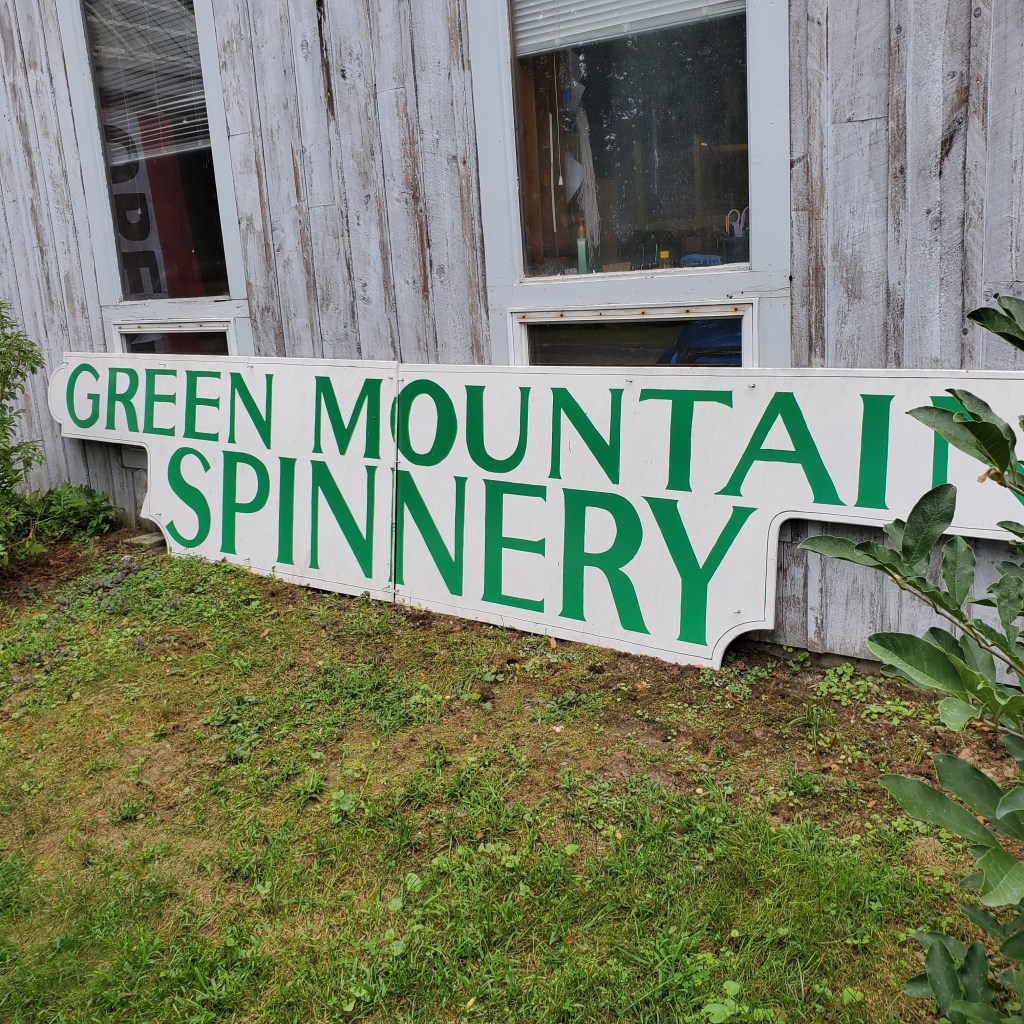
Another photo taken on our mohair-dropping road trip Saturday.
Buy GMS mohair yarn. The goat you knit may be my own.
Another photo taken on our mohair-dropping road trip Saturday.
Buy GMS mohair yarn. The goat you knit may be my own.
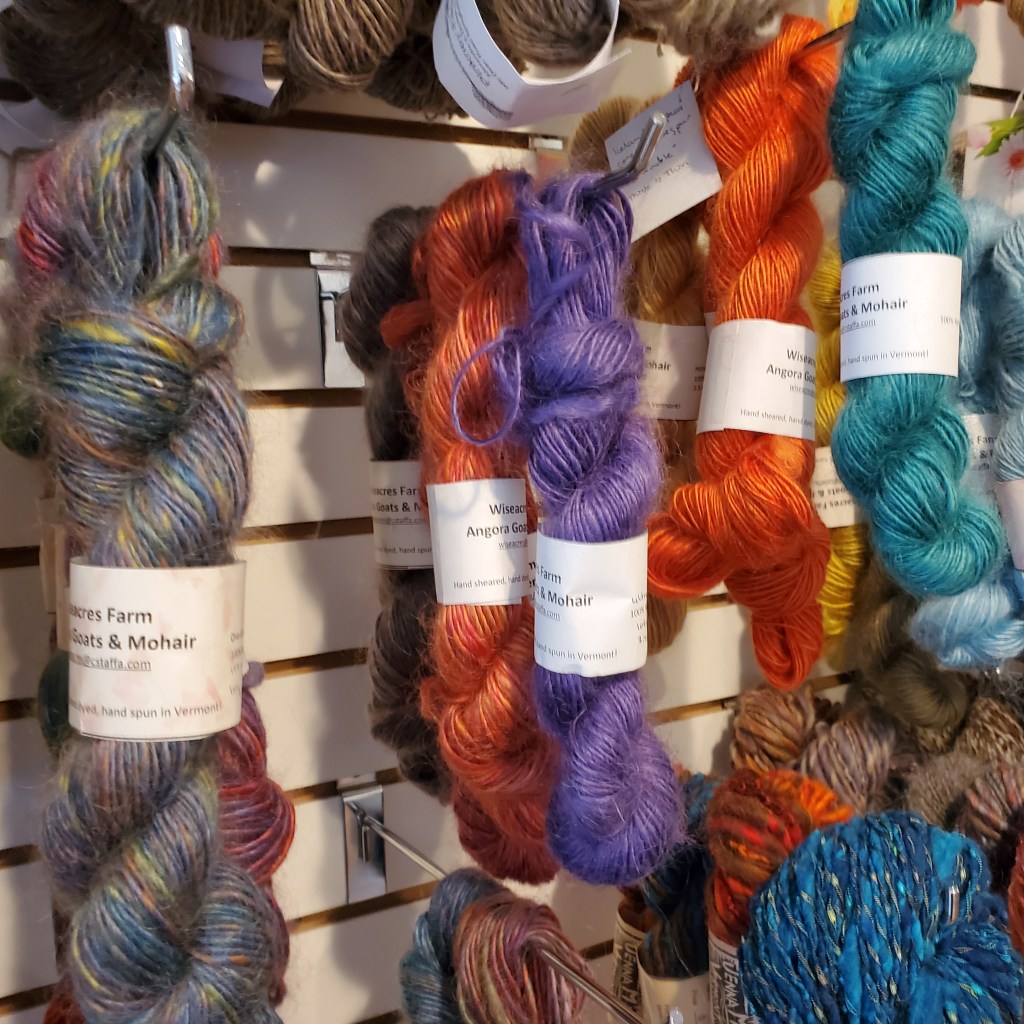
My shiny mohair yarn hanging up for sale at Six Loose Ladies in Chester, VT.
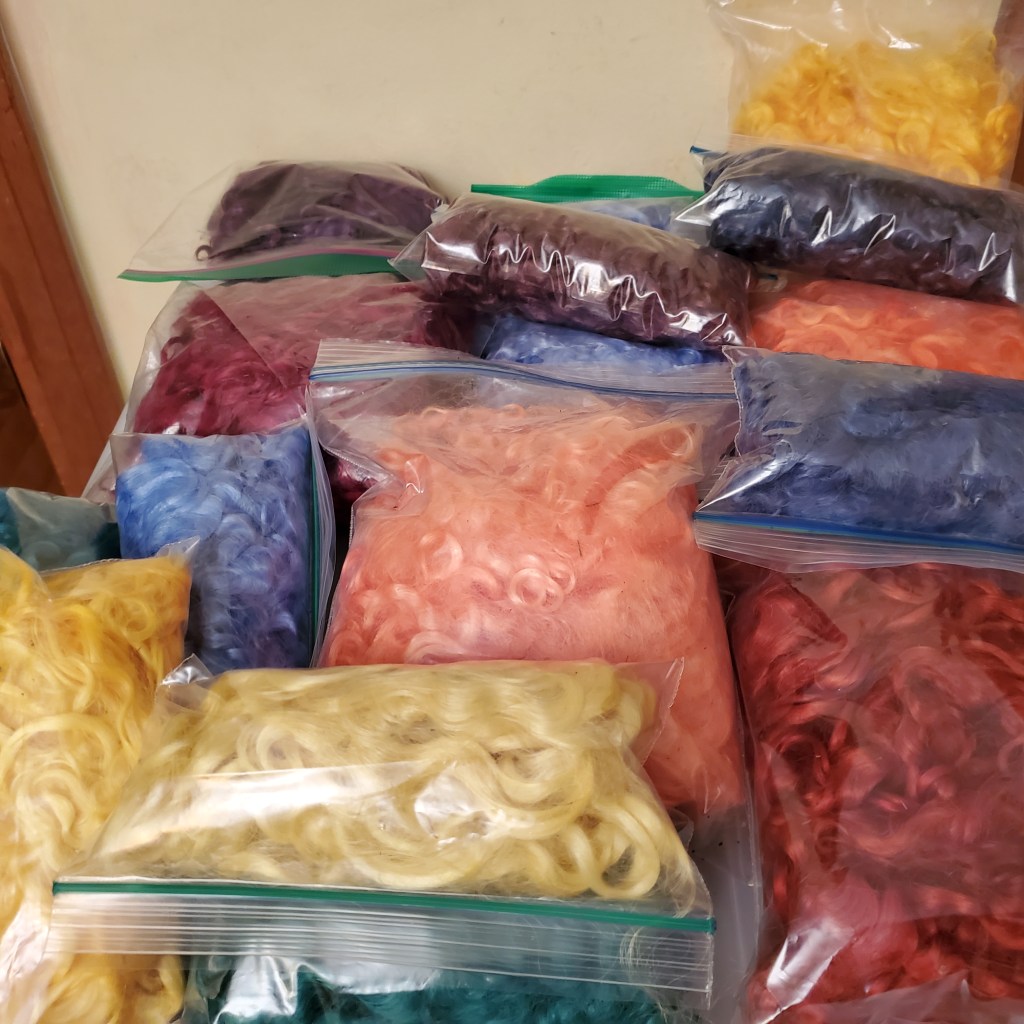
That’s all I can bags, I can’t bags no more…
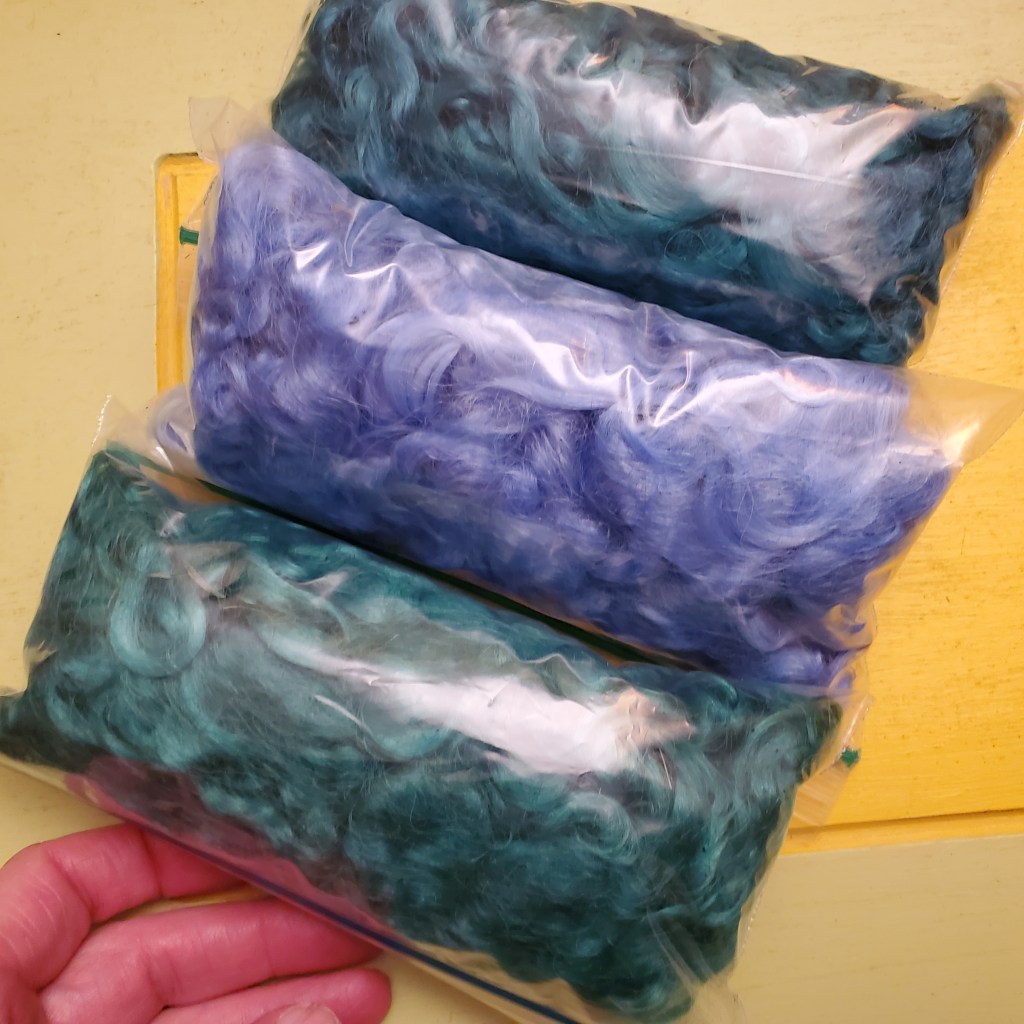
Bagging up mohair locks for consignment, as I won’t be selling anything in person this year.
Maybe there’ll never be a fair again. Maybe they’ll forget how to have one.
by Dodie Smith
This was my second read. Particularly the first five or so chapters, the book is strongly carried by our wonderful narrator, Cassandra Mortmain, a 17-year-old who calls a centuries-old castle in England home. She lives with her highly eccentric family – a famous author father who hasn’t written anything in years; his much younger artist-model wife christened Topaz (though “there is no law to make a woman stick to a name like that”); Cassandra’s slightly older, beloved, but exasperating sister Rose; their slightly younger brother Thomas; and a hired helpmate about their age, though they haven’t been able to pay him anything in years. In fact, they haven’t been able to afford to pay anything or anyone in years; they’ve been selling off furniture bit by bit and scrounging together a living based on that, and when we meet them, they aren’t sure what they’re going to do next.
Then, a la Pride & Prejudice (deftly referenced by the narrator), a nearby property is suddenly let to a single man of means (who, it is a fact universally acknowledged, must fall in love with one or both of our heroines by book’s end).
I do feel that once characters started falling in love with each other, the story got worse. But it’s quite a piece of work nevertheless.

I dyed 16 colors so far and then they canceled the fair; so screw the last two colors.
Now I think I will package some of it up in little bags to consign at 6 Loose Ladies, if they’ll still have me.
So contemplate for a moment the non-existence of god. Contemplate a materialist worldview, “above us only sky.” Everything you perceive with your senses – that’s all there is.
What has been gelling for me lately during silent non-verbal moments of contemplation is: Tom + Vera = Me. That’s all there is.
It’s not that putting the nail in the coffin of the Mystery answers the nature/nurture question for me so much as it renders it moot. How much does our environment shape our personality? Well, what is a “personality”? Contemplate for a moment the possibility that there’s no such thing. There’s just a bunch of stuff people do.
If “this” (squeezes bit of skin between fingers) is all there is, then I know now precisely “who I am.”
And incidentally, behind the scenes during all of this drama and contemplation have silently stood two people: John & Barbara. And it occurs to me how none of this has the slightest bit to do with them. It seems unfortunate that we do not have separate words for “the woman who gave birth to you” and “the guy who fertilized her ovum” vs. “the female primarily involved in raising you” & “the male primary involved in raising you.” They are just mother and father, at best modified as “biological” mother & father and “adoptive” mother & father. But they are so entirely different.
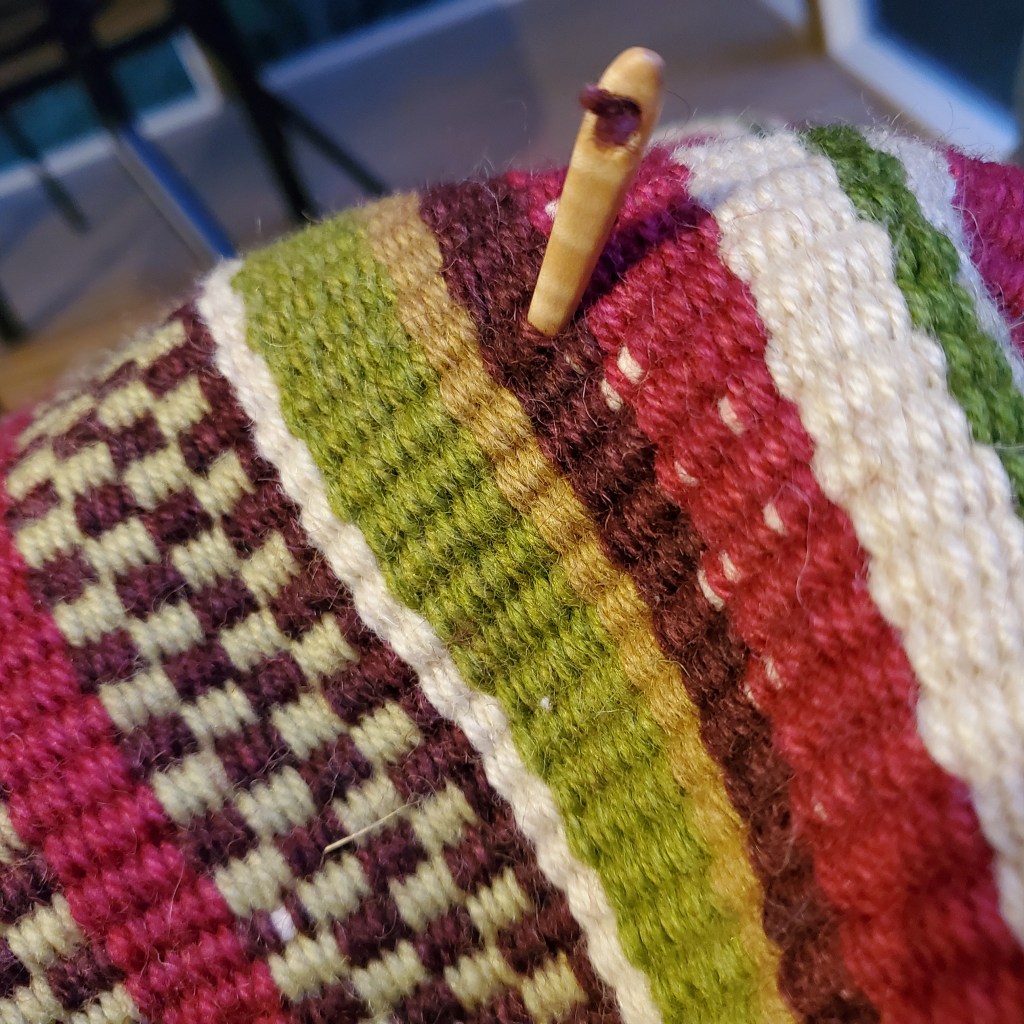
Fixing the flaws in my rug. On the screen porch as evening turns to night. Radio playing quietly next to me, accompanied by insect racket. Beautiful world.
by Ursula LeGuin
This is a re-read for me for book club. I first read this back in the early 90s on Aunt Alice’s recommendation. She thought I would get a kick out of the genderlessness. I had a lot of gender eShoes back then.
But I had not remembered anything about it other than the central conceit, so I went in fresh. It started out badly, for me. I’m not a fan of classic sci-fi. It always feels so pretentious. All the laborious exposition. I’m just not into the high concepts. & this one started out with a lot of politics which I found inscrutable.
It took off in the second half. The earthling and the alien bond during an arduous polar trek.
So, for those who DIDN’T have an aunt to introduce them to this classic and hence may not know the central conceit: the beings on this planet are hermaphroditic. For most of the month they are neither male nor female; then they enter “kemmer”, or heat, and take on one or the other gender. The main character is from our planet or some semblance thereof and is an envoy trying to get them to join an interplanetary alliance. He’s put off by the weird gender-bending, and starts out as annoyingly misogynist. But he gets woke.


 Tytania