Couplers & Conflict Theorists

I listened to an old Rationally Speaking last night that inadvertently explained to me why there is no discussing things with some people.

Two ways of categorizing people:


a) Mistake Theorists vs. Conflict Theorists

Mistake theorists: “We all want to help the world, but we just disagree on how to
help it.”

Conflict theorists: “Stuff is bad because people have caused these problems, and so we need to defeat those people.”

b) Couplers vs. Decouplers

“In a nutshell, decouplers want to be able to talk about the specific claim,
or the specific disagreement, without context. We should just be able to
isolate these specific, factual questions and figure out who’s right.
And the non-decouplers don’t think that’s feasible or desirable. And they’re
kind of suspicious that the alleged decouplers really are decoupling, as
opposed to just trying to smuggle in a lot of attitudes and implications while
claiming to be decoupling.”

The other day a friend of mine complained about the writer of an editorial being “disingenuous.” I couldn’t understand it. How do you know he’s being disingenuous? Wouldn’t you have to read his mind? Or at least know him a hell of a lot better?

Now I get it – friend is a coupler. The fact is that the editorial writer had a reputation of being against affirmative action based on race. This is a no-no attitude in friend’s worldview. Ergo when the editorial writer tried to make it clear that he was not against affirmative action based on socioeconomic background, friend calls “disingenuous.” From friend’s point of view, editorial writer is just trying to catch you off guard so he can “smuggle in a lot of attitude.”

Needless to say I’m a decoupler and mistake theorist.

If you’re not going to give someone the benefit of the doubt for arguing in good faith, I don’t think you should engage at all.

Book Corner 2022.17

by Judith Grisel

Informative book about addiction by a neuroscientist – and former addict.

Grisel wrote her thesis on the mechanism by which morphine is more addictive in familiar contexts than in novel contexts; a kind of Pavlovian effect triggers an anticipatory process in the brain. This process, dubbed “the b process”, is the brain’s effort to maintain stasis in response to “the a process”, the effects of the drug itself. This is the key to Grisel’s model of addiction, the graph of which she would get tattooed on her body if she ever wanted to get a tattoo. A drug floods the brain with a certain effect, and the brain in response tries to fight back, to counterbalance it. After more and more instances of taking the drug, the “b process” becomes stronger, lasting longer and kicking in sooner. So think of the drug’s effect as “the good feeling”; this means you’re going to get more and more “bad feeling”, sooner, heavier, and lasting longer, until you’ve got a case of classic addiction: you’re no longer taking the drug to feel good. You’re taking it not to feel bad.

The chapters each deal with a different category of drug, based on how it achieves its effects. I read the chapter on alcohol with interest, as I dabble sometimes with the idea of stopping drinking altogether. The more I think about it, the more I feel that regular imbibing is really not such a good idea. Counting alcoholism as one of her past addictions, Grisel is strong in her condemnation of it, and heavy are her lamentations of its ubiquity and heavy advertisement. But I feel she’s remiss in not discussing its central place in so many cultures for so many centuries – people have practically bathed in the stuff, and continue to do so, all over Europe and beyond. Wine accompanies every meal as a matter of course. Is this stuff really so bad for you? Why has it persisted? And she doesn’t discuss its value as a social lubricant. She deals with it merely as a depressive, a downer, and wonders why people want to get depressed and “dimmed” whenever it’s time to celebrate something. But booze is only technically a downer. For me its value is in the way it greases the wheels of interaction with other people. She never mentions this.

Poor Grisel. You really do feel for her… her addiction is still a real living thing. She misses pot so much, and she is so jealous of people who can drink one or two drinks and stop. They absolutely confound her. She sees her husband peruse a menu of microbrews, which lists the alcohol content of each, and can’t understand why it isn’t an easy choice of picking the most alcoholic one. A coworker mentions leaving an event after only two drinks because she has to work in the morning, and Grisel can’t fathom what one thing has to do with the other. I mean, of course she understands these things on an intellectual level, but she can’t make them jibe with her own experience. When she was a drinker, she DRANK.

Meanwhile, I wonder how Dr. Carl L. Hart of Drug Use for Grownups is doing these days…

Funny, I read that book in October of last year, but never posted a review of it. On purpose? Was I afraid of having such a book on my blog?

Goats in Coats

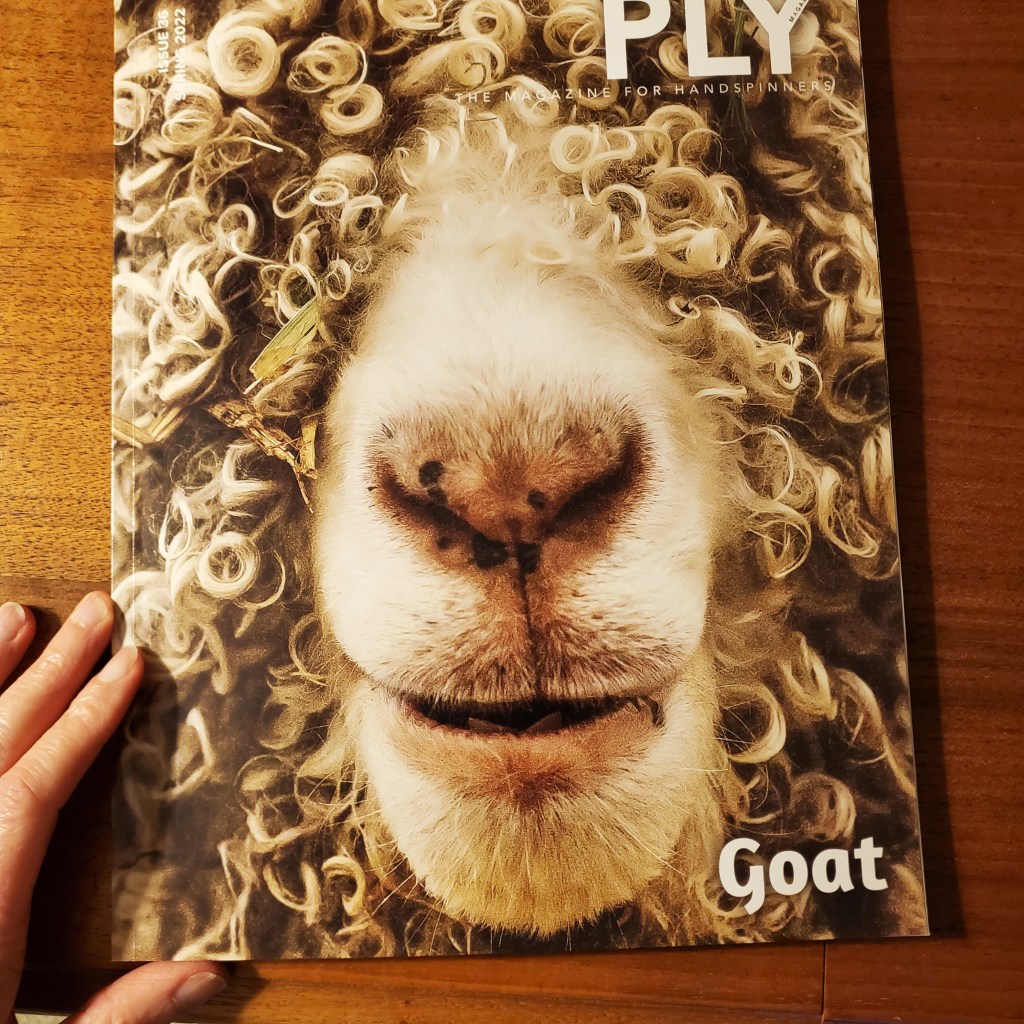
Goat!

I’ve been looking forward to this issue of Ply magazine for a long time!

For the pictures, I guess. Not sure the content is going to teach me much… from one of the first articles, “Angora goats cannot be jacketed, so vegetable matter is a given.” Really? Meaning I’ve done the impossible for years by keeping jackets on my goats on a regular basis? Amazing! I honestly have no idea what she’s talking about.

Book Corner 2022.15

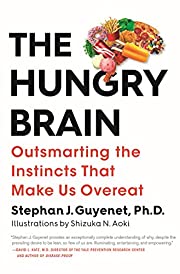
by Stephan J. Guyenet, Ph.D.

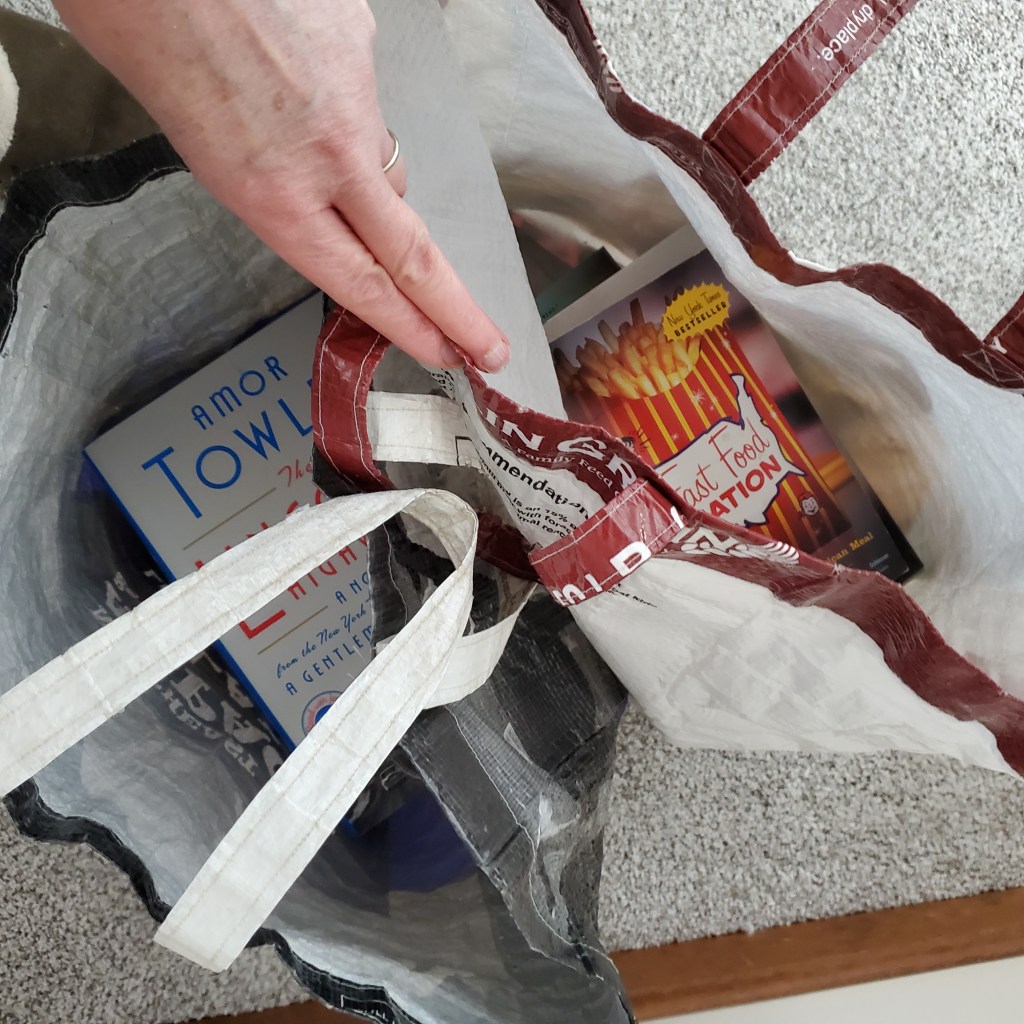
A similar conclusion to SALT, SUGAR, FAT by Michael Moss as to why American obesity rates are skyrocketing: the food just TASTES TOO DAMN GOOD.

To find a time when things were different, we don’t have to go back to hunter-gatherer times – although Guyenet does; we spend a hypothetical day with a few hypothetical members of a non-hypothetical tribe of East Africa, who eat a certain fibrous tuber as a mainstay of their diet. You chew the flesh and then spit out the pithy stuff. It’s not very good. Nobody’s very excited about it. Likewise until 20th century convenience foods and ubiquitous restaurant cooking, you had to eat your own household’s cooking. I’m betting that often wasn’t very good either.

It wasn’t Oreos. It wasn’t Big Macs. Now it is. Mmmmmmm.

This particular book is about the brain science behind metabolism, hunger cues, etc. Along the lines of the main thesis I’ve described above, his biggest weight loss tip is to eat food that isn’t very good. Of course you’ll eat less of it, for starters; but it may also have some effect on the brain, and on the levels of something called leptin, to expose yourself less often to the utter deliciousness that is the American supermarket diet.

(He doesn’t phrase it as “eat food that isn’t very good.” He calls it “simple food.”)

But nooooooooooooo I refuse to give up deliciousness. That said, point taken, and it’s always good advice to eat simple food close to the source.

One surprising thing I bookmarked was his allegation that we tend to put on most of our yearly weight gain as a result of the extended holiday season. I always thought that what you did the majority of the year would far outweigh some indulgence at the end; but maybe I’m not really admitting to how lengthy the holiday season is in proportion to the year as a whole. Anyway, to avoid upward creep of poundage, he says to focus on strategies to minimize holiday overeating.

I thought those were a couple of unique tips.

Book Corner 2022.14

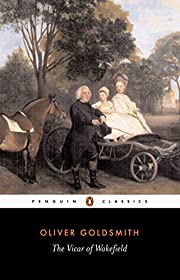
by Oliver Goldsmith

Every now and then there’s nothing like a good classic. (Groucho Marx voice:) And this is nothing like a good classic!

It’s wild and crazy. Fortunes are lost, houses burn down, reputations are ruined, ruffians roughhouse, people come back from the dead, and digressions digress a la galore. The vicar has six lovely children, two of them marriageable daughters. At heart, it is a classic Marriage Plot; and that’s OK by me.

Double Whammy

A double whammy is when one of my heroes interviews another; such as Malcolm Gladwell interviewing Oliver Burkeman. This is a lovely interview and unusual in the welcome respect that they don’t spend all that much time asking Burkeman questions that just cause him to repeat everything I’ve already read in the book. It goes more like a therapy session. We learn that Burkeman started getting obsessed with maximizing him productivity at a very precocious age; he faults his over-anxious, get-to-the-airport-14-hours-early father. But I was like that myself, and I think some of us are just hardwired as such. When Burkeman tries to turn the tables, and prods Gladwell to talk more about how he grew up in such an opposite environment, I’m as fascinated as he is. While Burkeman’s parents said, “Just do your best,” which sent him into a tailspin thinking that he couldn’t slack off for a moment or it wasn’t his “best”… Gladwell’s easy-going parents said, “You’re bored? Good! It’s good to just drift along once and a while…” and Gladwell grew up embracing the easy-going life. But he keeps dodging the question of how he’s become so successful without that drive towards productivity – why isn’t he working at a surf shop in Bali? I’d love to know.

Large chunk of the relevant transcript follows, emphasis added by me; in these spots I particularly wonder if these people are genetically related to Xopher:

Oliver: What would be the motivation to have written all the books that you’ve written and to have created all the other content—podcasts, audiobooks, everything else—what would be the motivation to have got on to that escalator in the first place if you were just completely relaxed about your relationship to the world? 

Malcolm: I may have inherited it from my parents. I don’t think of either of my parents as being future oriented. They were people we never discussed tomorrow. We only ever discussed today. And I never think about tomorrow. Really. Not much. My most powerful memories of my parents—my father is no longer with us; my mother is very much—are of them being in the moment. 

My father would only ever talk about what he was doing, and he would almost never talk about what he intended to do. And my mother was always celebrating the thing that was happening. She’d make a fresh scone, and eat it, and then she would say something to the effect of: “At this very moment, eating this particular scone, I am insanely happy.” 

I’m not thinking about tomorrow