Rhododendrons (Right?)

022.jpg

This was at the Arboretum in Seattle this past weekend.  I *think* this is a rhododendron, though there’s a chance it could be an azalea; I’m not good at identifying flowering plants.  We basically saw rhododendrons, azaleas, magnolias, and cherry trees.  Larry and I went walking early Sunday morning.  Like most places, it seems, Seattle is much further along in the springtime thing than Vermont.


Grieving

I used to think grieving was just about missing someone.

Or if a person’s life was cut short prematurely, about being upset about that, kind of on their behalf.

So, in my usual dense way, I didn’t have much patience for people making a big deal about somebody old dying that they had never seen fit to even mention before.

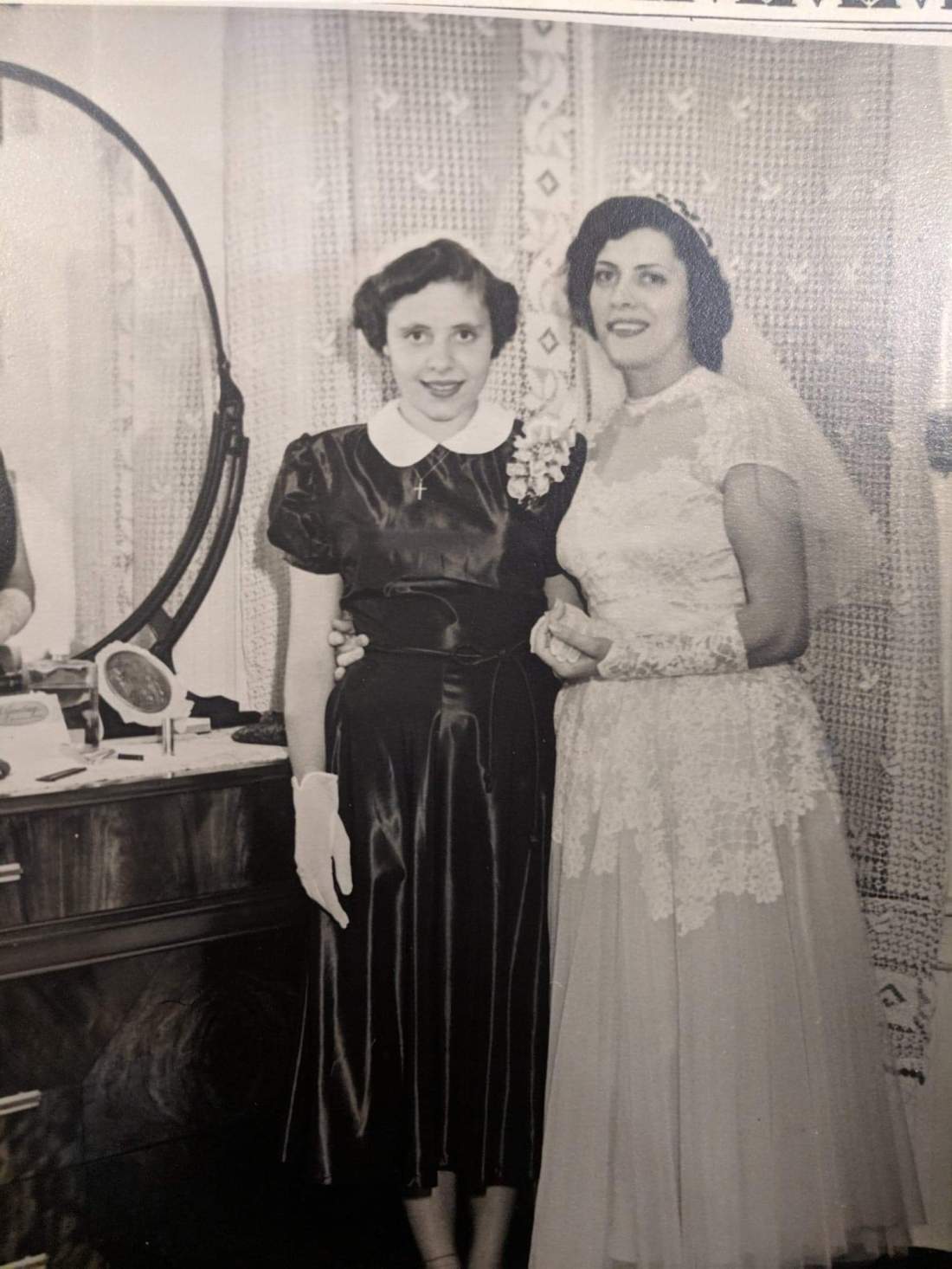
Now I realize that grieving is also about stories ending.  That’s the best way I can put it.  When I look at pictures of John, Barbara, Uncle Bill, and Aunt Lou, young and in their prime, I feel sad for their stories being over.

I wasn’t “close” with Aunt Lou, probably never spoke with her over the past 20 years other than the time she came to my wedding and the time she came to Barbara’s funeral.

Our families got together only once or twice a year when I was a child.  So I wasn’t this big part of her “story”, but I was part of it.  I was her sister’s daughter.  I knew her and her story and I was in it.

I look at pictures of their youth, and I know how it turns out.  There’s something just so sad about that.

Maybe it’s like a novel where they put this epilogue and tell you how everyone dies. That’s always kind of annoying, isn’t it?


023


Book Corner 2019.20

1616204214_01__SX142_SY224_SCLZZZZZZZ_.jpg

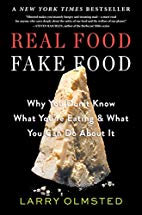
Real Food/Fake Food by Larry Olmsted

A defense of truth in foodie advertising.

First off, Parmigiano-Reggiano cheese, a delicious hard grating (and snacking!) cheese, unlike any other to hear him tell it.  I’m all for Parmigiano-Reggiano.  But Grana Padano has all the same characteristics.  I’m more familiar with the latter than the former, so maybe I need to go find some P-R and be transported into ecstasies by what I’ve been missing; but I have to say I’ve had damn good G. P.  He talks about G. P. being passed off as parmesan, and I’m all for truth in labeling and advertising; but he never stakes any claims as to why G. P. is such a worse thing.

And a confession here.  That “cardboard” powder that comes in the shakeable green can?  It ain’t Parmigiano-Reggiano or even lousy Grana Padano or even, I guess, cheese.  But (whisper) I kind of like it?  It has its place?  It’s an easily shakeable umami I can put on my pasta.  Shaved hard cheese is delicious, but it’s not the same thing, is it?  I like the grated stuff.  Grew up with it.

Onward… parma ham – I’m not familiar enough with it to comment.  Fish labeled as the wrong species – again, I don’t want things mislabeled.  But he doesn’t really sufficiently go into why the species is so important.

Olive oil – a very informative chapter.  And I’ve been destroying my bottle of super-authentic olive oil that I carted personally all the way from Italy, by keeping it next to the toaster-oven – DOH!  But sigh, to hear the experts tell it, we have to buy oils and spices and grains in practically single-serving sizes since they allegedly become inedible so quickly.

Truffle oil, another informative section – basically, don’t.  Just don’t.

Kobe beef…  You haven’t had it.  There are only three places in America serving the real deal.  Meanwhile, we have a lot of “wagyu” beef floating around… this is nominally the same species as the cows used in Japan to make Kobe beef, but that doesn’t make it Kobe beef, or good, or anything, really.  Anyway, Kobe beef doesn’t sound like something I want.  The way it’s described reminds me of a croissant – fat, fat, fat, and just enough lean [muscle/flour] to keep the structure together and not just be a stick of fat.  Meh.

Champagne – I don’t even like.  Scotch – even less so.  More about cheese.  And wine – provenances and varietals.  Useful info, like what percentage of a varietal is needed in the U.S.A. to use the name of the varietal in the label (used to be 51%, now it’s much higher)…

Don’t let my negativity fool you, the book was A.O.K. with lots of info; I guess just a few too many sections about foodstuffs I’m not interested in.

Book Corner 2019.18

0544557239_01__SX142_SY224_SCLZZZZZZZ_.jpg

Life Admin by Elizabeth Emens

From what I could see, she didn’t learn to do less, do better, or live more.  All I got was a lot of complaining.  And enough about the Flexible Spending Account already.  Apparently I am a weird mash-up of the “Admin Denier” and the “Admin Super-Doer.”  I am “on top of things” while at the same time am convinced that IT’S JUST NOT THAT IMPORTANT.


Book Corner 2019.17

1108431836_01__SX142_SY224_SCLZZZZZZZ_

Reading Jane Austen by Jenny Davidson

Bought this semi-impulsively, needing some quick reading material during travel.  Though I was afraid it would read like one of those “book report” books (here’s a quote to support my thesis… here’s another… but what about this one), maybe I am being non-objective due to my love of the subject matter, but it never got tiresome.  AND, it’s inspiring me to, well, re-read Jane Austen.

Book Corner 2019.16

0061458589_01__SX50_SCLZZZZZZZ_

So Much for That by Lionel Shriver

This is my third Lionel Shriver, and I didn’t love it as much as the first two, because the secondary plot was a bit annoying and tiresome.  Without it, the book may have garnered five stars and been a more satisfactory length as well.

Our hero has a dream, and has had it since he was 15: to work and save enough to finally move somewhere cheap enough to live out the rest of his life without having to work anymore.  He marries someone allegedly simpatico, but who manages to find a reason to nix every destination that they explore as a possible retirement grounds.  Having had enough delay, he decides at around age 50 to buy the tickets unilaterally and lay down the ultimatum that he is finally going, to Pemba, an island off the coast of Tanzania, very much hopefully with her, but with or without her.  And she in turn lays down the bombshell that he can’t go, because she’s been diagnosed with mesothelioma, and she’s going to need his health insurance.

Shep loves his wife, and thus do his plans immediately invert.  For the next year plus, it’s all about trying to keep Glynis alive and get her well.  And each chapter begins with a statement of the balance of his life savings, which falls surely, immediately, and then precipitously, eventually to near nothing.

There’s a side plot about his friend.  I won’t summarize that plot or any more of this one…  What is wonderful about Lionel Shriver is that she writes about people like me and situations I know.  Her characters are in my demographic.  These live in Westchester.  They have sometimes unspeakable feelings that I have too.  Nobody really talks about the expense of end-of-life, and how that expense feels to those who have to undertake it, and how it feels to know you aren’t supposed to feel ANYTHING about money when someone’s life is at stake, even if the prognosis is hopeless.

Shep really does love his wife, but he’s not unfeeling about the fact that the means to fulfill his life’s dream is dribbling and then pouring away into her probably futile treatments; and the tragic fact is that he is destined to outlive her, and might still want to pursue his dream.

Oh, and then there’s his aging father and guilt-trip-laying sister.  Yes, these books are really about people like me and situations I know.

It’s all very real and not something you usually read a novel about.  And the ending is FANTASTIC.