

Author: christinestaffa
My life's journey has taken me from the streets of New York, up the Hudson Valley, to a little goat farm under Vermont's highest mountain.
Book Corner 2019.35
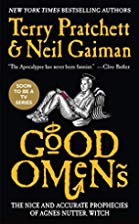
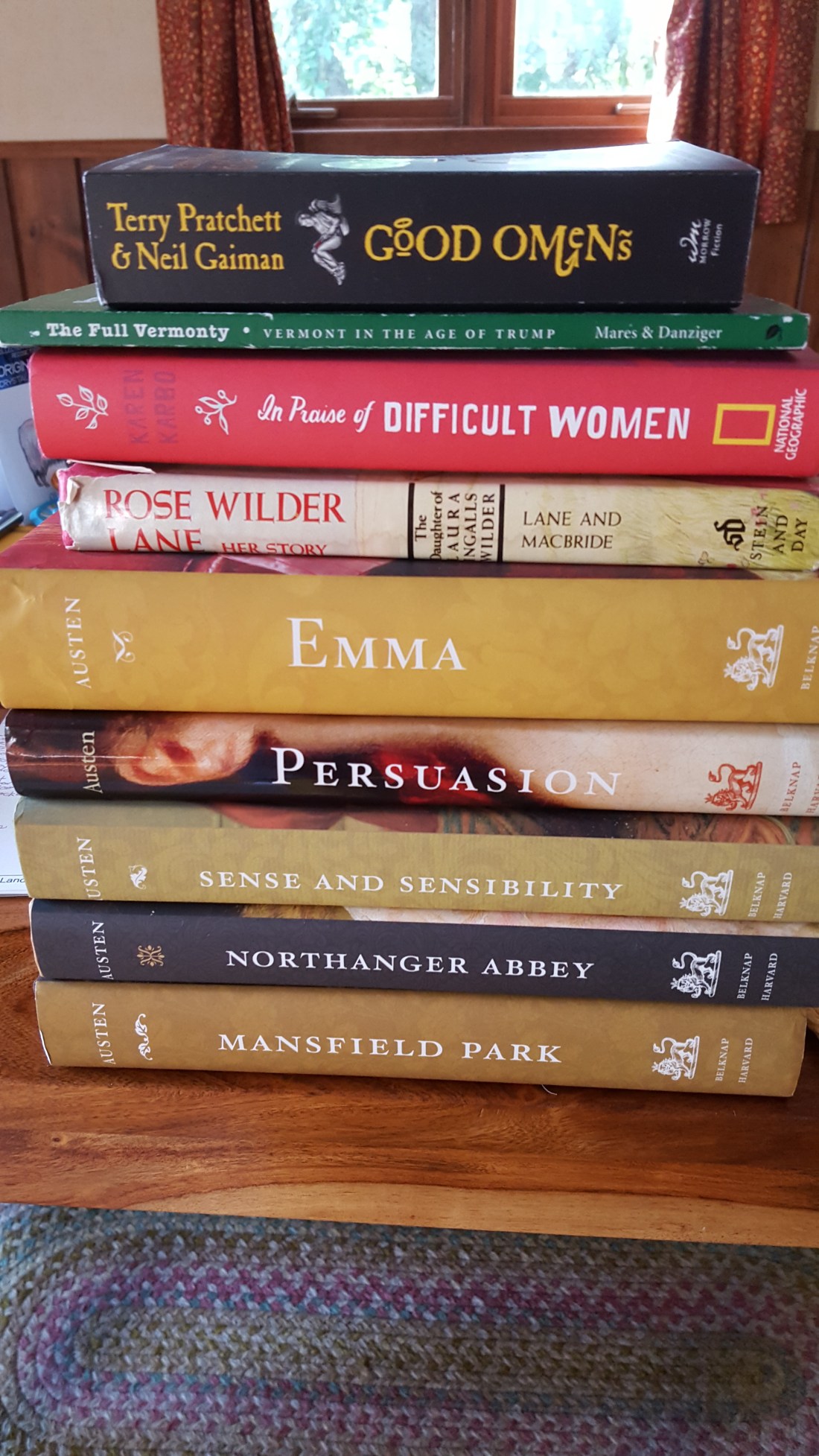
Good Omens by Terry Pratchett & Nail Gaiman
A crazy slouch towards Armageddon. I’d say it was more Pratchett than Gaiman. The jokes just never stop.
It was long and rambly, with a cast of characters to match. There were some I loved every time they appeared (Crowley, Aziraphale, Anathema – her name alone has to make you love her). At the other end were some that I really found repulsive, and disliked whenever they got airtime (Shadwell). I wasn’t crazy about Newt. As for the kids, they were good kid characters, but being American with little exposure to Britain, I just couldn’t reconcile those heavy accents (and ideas) coming out of children’s mouths. E.g., “I don’t see what’s so triffic about creating people as people, and then gettin’ upset ‘cos they act like people…” This is the 11-year-old Antichrist speaking. To me it just sounds like Andy Capp or one of those dimwitted Python characters.
Yes, the Antichrist; so anyway – the purported plot of the book is that the Antichrist comes to earth but gets switched at birth, and grows up without the proper diabolical “training.” So he just turns out to be a boy with a few superpowers, and isn’t really evil at all.
Meanwhile what happened to the baby who got the training? I’m not sure. If he turned up again at all, it was extremely rarely. So I thought this was going to be a big “switched at birth”, “nature vs. nurture” kind of subplot, but it wasn’t so much.
Then there were the Four [Motorcycle] Riders of the apocalypse. I read in the afterward that this was Gaiman’s main contribution. Those portions are a little less jokey, but I don’t know, things just didn’t really come together. Everything was just kind of wacky.
If you like Terry Pratchett, I think you’ll love it. if you’re looking for more Gaiman, I don’t really see it.
It was long and rambly, with a cast of characters to match. There were some I loved every time they appeared (Crowley, Aziraphale, Anathema – her name alone has to make you love her). At the other end were some that I really found repulsive, and disliked whenever they got airtime (Shadwell). I wasn’t crazy about Newt. As for the kids, they were good kid characters, but being American with little exposure to Britain, I just couldn’t reconcile those heavy accents (and ideas) coming out of children’s mouths. E.g., “I don’t see what’s so triffic about creating people as people, and then gettin’ upset ‘cos they act like people…” This is the 11-year-old Antichrist speaking. To me it just sounds like Andy Capp or one of those dimwitted Python characters.
Yes, the Antichrist; so anyway – the purported plot of the book is that the Antichrist comes to earth but gets switched at birth, and grows up without the proper diabolical “training.” So he just turns out to be a boy with a few superpowers, and isn’t really evil at all.
Meanwhile what happened to the baby who got the training? I’m not sure. If he turned up again at all, it was extremely rarely. So I thought this was going to be a big “switched at birth”, “nature vs. nurture” kind of subplot, but it wasn’t so much.
Then there were the Four [Motorcycle] Riders of the apocalypse. I read in the afterward that this was Gaiman’s main contribution. Those portions are a little less jokey, but I don’t know, things just didn’t really come together. Everything was just kind of wacky.
If you like Terry Pratchett, I think you’ll love it. if you’re looking for more Gaiman, I don’t really see it. (  1/2 )
1/2 )
Such Wonderful, Flat Biking
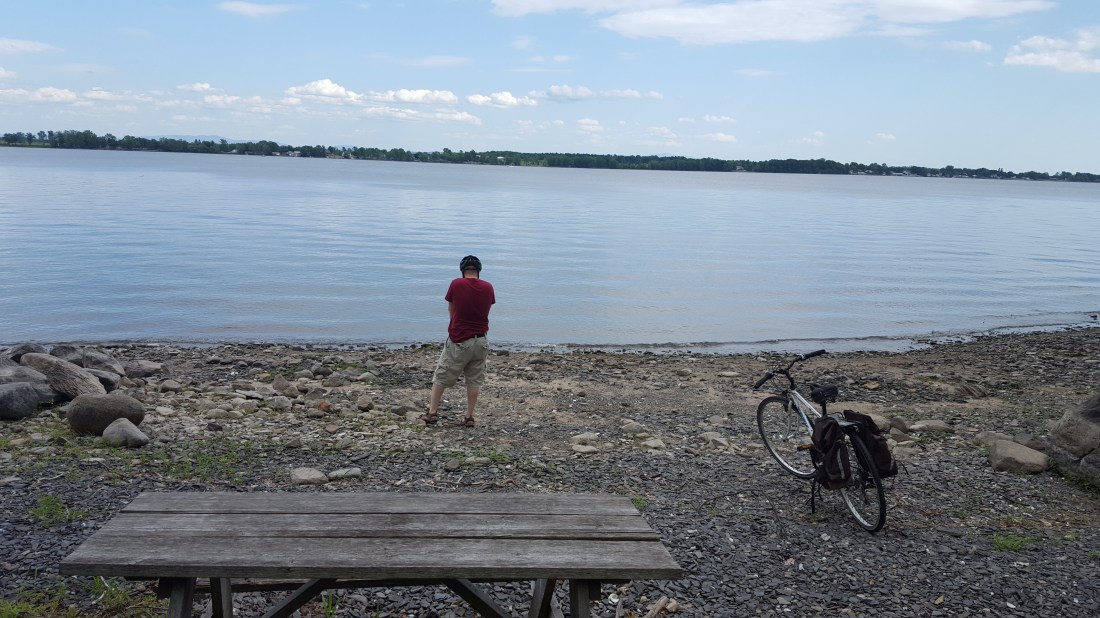
Yesterday; my VT251 picture for Alburgh.
Z’s

Zinnias & Zowie
Book Corner 2019.34

This Fight Is Our Fight by Elizabeth Warren
I don’t agree with Warren on all things. She doesn’t have a single good thing to say about business, ever; the Washington Post put it well in an editorial I just saw today about her latest proposed bill about regulating financial equity: that, typically, she was “overreaching” and “overwrought.”
For example, in the book she cites a commencement speech given by Michael Bloomberg where he criticizes the right for being too quick to demonize minorities, and the left for being too quick to demonize big business.
Her reaction is, well, overwrought. How dare he “equate” poor minorities with powerful big business? How come everyone else is not up in arms!
Because he didn’t “equate” them; not surprisingly, Warren fails to see she is a perfect example of what he’s talking about.
The book was big on elementary history lessons and rants. I wished there were more autobiography, and more of the informal case studies she starts off with. I really do like Senator Warren, respect her, and at the core of her message, agree with her – I would love to fix the system so that it works for the majority of Americans; that’s what the system is “for.” So, without overreaching or overreacting, let’s get to it! (  )
)
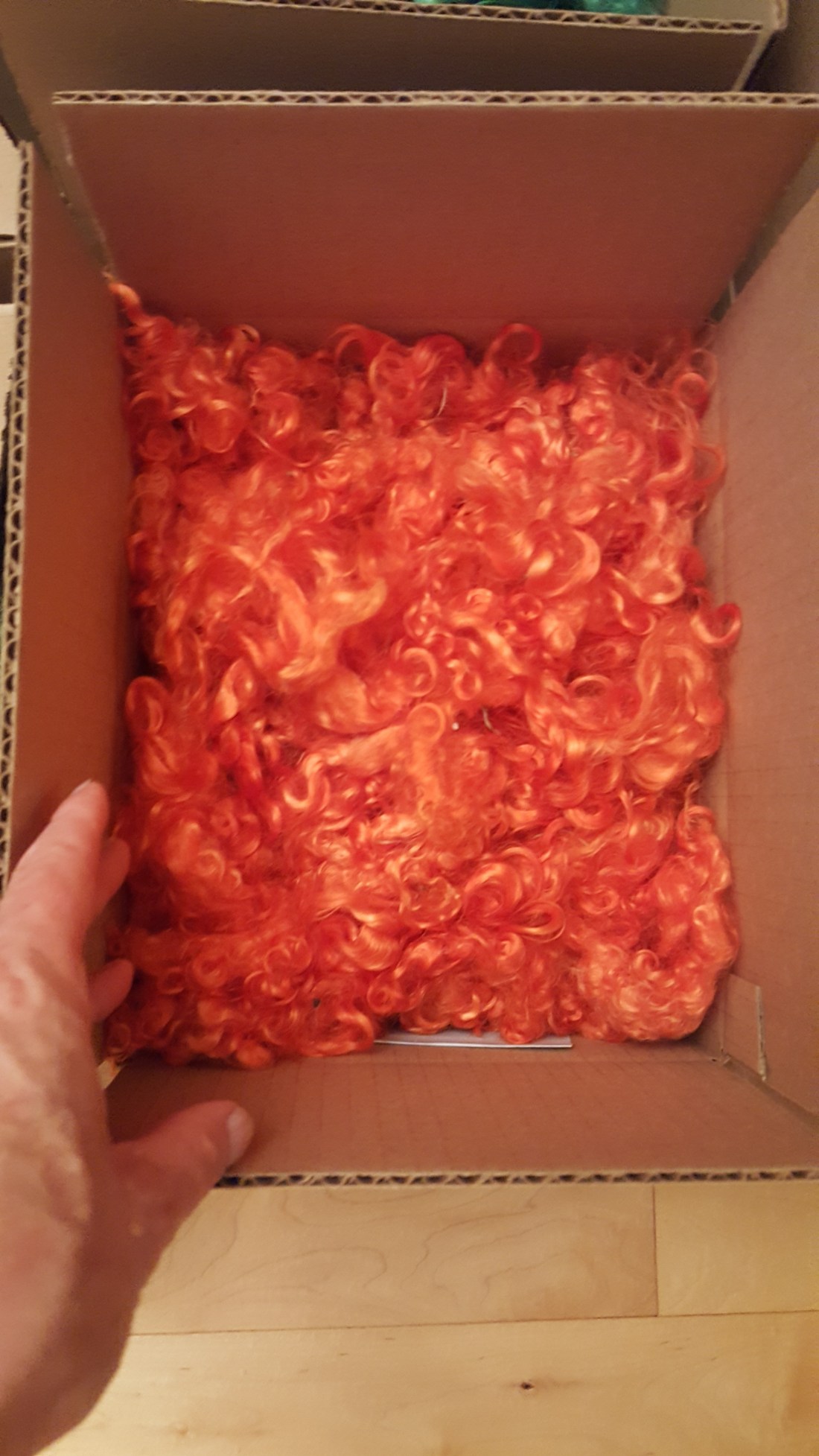
Goes Through My Head a Lot While Dyeing
There was a Barry Manilow song called “This One’s for You”. This first line was, “This one’ll never sell, they’ll never understand…”
Keep Me Movin’…. Over 50…
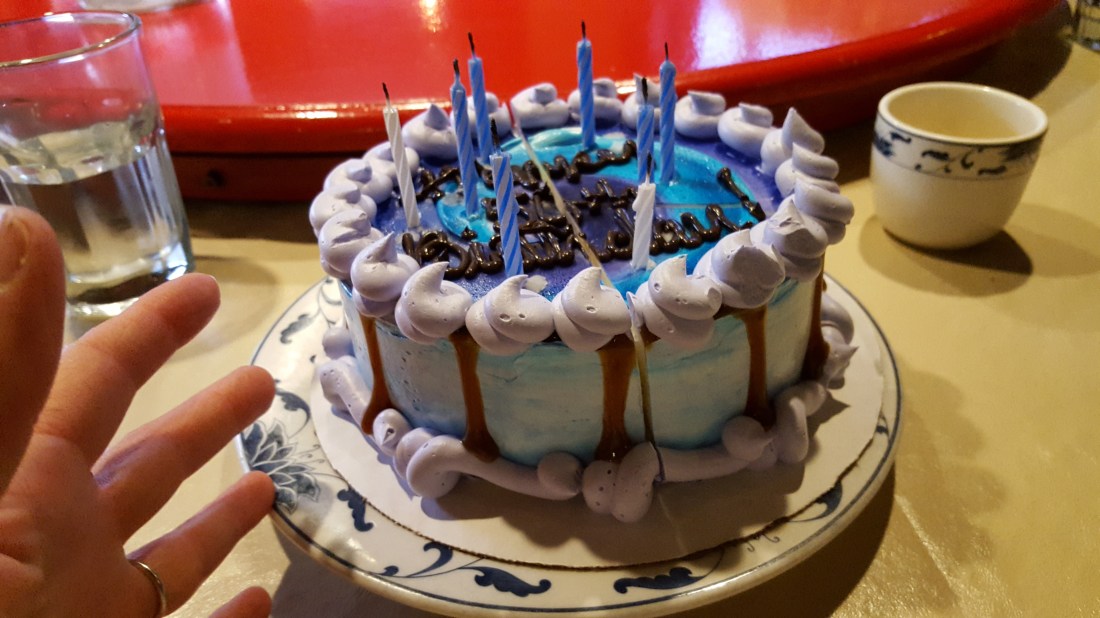
My birthday was a piece of perfect with a side of awesomesauce.
Thoughts on Life, the First Half
50 years ago today, a teenage girl in the Bronx gave birth. After, one hopes, a sufficient period of rest – and, I’m told, a fair amount of argument and determination – she was allowed to see her baby. It was a girl, with fine red hair, like that of her erstwhile lover, wherever he was. Vera had been toying with the name “Titania” for a girl, after the fairy in “A Midsummer Night’s Dream”; but at the last minute, filling out the birth certificate paperwork, she decided to drop the “Tit” and just go with “Tania.” The name of the baby’s father, she left blank. “It’s none of his business,” she muttered. She signed the form. Then she signed the relinquishment papers.
“Are you sure?” had asked her best friend, barely 17 herself, and in awe of everything Vera had ever done, and was about to do. “This is serious.” But once Vera had made up her mind about something, she was determined. She would not take that baby home.
Vera had a cousin Christine who was adopted, an only child. Christine always seemed to have the best of everything. “Lorraine,” Vera had explained, “when people adopt a child, go to all that trouble and work to get that child, that child is their LIFE. That child gets everything possible from them.” That is what she wanted for Tania, to be Christine (I am not making this up).
Vera’s hitchhiking days were over after Tania. She went home to live with her parents. She worked in their store. When they got old, she took care of them. She only married late in life, and didn’t have any more babies.
But she was a tremendous aunt, big sister, and cousin to her younger relatives; she was crafty, making them costumes and toys and dolls. But one doll that she made, she kept for herself and wouldn’t let any of them touch. “That’s my baby!” she would admonish them. It was a red-haired Raggedy Ann kind of doll that she called Tania. Her younger sisters and cousins would only put two and two together about that doll much later, when Tania herself had shown up on their doorstep.
We are all dealt our most important cards before we are even born, at conception, when our genes come together. I was dealt a big fat fateful card just days after my birth, when a 19-year-old girl made a big decision. And then, seven months later, I was dealt the formative cards of a mother, a father, and an older brother.
Now, there’s the cards you’re dealt, and then there’s how you play them. I think I’ve played a pretty tight game here. I’ve come up with some odd strategies that have nevertheless worked well for me, and when something has worked well, I’ve tended to stick to it, doggedly. Like Vera, I guess, I can’t be swayed.
And then, this card game itself is embedded in a larger game of dominoes. (Stay with me here.) Each moment of our lives is a domino, knocked down by the moment before it, and itself knocking down the next domino. Branching out from every single domino are the other paths which represent the choices or events that could have happened but did not. We are relentlessly knocking the dominoes forward. When something crazy happens, and you wonder, “Why did that happen?” “What a coincidence.” “Why did have to get hit by that car?” “Why couldn’t I have looked where I was going?” The answer is, because, something had to happen, and in this universe, that was the thing that did.
Vera, if you imagined a picture-perfect Life of Riley for me, where I’d be wearing satin frocks and playing with a small yappy dog, you might have been disappointed. I think I ended up in a neighborhood much like yours and surrounded by similar people. But I had one extremely important thing that you could not give me: I had two parents, always, the same two parents throughout my whole childhood and beyond. Though during the worst years I often wished that one of them would get the hell out of there, I do realize and appreciate the irreplaceable benefits of family and home stability to a child. I had two parents and I had the best education they could provide. This was no small card to have been dealt, its impact on my game not to be overlooked. Thanx, Vera, and Barbara, and John, for playing the cards that provided me with that.
Book Corner 2019.33
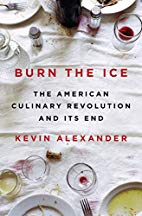
Burn the Ice by Kevin Alexander
This book had a five-star introduction, which can stand on its own, about how we have to by now have reached Peak Foodieness – there are too many restaurants, too many products, too many trends moving too fast, all chasing too few dollars. He hopes his book will be a kind of “You heard it here first!”
But then, the body of the book is entirely different. He attempts to tell the story of this rise of the unsustainable fetishization of food, by means of the stories of various individuals – chefs, restauranteurs, bartenders. The individual stories don’t always go from start to finish, but are broken up in spots that feel random and scattered around. And they attempt to convey a mood of fever pitch by means of relentless lists and name-dropping, name-dropping, name-dropping. I found myself helplessly carried along in the hopes of reaching some satisfying climax and denouement, all the while saying, “I don’t care. I don’t care. I don’t CARE about these people I’ve never heard of and the exact locations of their establishments, in cities I’ve barely been to! I don’t even LIKE cocktails!”
The two chapters I liked best were like the introduction in that they could easily stand on their own as essays – maybe Alexander should in fact stick to writing essays. They were the bits about Guy Fieri, which was written entirely in the form of questions; and the Pioneer Woman, Ree Drummond. It helped that I actually know who these people are.
Ultimately there was no climax, I guess because the crash hasn’t happened yet. Why didn’t he at least have a final chapter conjecturing how it all might end? I really couldn’t help but feel ripped off. ( )
The Universe Wishes Me a Happy Birthday

Jean Talon, Montreal, QC
Awesome pre-birthday weekend.
And if you ever get the opportunity to see Cirque du Soleil, run, do not walk.
 Tytania