

Working on peridot today. It appears to be too dark and green. No matter… lots of white fiber exists in the world, I can improve.
Working on peridot today. It appears to be too dark and green. No matter… lots of white fiber exists in the world, I can improve.
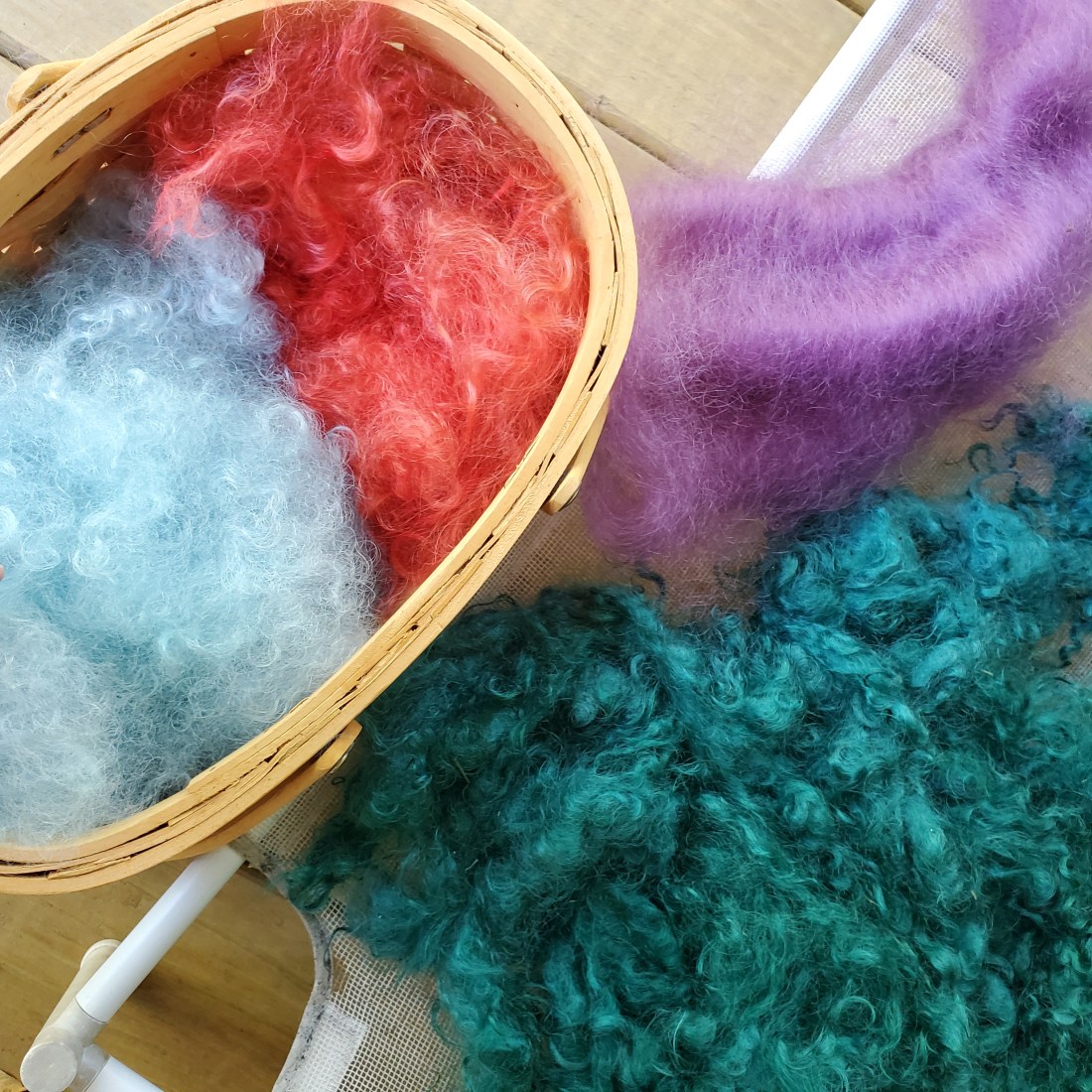
Here we are so far, January (garnet), February (amethyst), March (emerald), May (aquamarine).
The garnet’s a bit too orange and the emerald a bit too blue, but I can do better next time.
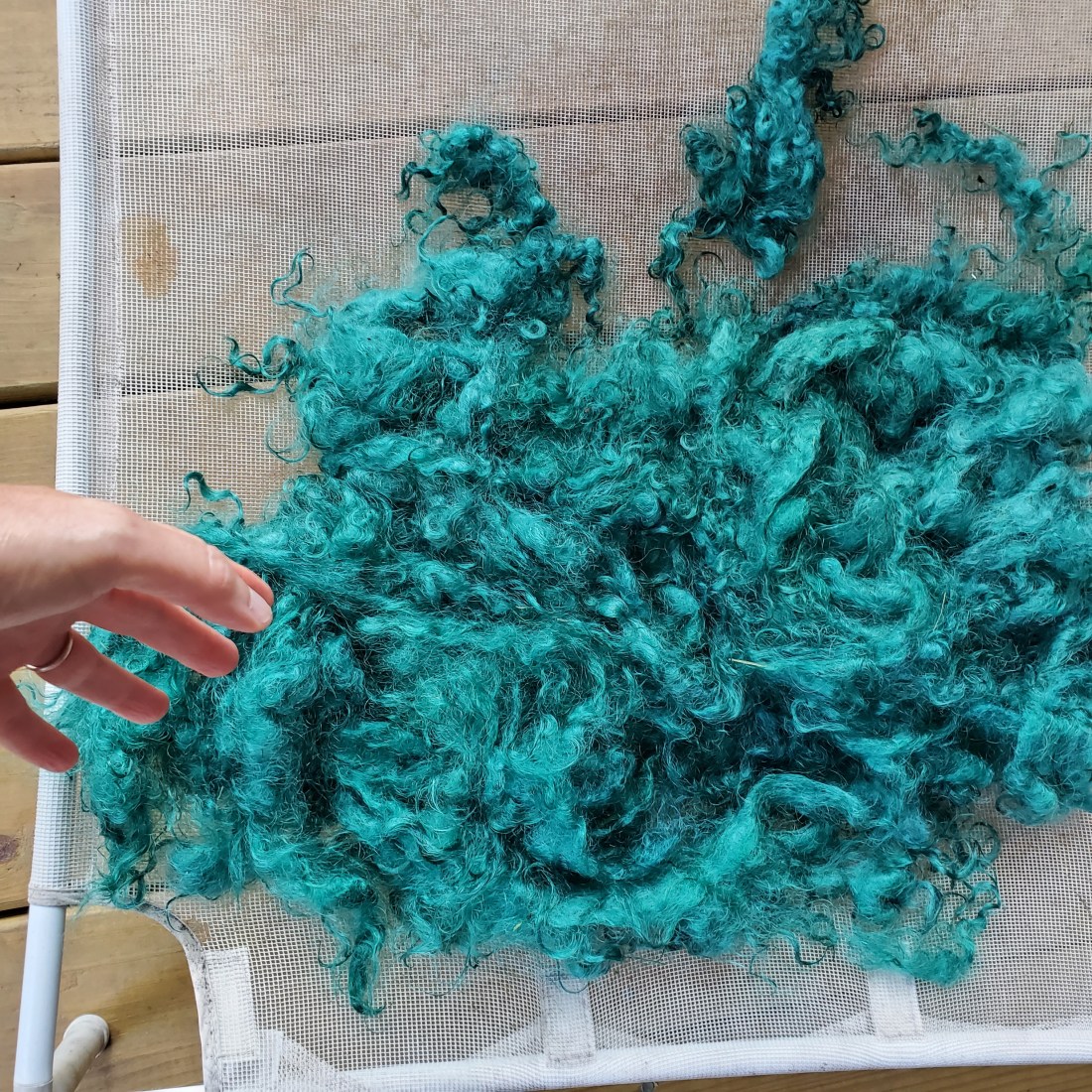
This came out bluer than I wanted, so I overdyed with more green today. If someone had asked me, “Are you dyeing?” I would have said, “No! I’m OVER-DYEING!” GET IT?? A dyeing pun that for once is not about death!
Not happy with Vermont anymore. Too many days with double-digit caseload increases.
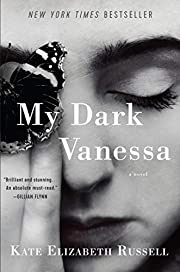
This was a disappointment. I was expecting a nuanced story about a teacher-student affair. But it was a story about abuse. None of the characters were likeable. I’m glad to be done with it.
I don’t think it benefited by all the going back-and-forth in time. We knew the climax well before the end; a little suspense would have improved the story. Towards the end there was an incident that I thought was going to give an interesting plot twist, but it went nowhere. Thus there was no satisfaction in reaching the end – except that I didn’t have to spend another evening with 100% dysfunctional Vanessa (does she NEVER have a happy or successful moment?) or icky Strane (just yuck, yuck, yuck).
Weird thing that annoyed me: the oddball one-syllable last names almost everyone had. One person’s last name was only two letters long. It was a strange affectation (and yes, I know I’m strange for noticing and getting annoyed by it). (  )
)
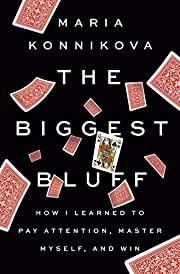
The Biggest Bluff by Maria Konnikova
I got all the way to the end before I realized there was a glossary of poker terms there. THANX, KINDLE. Grr.
And I read basically the whole thing without really understanding even the rudimentary rules to Texas Hold ‘Em. But that’s OK! Because it’s not about the hands and how they went. It’s about… life.
Konnikova has written a fairly unique “my year of” style book. She decides she wants to master poker in a year. A lot of random things have gone wrong in her life at once, and somehow she feels that studying poker will help her learn to understand the role of random chance in life. What makes the book unique is not only that it actually takes her more than a year to do what she sets out to do (and she sticks with it anyway even though that “ruins” the premise); but that she injects very little extraneous detail about herself. Once in a while we get in on a conversation with her husband or mother. She seems to have no kids and live in Brooklyn, but she doesn’t dwell on either of those things. She doesn’t dwell on herself at ALL, except as a student of poker. It’s wonderful! She’s a journalist, and that may have something to do with it.
So basically, what we learn is, you gotta know when to hold ’em, and know when to fold ’em, just like the song says. It’s so cliche, but I used to say it too; before I became more enamored of my Domino theory of life, I had a Card Game theory of life: there’s the hands you’re dealt, but then there’s how you play them. When my father was ill, every day felt like another really tough card. And I thought about the big areas of my life and how I’d played my cards, and there were some plays I was really proud of, some I’d always doubt… And I thought about how my brother was refusing to play these tough rounds at all. And it was a really helpful metaphor. And when I try to explain why the Kinks song “Better Things” was for so long the only thing that could cheer me up, I could only say it was something about the particular phrasing, “I know tomorrow you’ll find better things.” So many things are beyond our control – we just FIND them. And I was finding crappy things right now, but the law of averages implied that sooner or later I would surely find BETTER things. Those are the cards you’re dealt.
Oh wait, I was writing a book review. For Konnikova, it seems to come down to stoicism. She becomes successful when she can control her emotions and just play, play, play. She throws in some helpful quotations here and there, and the most appropriate seems to be from Kipling:
“If you can meet with Triumph and Disaster,
And treat those two impostors just the same…”
She has to learn that anyone can have either a triumph or a disaster through no fault of her playing (though she can certainly have a disaster through her own fault, too). Anyone can get lucky or unlucky. Successful pros just keep playing – and learning – and adjusting. While there’s LOTS and lots of poker, poker slang, and poker play-by-play along the way – the life lesson ultimately comes through. (  )
)
Addendum: it’s high summer, with lengthy daylight, which does not lend itself to indoor computer work; hence the blog posts few & far between. See you on the rainy days.
This makes ten skeins in the current “season”, though I have only four in custody, having sent six out into the world.
Olive green on the right is the new addition.

But moving on to jewel tones… here’s my amethyst:

Almost heaven, in Vermont
Green Mountains, Winooski River
Life is old there, older than the trees
Younger than the mountains, growin’ like a breeze
Route 15, take me home
To the place I belong
In Vermont, Mount Mansfield,
Take me home, Route 15

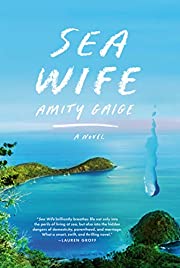
Sea Wife by Amity Gaige
A super-exciting story about a couple with two young children who go away to sea on a sailboat. You know from page 1 that things come to a bad end. The story is mainly told back-and-forth between Juliet’s hindsight perspective and Michael’s daily log entries. The bold print and indentation for Michael’s entries makes it clear who’s speaking; but even so, the switching could be very rapid, and it sometimes took a slight effort to reposition one’s mind into the right character at the right time.
I don’t know anything about boats and I do terrible at following action sequences under the best of circumstances; so in a lot of the most gripping moments, I could only skim helplessly in a “jib mainsail yada yada halyard keep yada yada” kind of way; and yet the book still delivered a 4-star experience for me.
The plot: with lots and lots of foreboding, we follow the family’s story from the different perspectives, wondering exactly how things will go south. Not only do we know there’s going to be a death: we soon have the possibility of foul play mixed in.
The conclusion: very satisfying.
The characters: While Juliet had many annoying traits – tendencies toward martyrdom, self-pity, self-absorption, and wanting to be a poet for Pete’s sake – it was OK, because I didn’t feel I was necessarily supposed to like her, not all the time. Michael in his personal log betrays an idealistic libertarian streak, but never goes off the nutso deep end – then again, he did take his whole young family away to Central America to live on a sailboat for a year, so what am I saying? Sybil, the 7-year-old is really charming – I don’t think I’ve ever come across a more likeable child in a modern novel before, not one who gets this much screen time. She never seems to get bratty. In fact, towards the end, I started to wonder – why does this kid never get bratty; is that realistic? George, the 2-year-old – also well played.
Rhetorical question: why do female protagonists in modern novels always have to be gorgeous? Can’t we have someone who’s a little dumpy-looking after having two children? (  )
)
Addendum: I own this book in hardcover and am happy to lend.
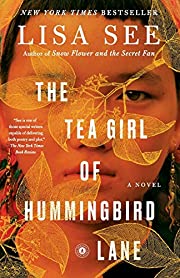
The Tea girl of Hummingbird Lane by Lisa See
It was grating, then kind of funny, the way things were always spelled out. For example, it’s really handy when a part of a culture’s traditions includes reciting exactly what that culture’s traditions are, as they perform the traditions, don’t you think? I also appreciated letters and therapy transcripts stating exactly what characters were feeling.
So, it’s OK that it’s not meant to be great literature – I accept that. What really kept the book from elevating, for me, was the number of wacky tangents. All of the following are spoilers.
She’s into education, she’s going to pursue higher schooling, that will be her way out – no, wait, she got distracted becoming a tea expert; the education thing is not happening anymore.
She’s in love, her lover goes away to earn money then returns for her – they can start their life together, though it will be hard – no, wait, that’s not happening, he’s a drug addict.
She’ll leave him and deal with the consequences of being a woman who left her husband – oh way, he just got killed by a tiger!
She goes out into the world and becomes a successful, independent businesswoman – oh wait, now she’s the pampered wife a gazillionaire.
And to tie it all up, the adopted child – birth mother reunion thread. Their paths finally manage to meet up in China. And everything is beautiful and magical and right, because that’s exactly how adopted child – birth mother search & reunion stories always turn out in life, aren’t they? (  )
)

